Air Diffusers & Grilles
(Installation, Airflow Balancing & Terminal Air Distribution Services)
Air Diffusers & Grilles – Engineering Execution & Field Services
Air Diffusers and Grilles are terminal air distribution devices that regulate airflow delivery into occupied spaces. They play a critical role in ensuring uniform air distribution, maintaining indoor comfort, minimizing drafts, and controlling noise levels.
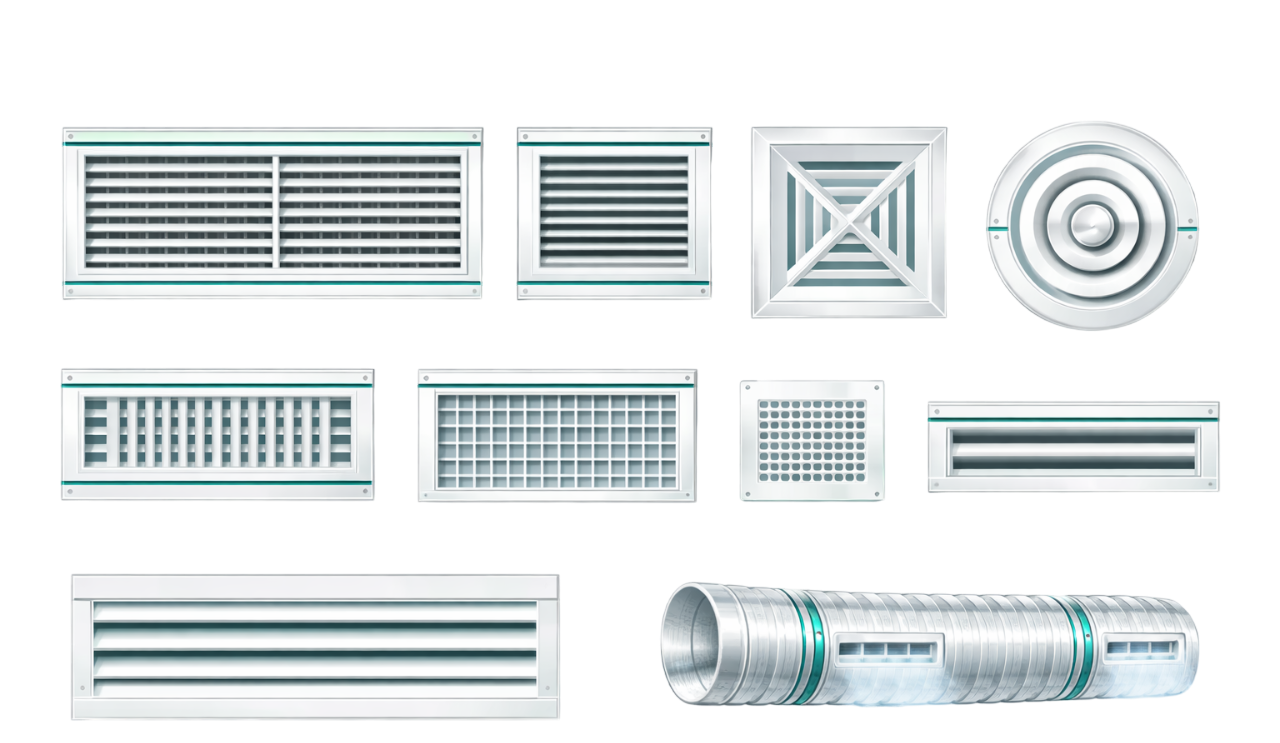
Unlike primary ducting systems that transport air, diffusers and grilles are responsible for:
- Air throw control
- Air pattern direction
- Velocity reduction
- Noise attenuation
- Return air intake
- Exhaust air discharge
These devices are installed in:
- Commercial offices
- Hospitals
- Hotels
- Retail spaces
- Residential towers
- Industrial facilities
- Cleanrooms
- Institutional buildings
Compress India provides complete engineering execution services for Air Diffusers & Grilles including installation, airflow balancing, testing, retrofitting, repair, and AMC services.
Air Diffuser Installation Services
We install and configure multiple types of diffusers as per project requirements.
Scope of work includes:
Ceiling diffuser installation
Square / rectangular diffuser installation
Slot diffuser installation
Linear diffuser installation
Swirl diffuser installation
Jet diffuser installation
Round ceiling diffuser installation
VCD (Volume Control Damper) integration
Plenum box installation
Flexible duct connection
Frame sealing and alignment
Engineering focus areas:
Airflow CFM distribution
Throw distance calculation
Spread pattern configuration
Neck velocity control
Static pressure compatibility
Draft prevention
Noise control (NC level)
Air Grille Installation Services
Grilles are typically used for return air and exhaust air systems.
Scope of work includes:
Return air grille installation
Exhaust air grille installation
Linear bar grille installation
Egg crate grille installation
Weather louver grille installation
Adjustable blade grille installation
VCD integration
Frame sealing
Engineering focus areas:
Air return capacity
Pressure drop control
Noise reduction
Corrosion-resistant material selection
Airflow direction adjustment
Airflow Balancing & Testing
Proper terminal device setup ensures comfort and performance.
We conduct:
- Terminal airflow CFM measurement
- Air balancing coordination
- Throw pattern verification
- Static pressure validation
- Velocity measurement
- Noise level testing
Uniform Temperature
Air balancing ensures uniform temperature distribution and comfort.
Repair & Rectification Services
We provide corrective services for:
- Uneven airflow distribution
- Excessive draft complaints
- Noisy diffusers
- Loose or damaged grilles
- Corrosion replacement
- VCD malfunction
- Plenum leakage
Root Cause Analysis
Root cause analysis ensures restoration of proper air distribution.
Retrofitting & Upgradation
Older terminal devices can impact airflow performance.
We execute:
- Replacement of outdated diffusers
- Upgrade to linear or slot diffusers
- Noise reduction upgrades
- Airflow correction modifications
- Aesthetic replacement works
Enhanced Comfort
Retrofitting improves comfort and visual appeal.
Preventive Maintenance & AMC Services
Routine inspection ensures long-term airflow performance.
Our AMC services include:
- Cleaning of diffusers and grilles
- Airflow verification
- Fastener inspection
- VCD operation testing
- Alignment check
- Replacement planning
Customized AMC Plans
Customized Annual Maintenance Contracts (AMC) are structured for commercial and institutional facilities.
Comfort Optimization & Air Distribution Efficiency
Optimized terminal devices improve indoor comfort.
We conduct:
- Draft analysis
- Airflow redistribution
- Throw adjustment
- Noise reduction assessment
- Comfort benchmarking
Occupant Satisfaction
Optimized air distribution enhances occupant satisfaction and system efficiency.
Connect with Our HVAC Engineering Team
For professional installation, airflow balancing, repair, retrofitting, or AMC services for Air Diffusers & Grilles, connect with our HVAC engineering team for precise and performance-driven terminal air distribution solutions.
Related HVAC Systems & Engineering Services
Air Diffusers & Grilles are closely associated with:
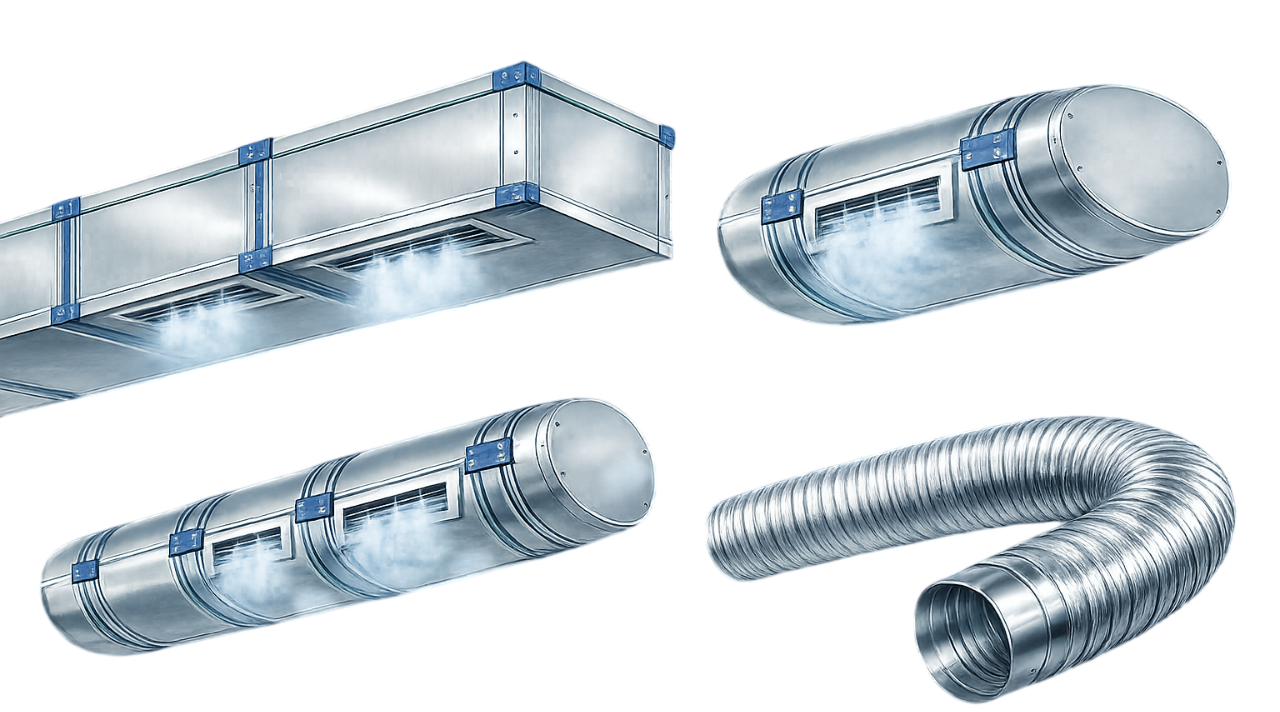
GI / MS / SS / Aluminium Ducting Systems
Learn More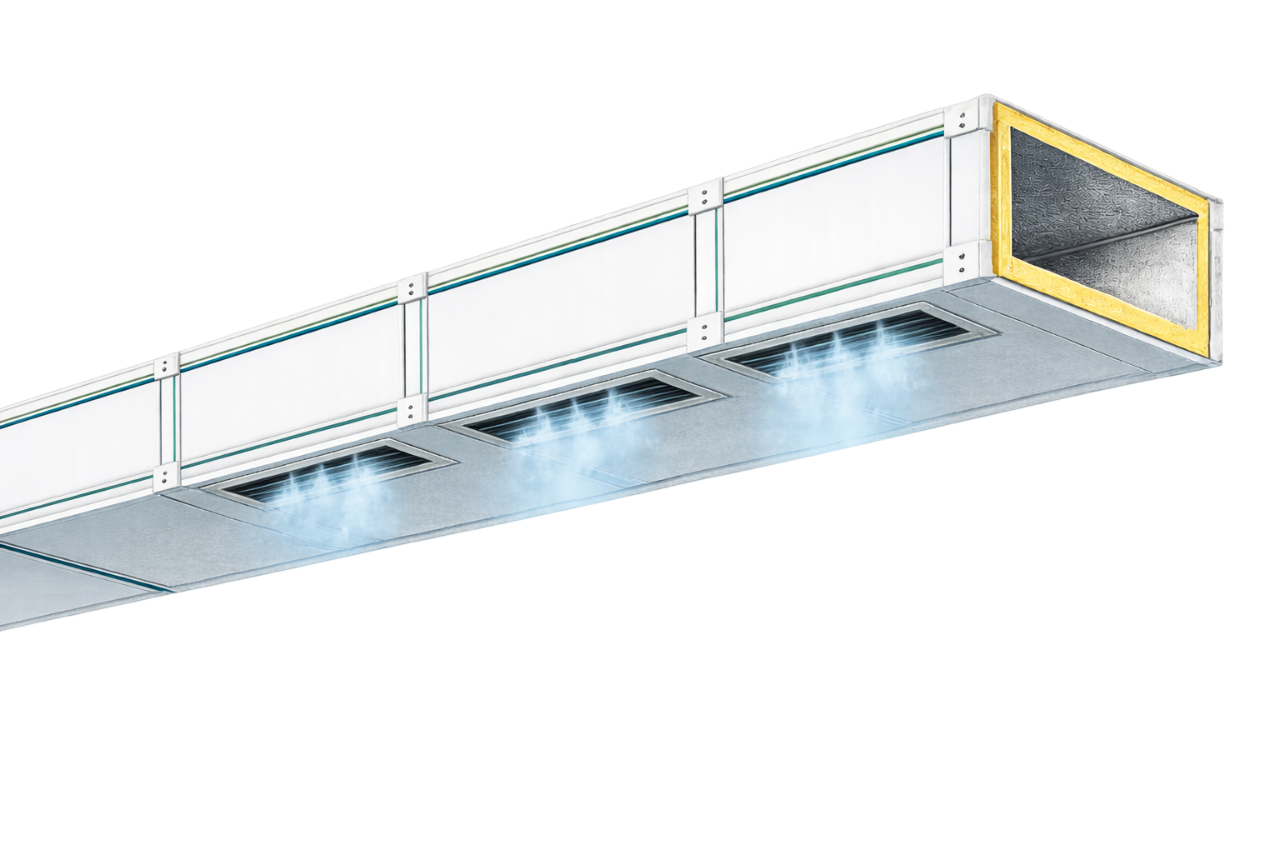
Pre-Insulated (PIR / PUF) Ducting
Learn More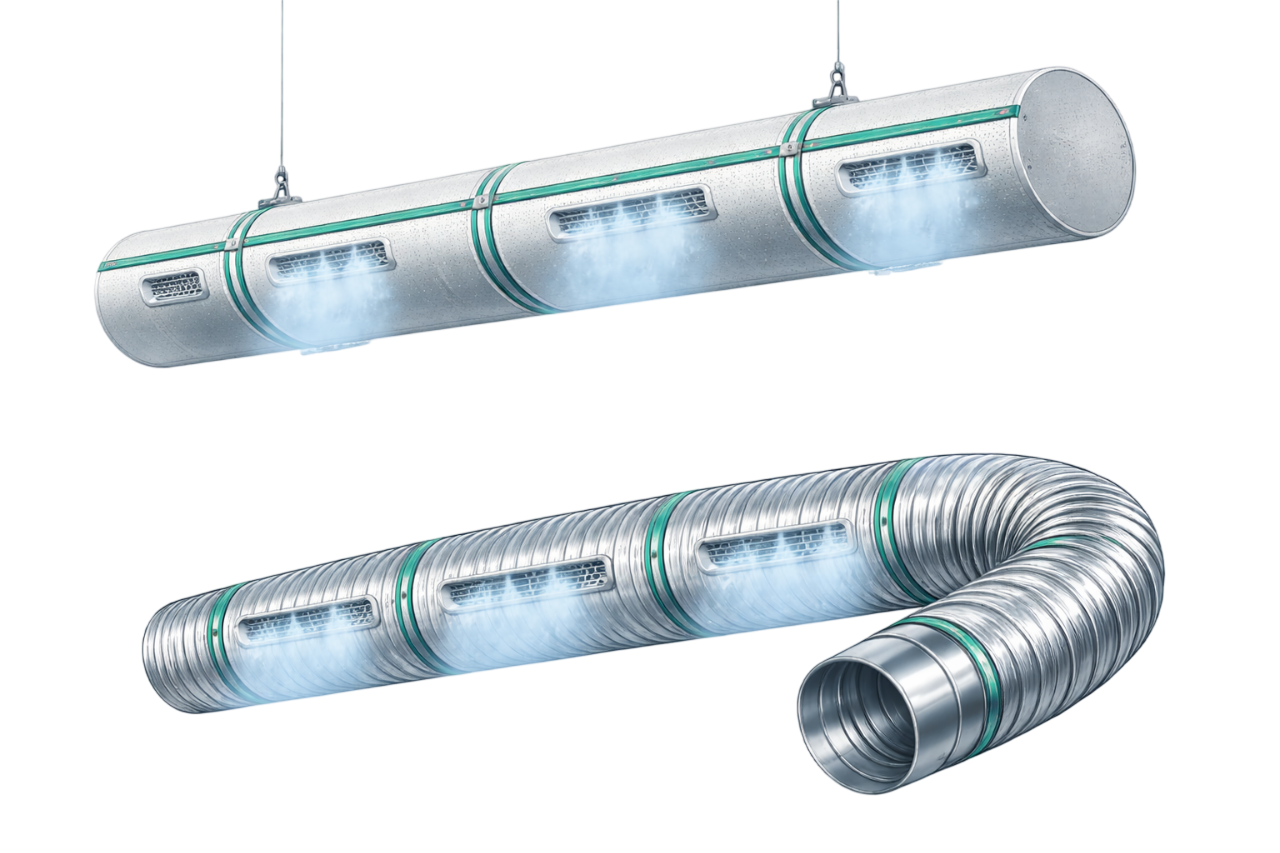
Fabric & Flexible Duct Systems
Learn More
Dampers & Airflow Control Devices
Learn More
Canvas & Connection Joints
Learn More
Fresh Air & IAQ Systems
Learn MoreFrequently Asked Questions
What is the difference between a diffuser and a grille?
Diffusers are designed for supply air, controlling the direction, throw, and spread of conditioned air into a space. Grilles are typically used for return air or exhaust air applications, allowing air to enter the return duct or be exhausted outside, with less emphasis on air pattern control.
What types of diffusers do you install?
We install various diffuser types including ceiling diffusers (square/rectangular/round), slot diffusers, linear diffusers, swirl diffusers for high airflow applications, and jet diffusers for long throws. Selection depends on ceiling type, airflow requirements, and aesthetic preferences.
What causes noisy diffusers?
Noisy diffusers are typically caused by excessive neck velocity, improper sizing, static pressure issues, loose components, or obstructions in the airflow path. Our engineering focus includes noise control (NC level) calculations and proper sizing to ensure quiet operation.
What is airflow balancing and why is it important?
Airflow balancing involves measuring and adjusting the airflow from each diffuser to match design specifications. It ensures uniform temperature distribution, eliminates hot/cold spots, prevents drafts, and optimizes system efficiency. We conduct CFM measurement, throw pattern verification, and velocity control.
Do you provide AMC for diffusers and grilles?
Yes, we offer Annual Maintenance Contracts (AMC) for diffusers and grilles. Our services include cleaning of diffusers and grilles, airflow verification, fastener inspection, VCD operation testing, alignment check, and replacement planning to ensure long-term performance.
What is throw distance in diffuser selection?
Throw distance is the horizontal distance air travels from a diffuser until its velocity reduces to a specified level (typically 0.25 m/s or 0.5 m/s). Proper throw calculation ensures that conditioned air reaches the occupied zone without causing drafts or short-circuiting to return grilles.
Can existing diffusers be replaced with newer models?
Yes, we execute retrofitting projects involving replacement of outdated diffusers with modern designs like linear or slot diffusers. This improves aesthetics, enhances airflow distribution, reduces noise, and corrects performance issues. We also perform airflow correction modifications during replacement.
What causes uneven airflow from diffusers?
Uneven airflow can result from improperly adjusted VCDs (Volume Control Dampers), imbalanced duct pressure, undersized diffusers, obstructions in the plenum or flexible duct, or incorrect diffuser selection. Our balancing services identify and correct these issues through measurement and adjustment.
What are VCDs and why are they important?
Volume Control Dampers (VCDs) are devices installed in the duct branch or plenum box that allow precise adjustment of airflow to each diffuser. They are essential for air balancing, enabling technicians to fine-tune the CFM to each zone for optimal comfort and system performance.
What engineering factors are considered in diffuser selection?
Key factors include required CFM, throw distance, spread pattern, neck velocity, static pressure compatibility, noise criteria (NC level), mounting type (ceiling/wall), and aesthetic requirements. Proper selection ensures efficient air distribution without drafts or excessive noise.