Piping & Utility Systems
(Engineered fluid conveyance systems for HVAC, process & utility applications)
Engineered Piping Networks for Reliable System Operation
Piping and utility systems form the circulatory network of HVAC and industrial utility infrastructure, responsible for conveying chilled water, hot water, condenser water, process fluids, and auxiliary services across facilities. Proper piping design directly affects system efficiency, reliability, maintainability, and lifecycle cost.
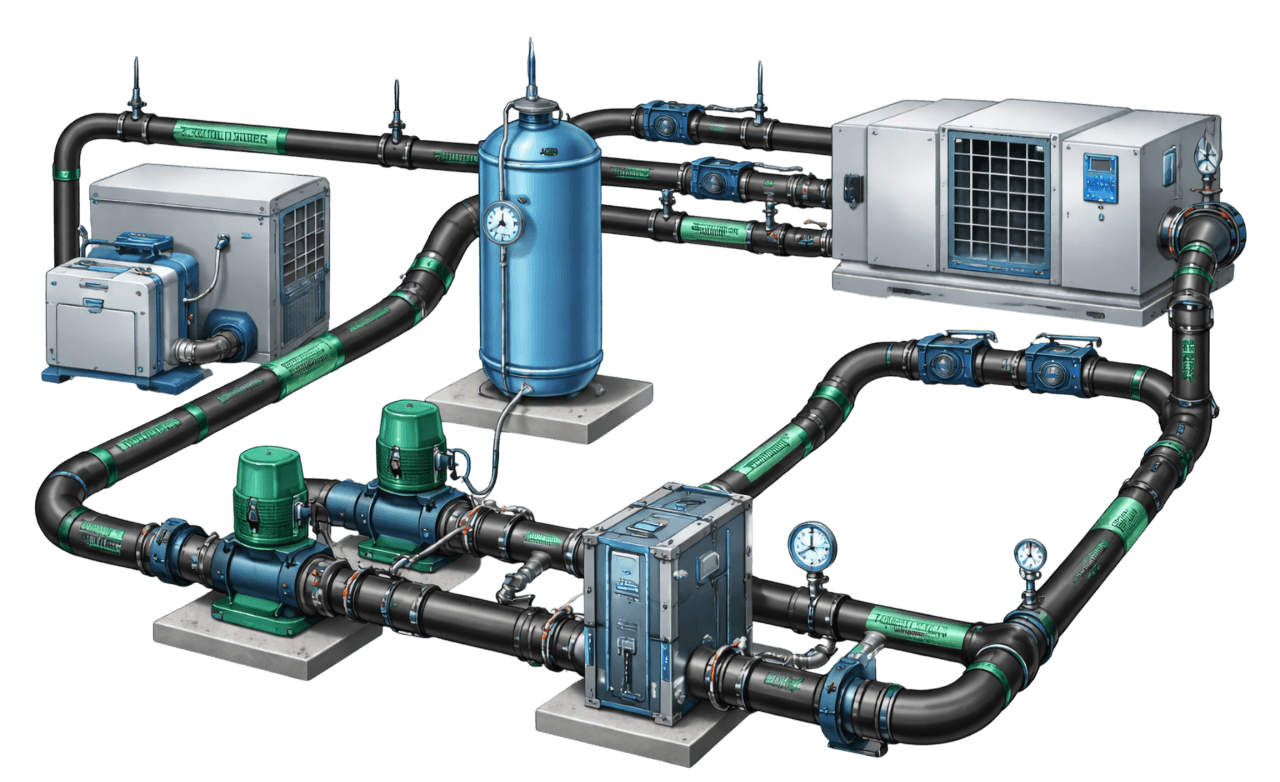
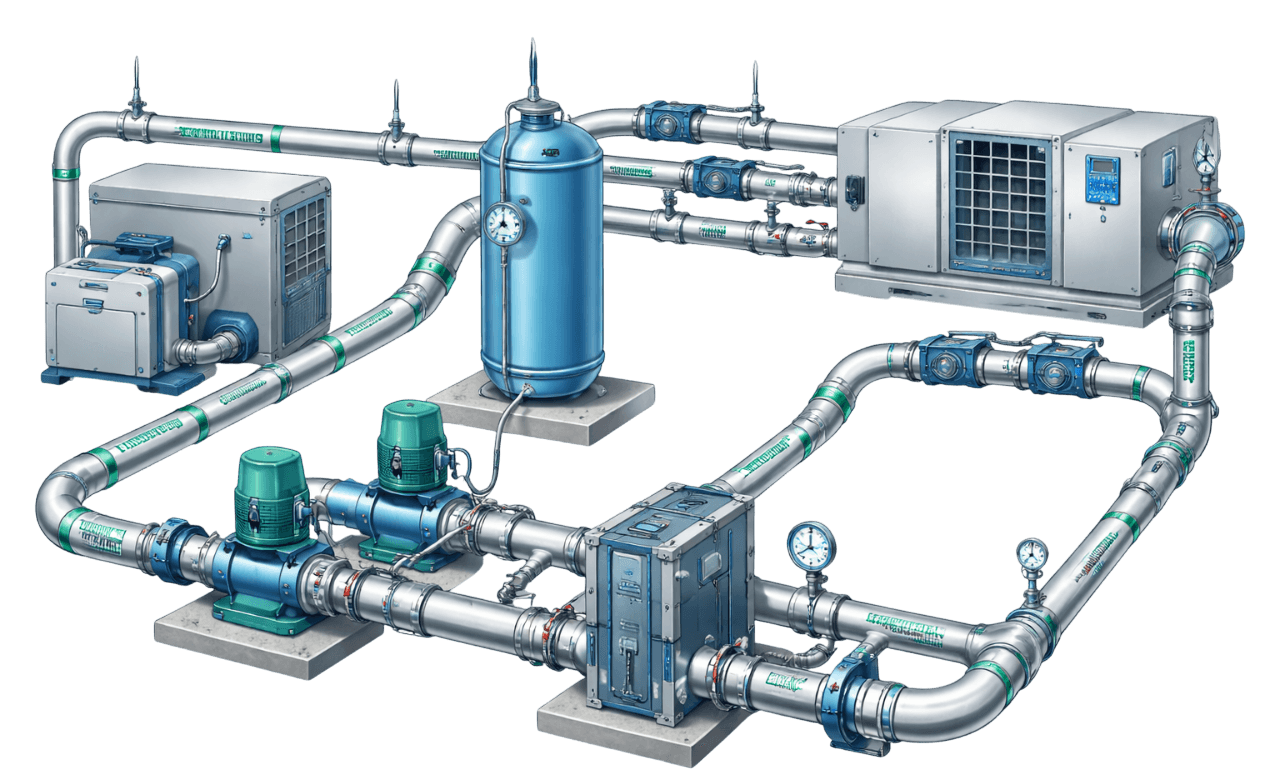
At Compress India, piping systems are engineered with a strong focus on hydraulic performance, material suitability, thermal behaviour, installation practicality, and long-term serviceability, ensuring stable operation across diverse project environments.
What Piping & Utility Systems Invlove ?
- Chilled water, hot water & condenser water piping
- Process and utility fluid distribution
- Hydraulic balance and pressure control
- Thermal expansion and stress management
- Isolation, control, and maintenance provisions
- Integration with HVAC and utility equipment
System Types & Configurations
Explore our comprehensive range of piping and utility systems designed for efficient fluid conveyance and optimal performance in various applications.
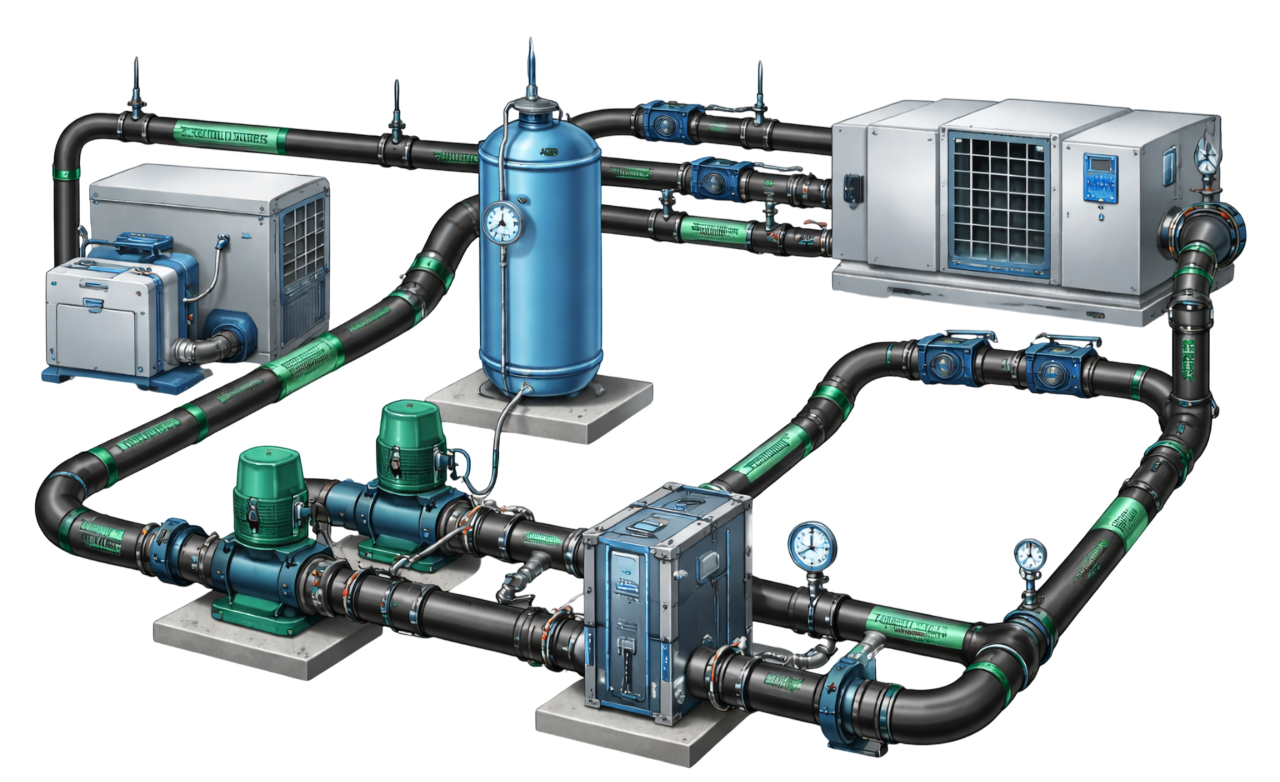
Chilled Water Piping Systems
Learn More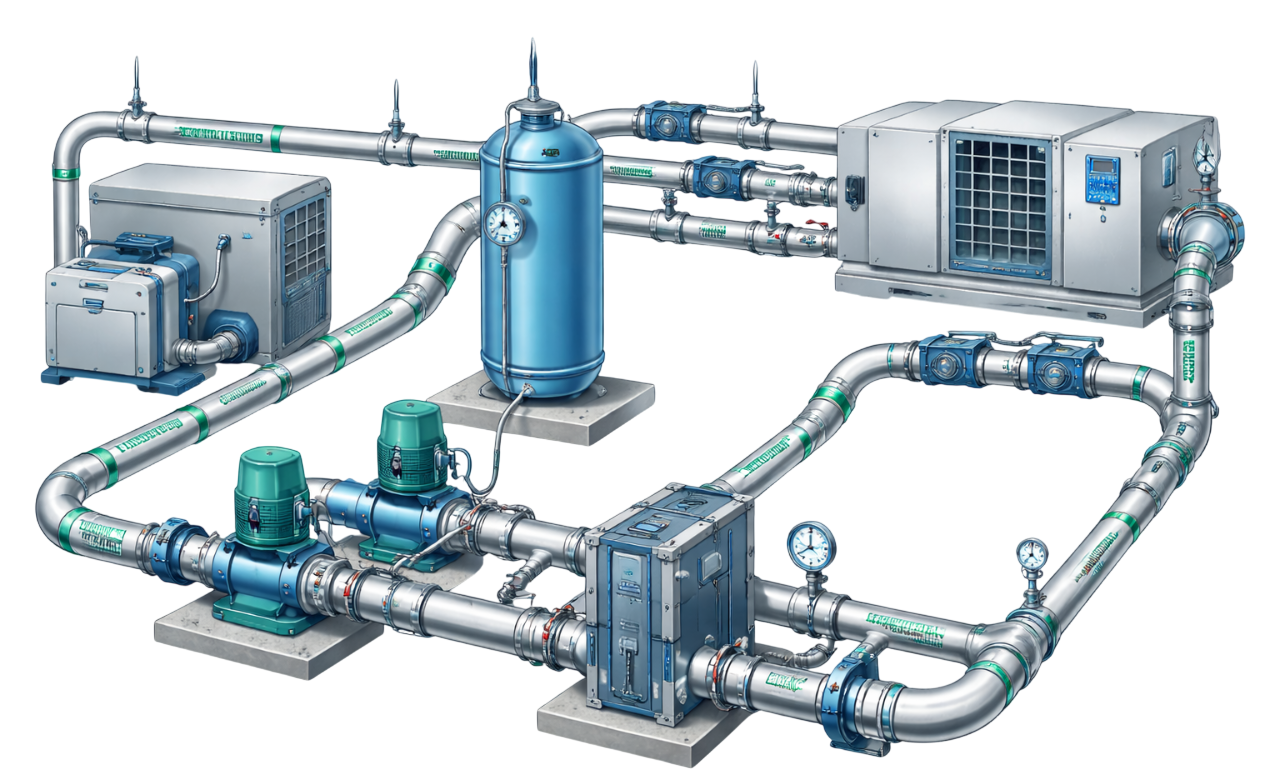
Hot Water & Heating Piping
Learn More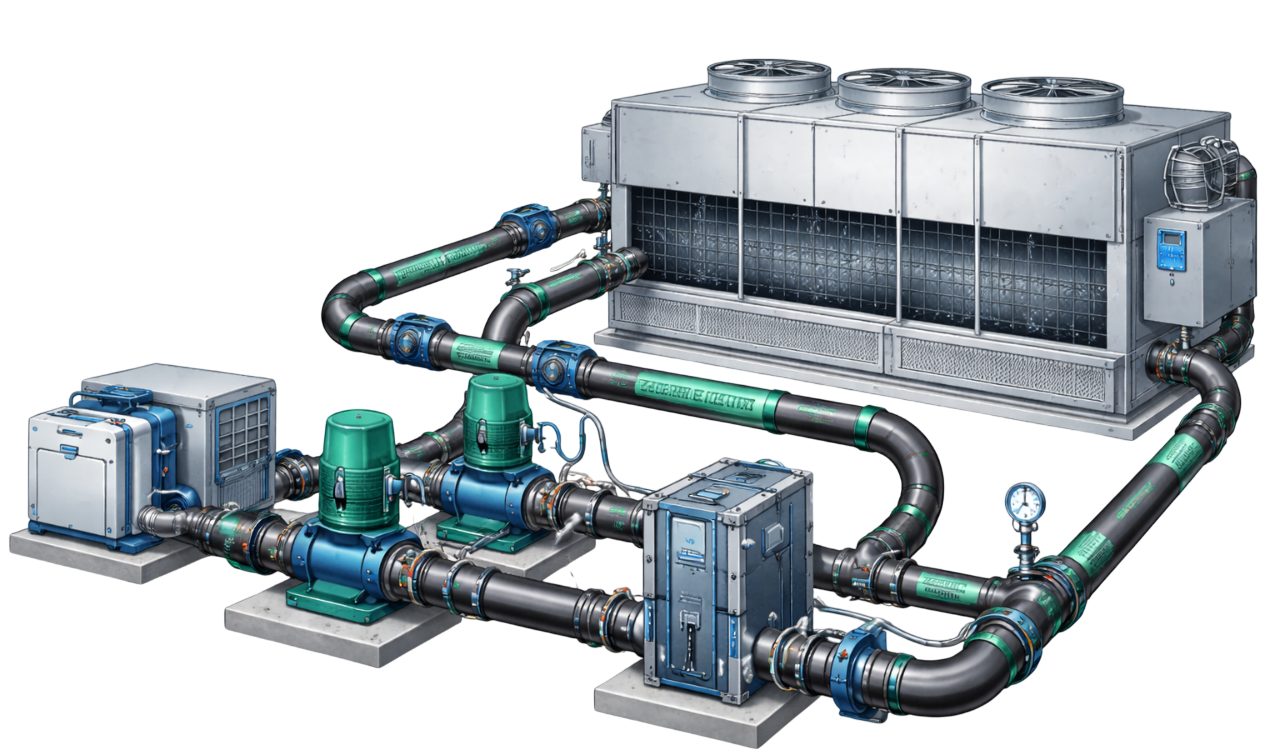
Condenser Water Piping
Learn More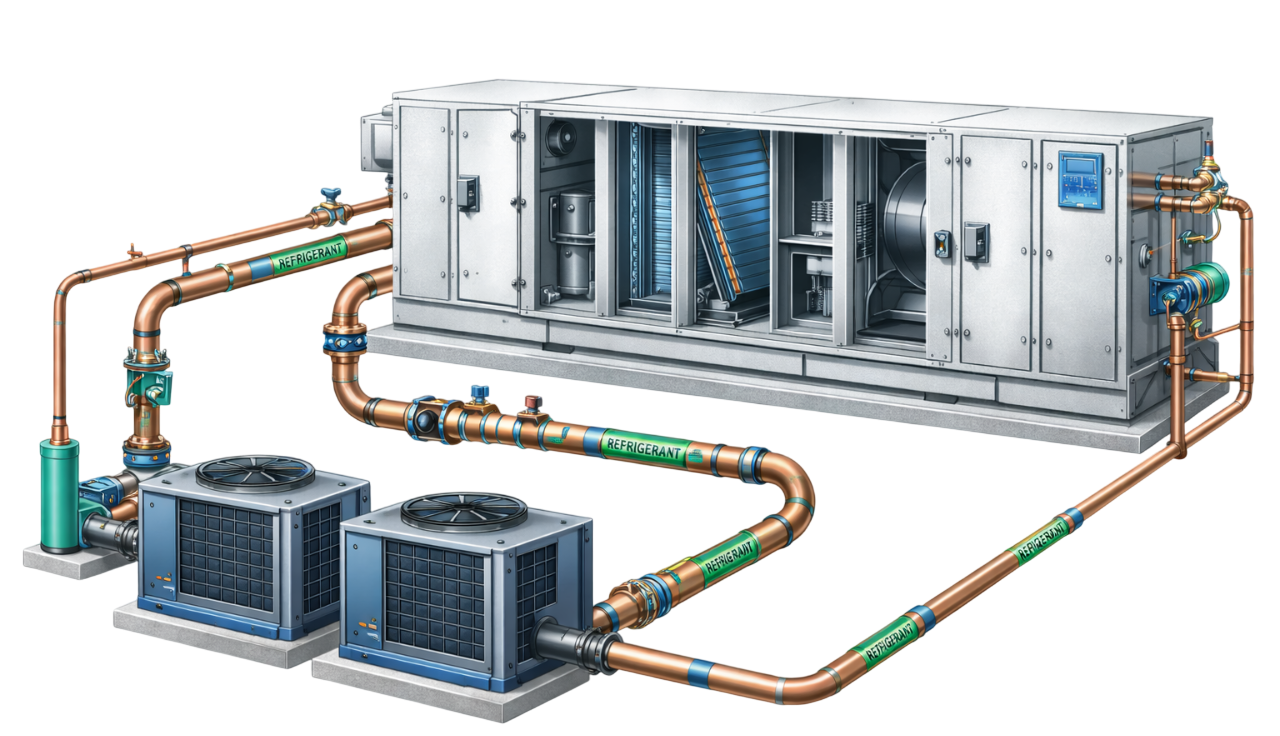
Refrigerant Piping
Learn More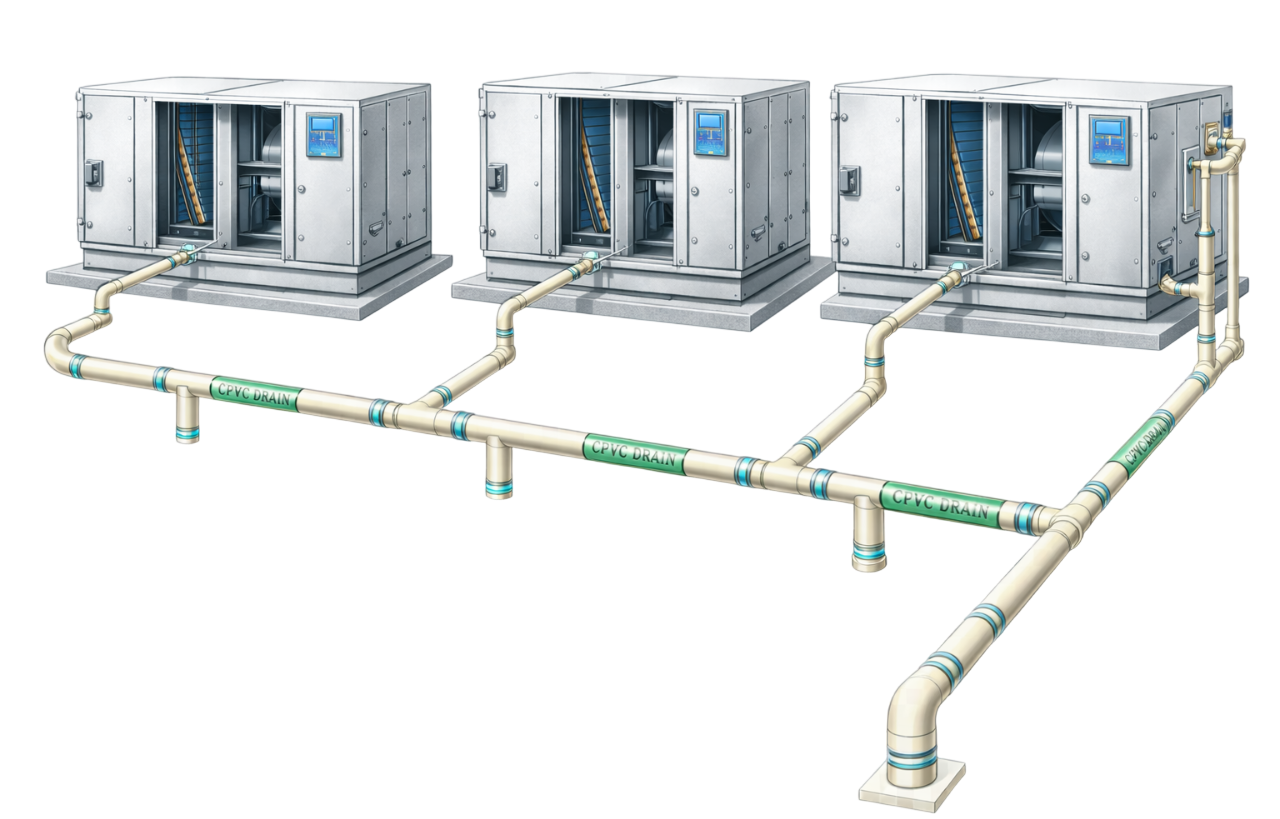
Condensate Drain Piping
Learn More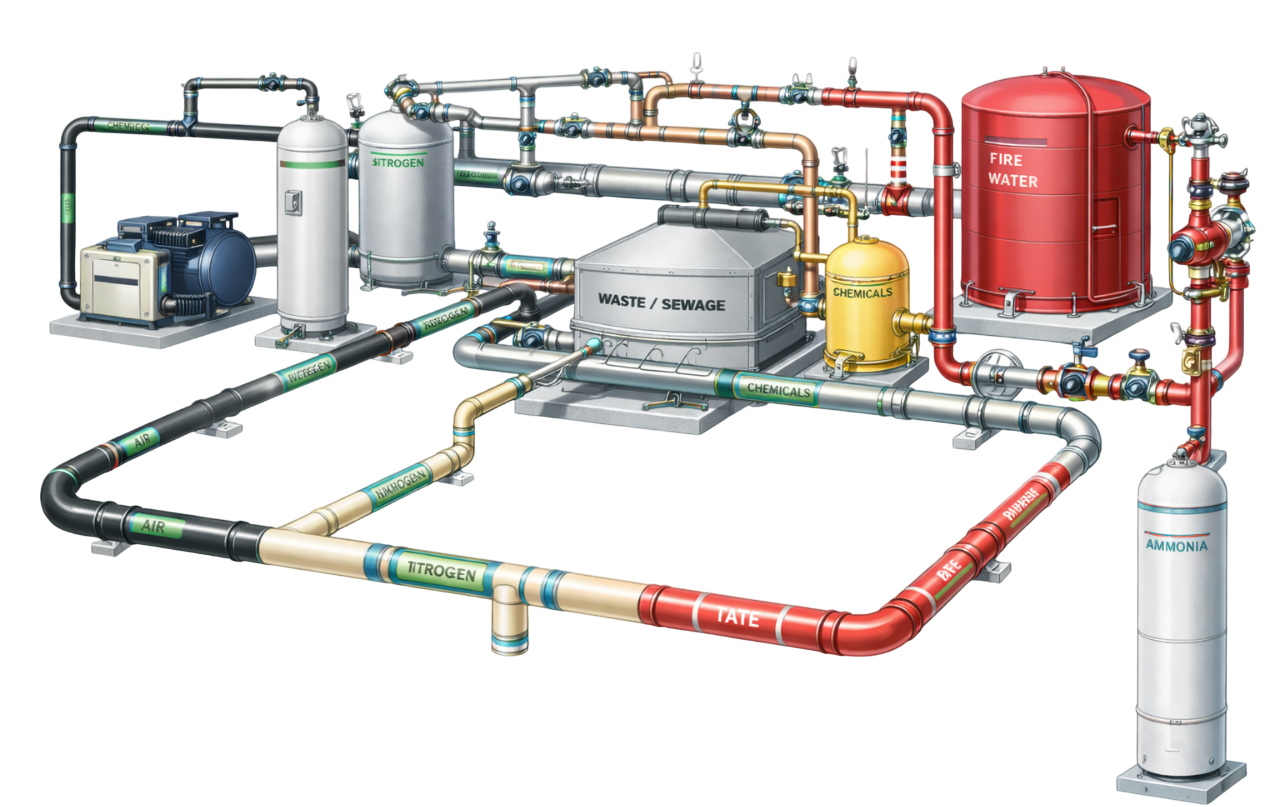
Process & Utility Piping Networks
Learn More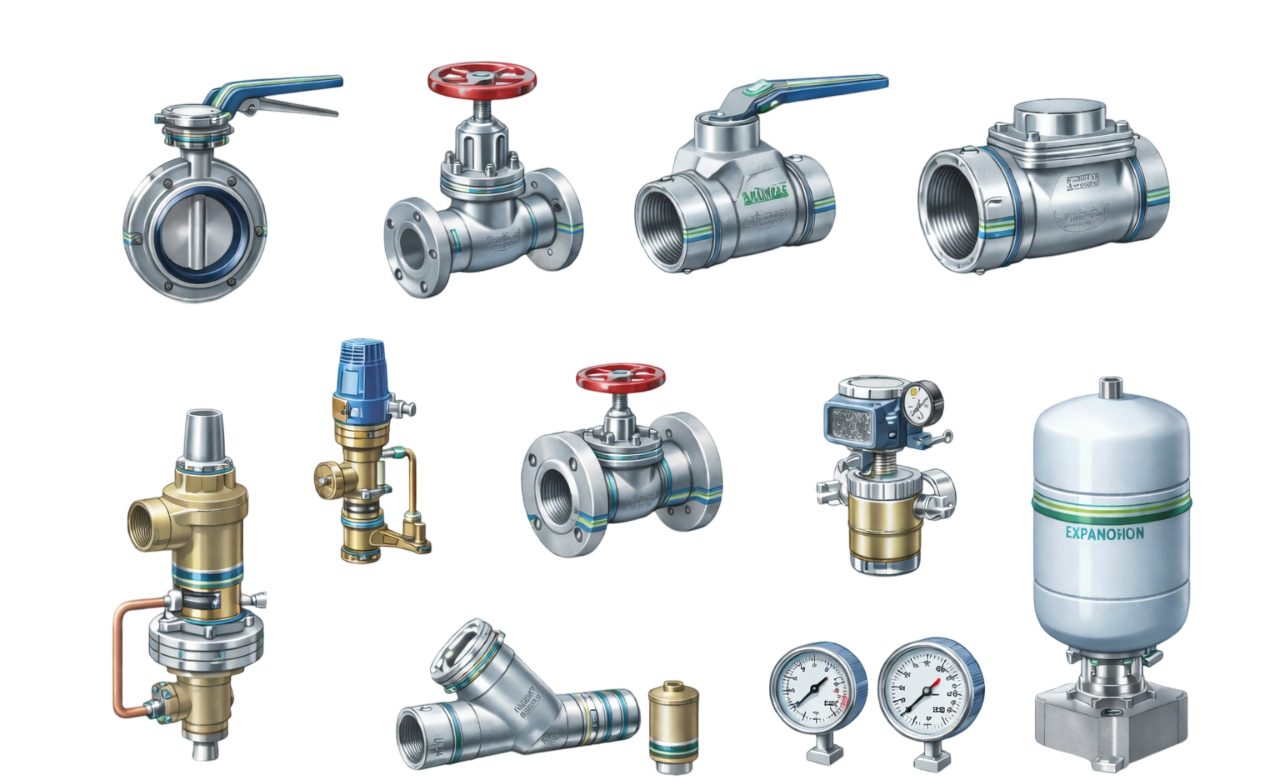
Valves, Strainers & Pipe Accessories
Learn MoreOur Engineering Approach – How We Execute
Structured methodology for piping system design and implementation, ensuring technical accuracy, optimal hydraulic performance, and system reliability.
System requirement and load analysis
Pressure drops and pump head calculations
Layout coordination and stress evaluation
Pipe sizing and velocity optimisation
Material selection and corrosion considerations
System validation and commissioning support
Applications & Project Environments
Our piping solutions serve diverse commercial, industrial, healthcare, and specialized environments requiring efficient fluid conveyance systems.
- Central HVAC plants and utility rooms
- Industrial and process facilities
- Commercial and institutional buildings
- Data centres and critical infrastructure
- Pharmaceutical and cleanroom projects
- Healthcare and laboratory facilities
Engineering-Led Value Outcomes
Measurable performance, efficiency, and reliability advantages delivered through disciplined piping engineering and system-level validation.
- Stable hydraulic performance
- Reduced energy losses and pump power
- Improved system reliability and uptime
- Ease of maintenance and future expansion
- Long service life with controlled operating costs
Consult with Our Engineering Team
Piping systems play a critical role in HVAC and utility performance. Our engineers support projects from conceptual hydraulic design through detailed engineering, execution coordination, and commissioning. Connect with us for all your HVAC industrial, process piping & hydraulic flow management systems.
Related HVAC Systems & Services
HVAC systems operate as an integrated ecosystem. Explore related services that support system performance, reliability, and lifecycle efficiency.
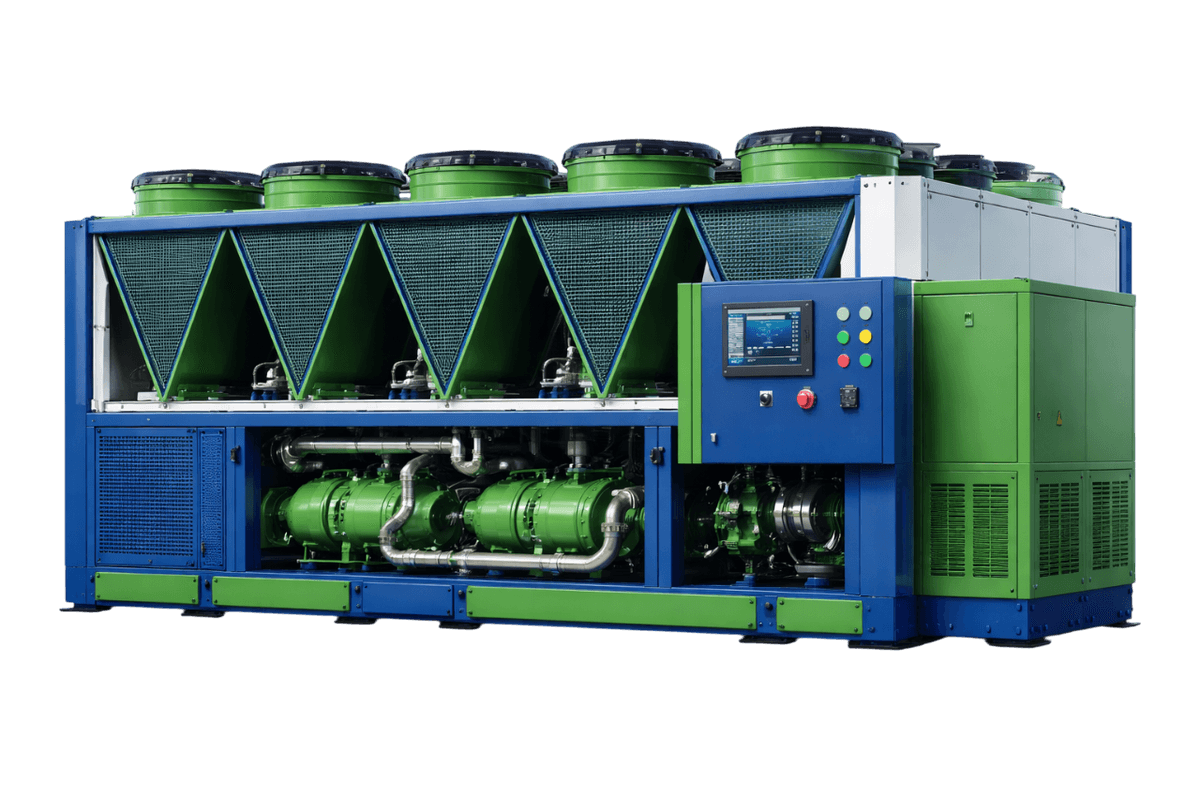
Chillers & Central Cooling
Learn More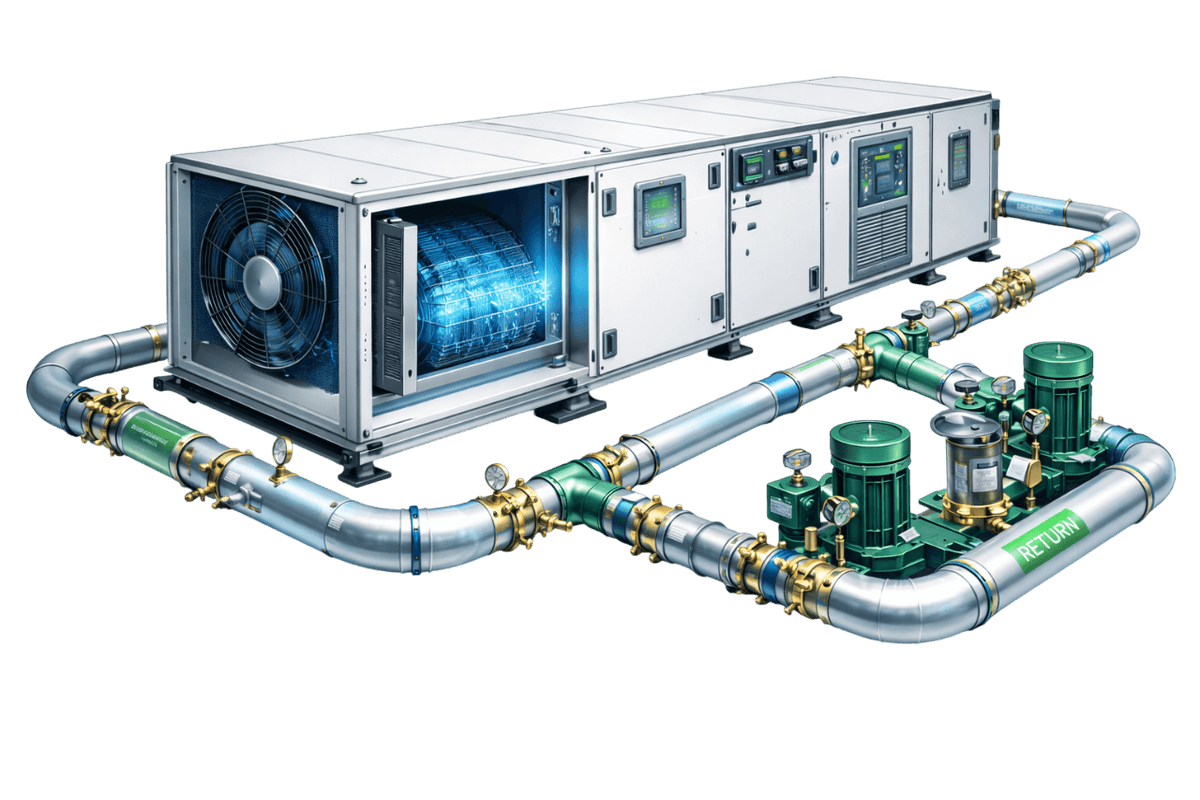
Hydronic Distribution & Flow Control
Learn More
Air Conditioning Systems
Learn More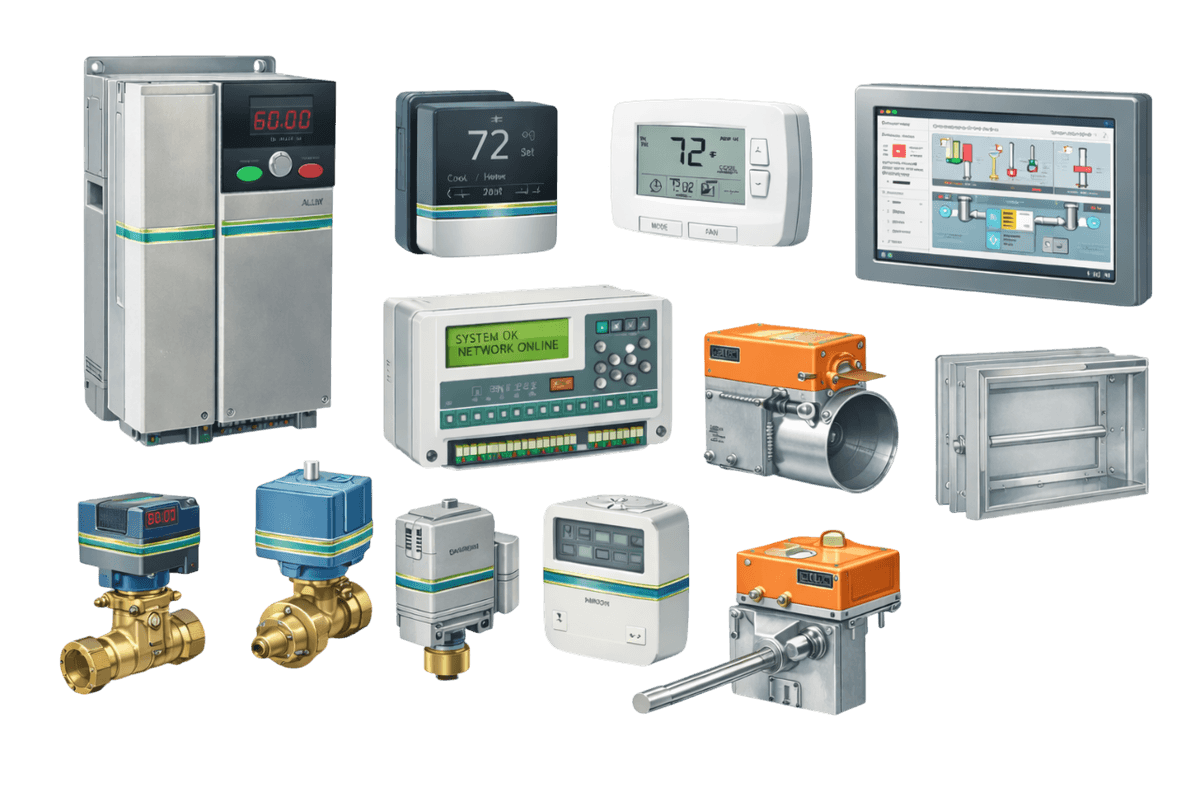
HVAC Automation & Instrumentation
Learn More
Testing & Commissioning
Learn MoreFrequently Asked Questions
What are the common materials used in HVAC piping systems?
Common materials include carbon steel (black/galvanized), stainless steel (304/316), copper (types L, K), CPVC, PPR, HDPE, and lined/coated pipes. Selection depends on fluid type, temperature, pressure, and corrosion considerations.
How is pipe sizing determined for chilled water systems?
Pipe sizing considers flow rate (GPM), velocity limits (2-4 fps for chilled water), pressure drop per 100 ft (0.5-4 ft H2O), available pump head, noise criteria, and future expansion. ASHRAE guidelines and pump curves guide optimization.
What is hydraulic balancing and why is it important?
Hydraulic balancing ensures each terminal unit receives design flow by adjusting balancing valves. It prevents over/under-flow, reduces pumping energy, ensures proper heat transfer, and maintains system efficiency and comfort.
What are expansion joints and when are they required?
Expansion joints accommodate thermal expansion/contraction and movement. Required in long straight runs, between building sections, at equipment connections, and where movement exceeds pipe material's flexibility. Types include bellows, slip, and rubber expansion joints.
How are piping systems insulated and why?
Piping insulation prevents heat gain/loss (energy conservation), controls condensation (chilled water/dew point), provides personnel protection (hot pipes), reduces noise, and meets code requirements. Materials include elastomeric, fiberglass, mineral wool, and PIR/PUF.
What types of valves are used in HVAC piping systems?
Common valves include ball valves (isolation), gate valves (full flow), globe valves (throttling), butterfly valves (large diameter), check valves (prevent backflow), balancing valves (flow control), pressure relief valves, and control valves (automated flow regulation).
What are the different piping system configurations?
Common configurations include direct return (simpler, less balanced), reverse return (balanced flow), primary-secondary (decoupled pumping), variable primary flow (energy efficient), and hybrid systems combining multiple approaches.
How are pressure drops calculated in piping systems?
Pressure drops include friction losses (Darcy-Weisbach/Hazen-Williams equations), fitting/valve losses (equivalent length/K-factor method), equipment losses (chillers, coils, heat exchangers), elevation changes, and safety factors (15-25%).
What is water treatment for HVAC piping systems?
Water treatment prevents corrosion, scale formation, biological growth (legionella), and fouling. Includes chemical treatment (corrosion inhibitors, biocides, scale controllers), filtration, side-stream cleaning, and continuous monitoring/maintenance.
What are the testing requirements for piping systems?
Testing includes hydrostatic pressure testing (1.5x design pressure), leak testing, flushing/cleaning (velocity-3 fps), chemical cleaning, passivation (stainless steel), flow/pressure balancing verification, and documentation for commissioning.
What are pipe supports and spacing requirements?
Pipe supports prevent sagging, control movement, and manage stress. Spacing depends on pipe material, size, fluid, temperature, and codes. Steel pipes: 10-20 ft, copper: 6-12 ft, plastic: 3-8 ft. Types include hangers, rollers, guides, anchors, and spring supports.
How does piping design differ for chilled vs. condenser water?
Chilled water: Lower temperatures (40-45°F supply), closed system, higher ΔT (10-15°F), corrosion protection critical, condensation prevention. Condenser water: Higher temperatures (85-95°F), open/closed system, lower ΔT (10°F), biological control, scaling prevention, larger pipe sizes typically.