Condensate Drain Piping Systems
(Installation, Slope Design, Leak Testing & Drainage Execution Services)
Condensate Drain Piping – Engineering Execution & Field Services
Condensate Drain Piping Systems are designed to safely remove condensate water generated from cooling coils in AHUs, FCUs, TFA/PAU units, VRF indoor units, precision air conditioners, and refrigeration systems. During cooling operation, moisture from air condenses on evaporator coils.
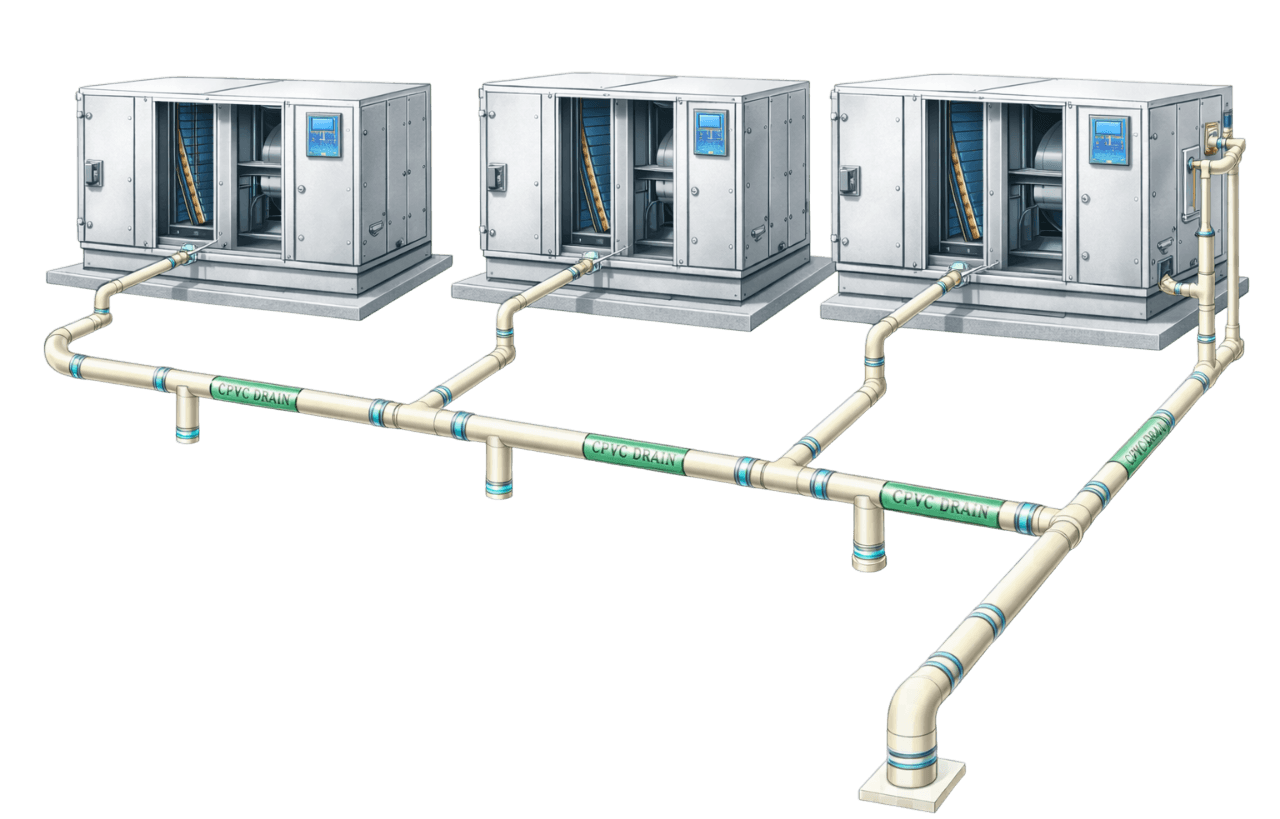
Improper condensate drainage can result in:
- Water leakage
- Ceiling damage
- Mold growth
- Corrosion
- IAQ issues
- Equipment shutdown
Condensate piping must be engineered with:
- Proper slope
- Trap design
- Air break provision
- Venting logic
- Backflow prevention
- Clean-out access
Compress India provides complete engineering execution services including fabrication, installation, slope correction, trap design, leak testing, retrofitting, repair, and AMC services for condensate drain piping systems.
Condensate Drain Piping Installation
We execute complete condensate drainage networks across HVAC systems.
Scope of work includes:
PVC / CPVC drain pipe installation
UPVC condensate piping
Copper drain line installation (where required)
Condensate trap fabrication
P-trap installation
Vent pipe installation
Air break connection
Floor drain connection
Support and hanger installation
Insulated drain line installation (where required)
Engineering Focus Areas:
Minimum slope (typically 1:100 or as per design)
Negative pressure trap depth calculation
Air suction prevention
Pumped condensate integration
Drain pipe sizing
Horizontal vs vertical routing logic
Overflow safety line provision
Trap Design & Backflow Prevention
Proper trap configuration is critical in negative pressure systems.
We ensure:
- Correct trap depth for static pressure
- Air seal maintenance
- Prevention of air bypass
- Anti-siphon protection
- Clean-out provision
- Pump-assisted drainage integration
Critical Protection
Incorrect trap sizing leads to water overflow and coil flooding.
Leak Testing & Commissioning
Proper testing ensures reliable drainage performance.
We provide:
- Water flow testing
- Leak inspection
- Slope verification
- Trap functionality testing
- Overflow testing
- Pump discharge testing (if applicable)
Reliable Drainage
Commissioning ensures smooth and obstruction-free drainage.
Insulation & Condensation Prevention
Condensate lines may require insulation to prevent sweating.
We provide:
- Closed-cell insulation
- Vapor barrier sealing
- Joint insulation sealing
- Anti-condensation treatment
Damage Prevention
Proper insulation prevents water dripping and ceiling damage.
Repair, Replacement & Retrofitting
We provide corrective services for:
- Blocked drain lines
- Improper slope correction
- Leakage rectification
- Trap replacement
- Pump failure correction
- Drain rerouting
- Overflow line installation
Leak-Free Operation
Retrofitting prevents recurring leakage complaints.
Preventive Maintenance & AMC Services
Routine maintenance prevents system failure.
Our AMC services include:
- Drain flushing
- Trap inspection
- Blockage removal
- Leakage monitoring
- Pump inspection
- Slope verification
Customized AMC Plans
Customized Annual Maintenance Contracts (AMC) are structured for commercial HVAC systems.
System Hygiene & Reliability Optimization
Optimized drainage prevents IAQ and structural damage issues.
We conduct:
- Flow verification
- Bio-growth prevention inspection
- Drain capacity review
- Long-term reliability assessment
Safe Operation
Proper drainage ensures safe HVAC operation.
Connect with Our HVAC Engineering Team
For professional installation, trap design, leak testing, repair, retrofitting, or AMC services for Condensate Drain Piping Systems, connect with our HVAC engineering team for reliable and leak-free drainage solutions.
Related HVAC Systems & Engineering Services
Condensate Drain Piping is closely associated with:
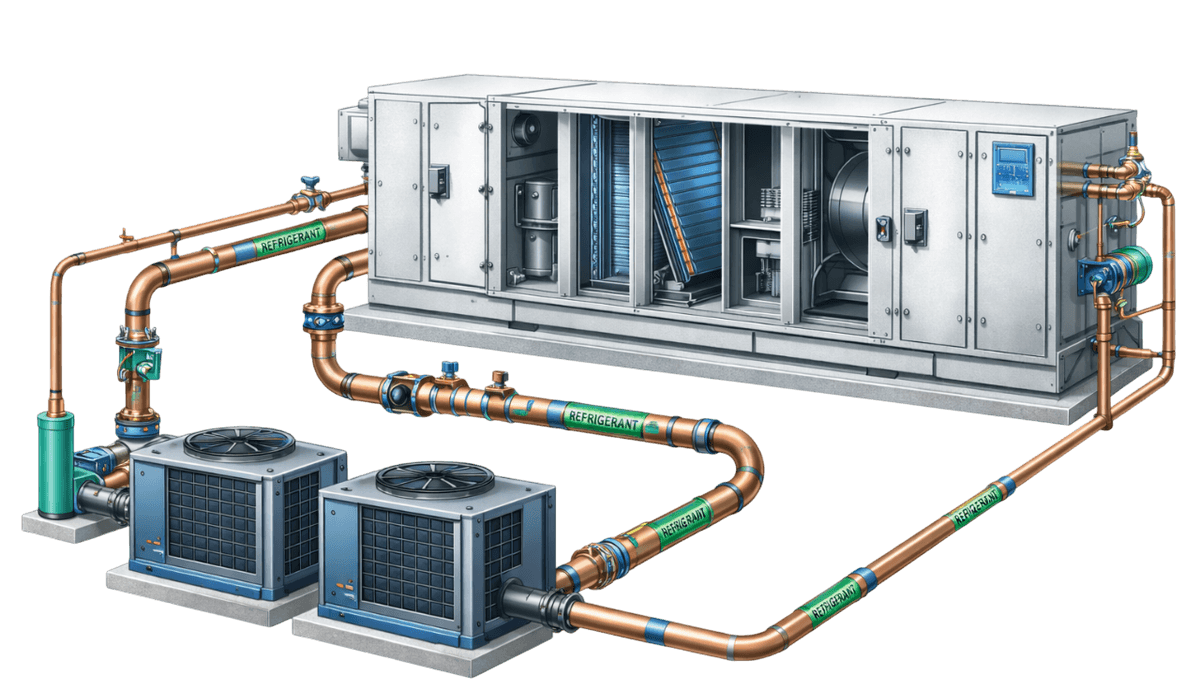
Refrigerant Piping
Learn More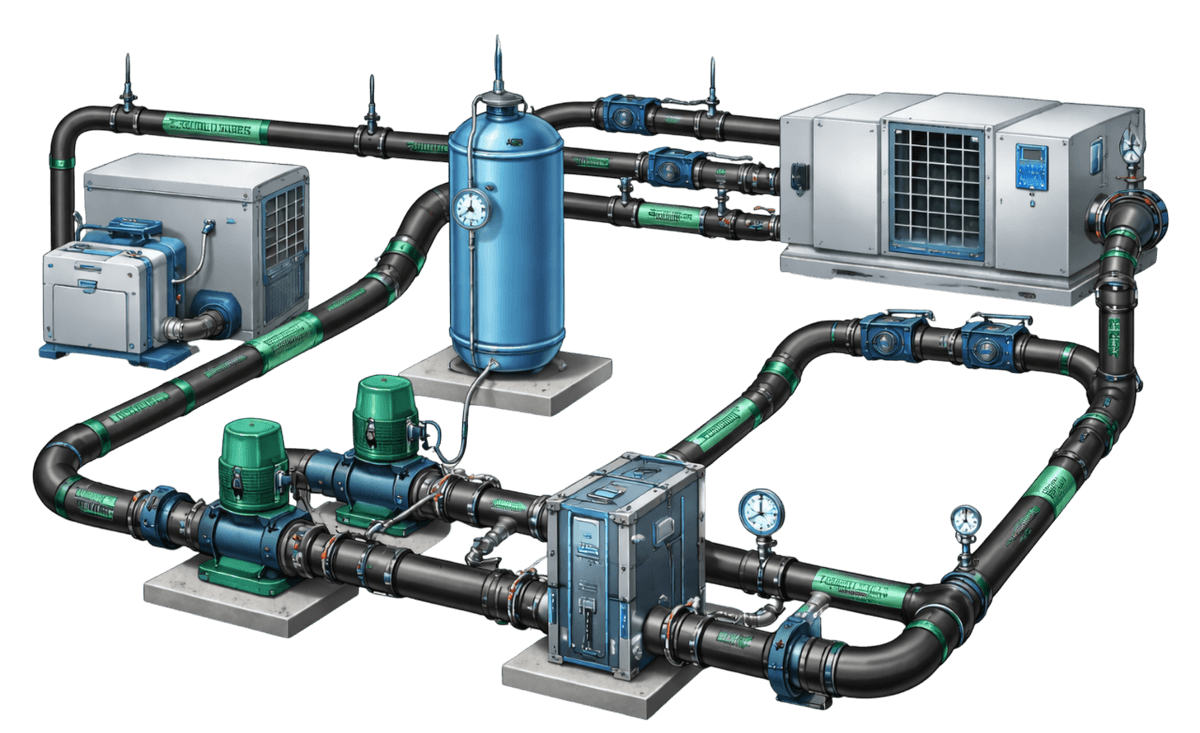
Chilled Water Piping Systems
Learn More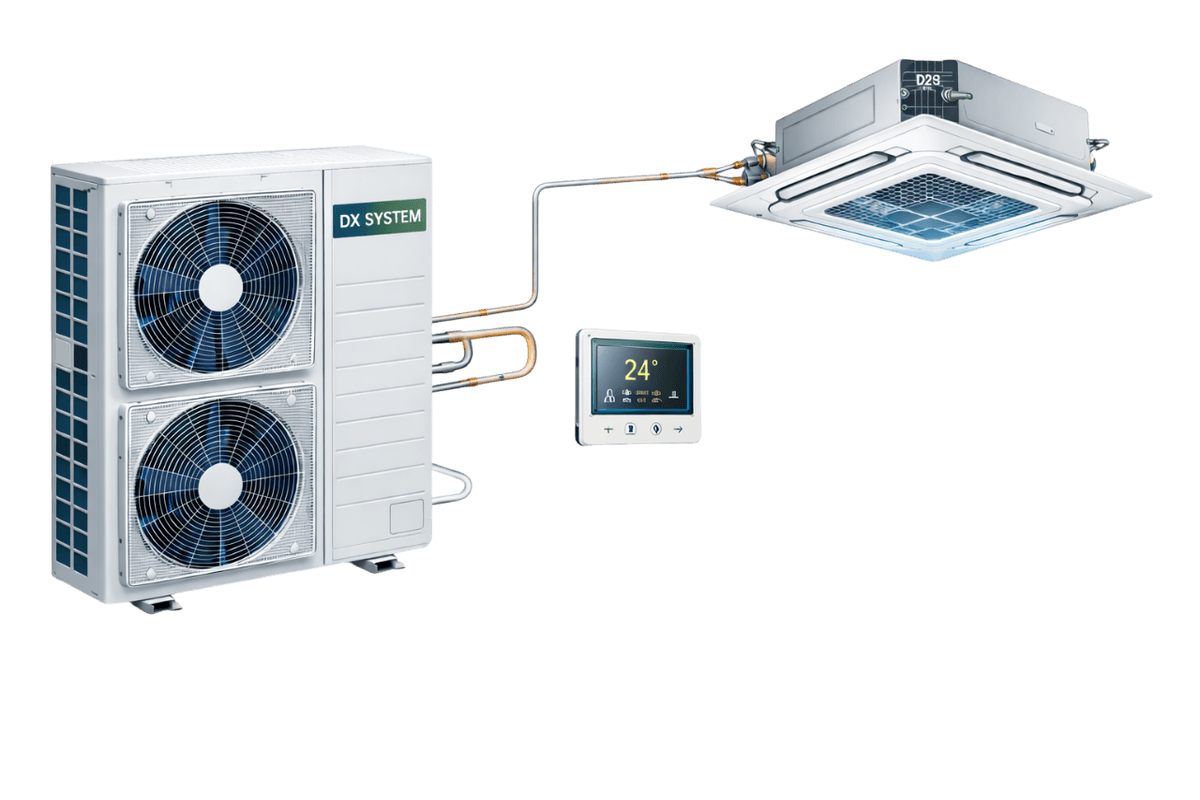
DX Air Conditioning Systems
Learn More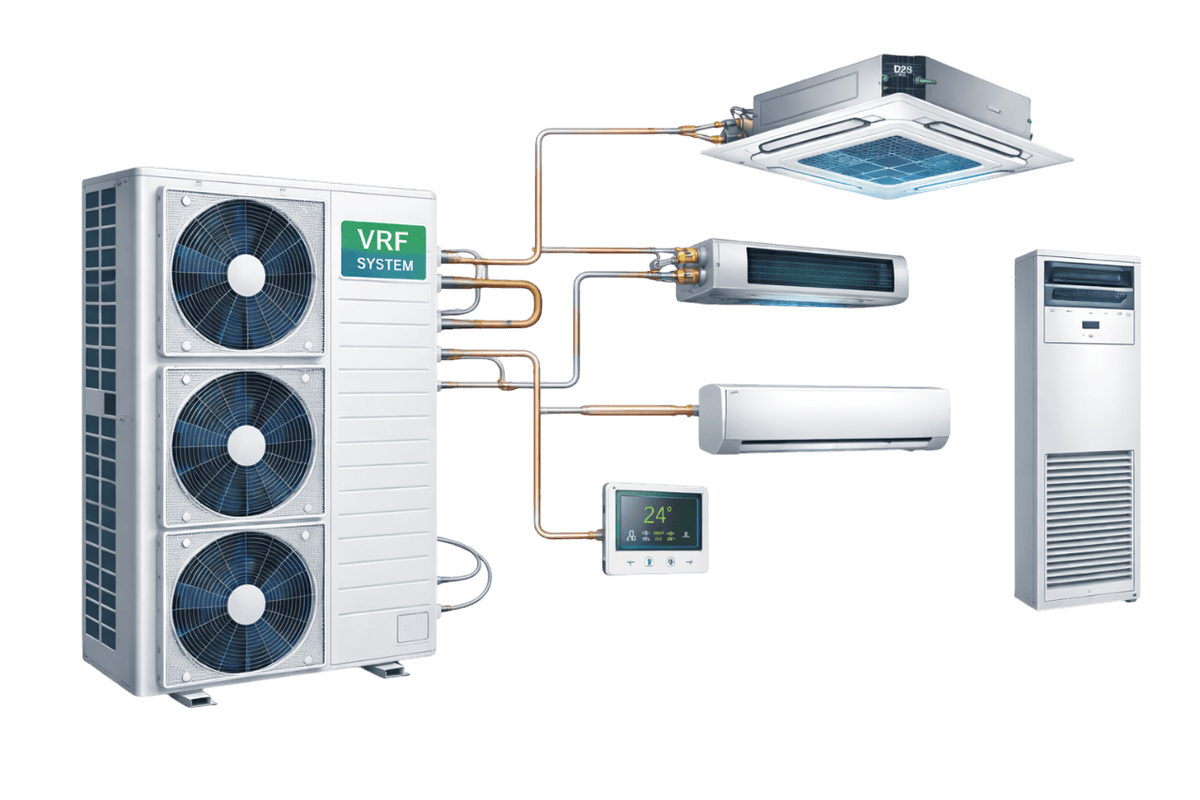
VRF / VRV Systems
Learn More
Precision Air Conditioning Systems
Learn More
Valves, Strainers & Pipe Accessories
Learn More
HVAC Automation & Instrumentation
Learn MoreFrequently Asked Questions
What are Condensate Drain Piping Systems?
Condensate Drain Piping Systems are designed to safely remove condensate water generated from cooling coils in AHUs, FCUs, TFA/PAU units, VRF indoor units, precision air conditioners, and refrigeration systems. During cooling operation, moisture from air condenses on evaporator coils and must be properly drained.
What materials are used for condensate drain piping?
We primarily use PVC, CPVC, and UPVC pipes for condensate drain lines. In some applications, copper drain lines may be installed. Materials are selected based on building codes, temperature requirements, and chemical compatibility with water treatment residues.
Why is proper slope important in condensate drainage?
Proper slope (typically 1:100 or as per design) ensures gravity-driven water flow without ponding or backflow. Insufficient slope leads to standing water in pipes, causing blockages, biological growth, and overflow. Slope must be maintained throughout the drainage network.
Do you provide AMC for condensate drain systems?
Yes, we offer comprehensive Annual Maintenance Contracts (AMC) for condensate drain systems including drain flushing, trap inspection, blockage removal, leakage monitoring, pump inspection (where applicable), and slope verification to prevent system failure and water damage.
What is the purpose of a condensate trap?
A condensate trap (P-trap) maintains an air seal that prevents air from being sucked into the drain line from negative pressure systems (like AHUs). It also prevents sewer gases from entering the building. Correct trap depth calculation based on static pressure is critical for proper function.
Why do condensate lines need insulation?
Condensate lines carry cold water and may sweat (condensation) on the outer surface, especially in humid environments. Insulation with closed-cell material and vapor barrier prevents this sweating, avoiding water dripping, ceiling damage, and potential mold growth.
Can you retrofit existing condensate drain systems?
Yes, we specialize in retrofitting existing condensate systems including blocked drain line clearing, improper slope correction, leakage rectification, trap replacement, pump failure correction, drain rerouting, and overflow line installation to prevent recurring leakage complaints.
What are the signs of improper condensate drainage?
Signs include visible water leaks near HVAC equipment, water stains on ceilings, mold growth around units, standing water in drain pans, gurgling sounds from drains, and musty odors indicating biological growth in stagnant water.
How do you prevent biological growth in condensate lines?
Biological growth (algae, mold, slime) is prevented through proper slope ensuring no standing water, regular maintenance flushing, and in some cases, biocidal treatments. We conduct bio-growth prevention inspections as part of our maintenance services.
What does your condensate drain installation include?
Our installation service covers complete PVC/CPVC/UPVC drain pipe installation, condensate trap fabrication, P-trap installation, vent pipe installation, air break connection, floor drain connection, support and hanger installation, insulated drain lines where required, water flow testing, leak inspection, slope verification, and trap functionality testing.