HVAC System Pipelines Chemical Cleaning & Descaling
(Industrial HVAC Pipeline Descaling, Chemical Flushing & Hydronic System Restoration Services)
HVAC System Pipelines Chemical Cleaning & Descaling – Engineering Execution & Field Services
HVAC pipeline networks transport chilled water, condenser water, heating water, and other utility fluids across HVAC systems. Over time, internal pipeline surfaces accumulate scale, corrosion products, sludge deposits, and microbial contamination that restrict fluid flow and reduce system performance.
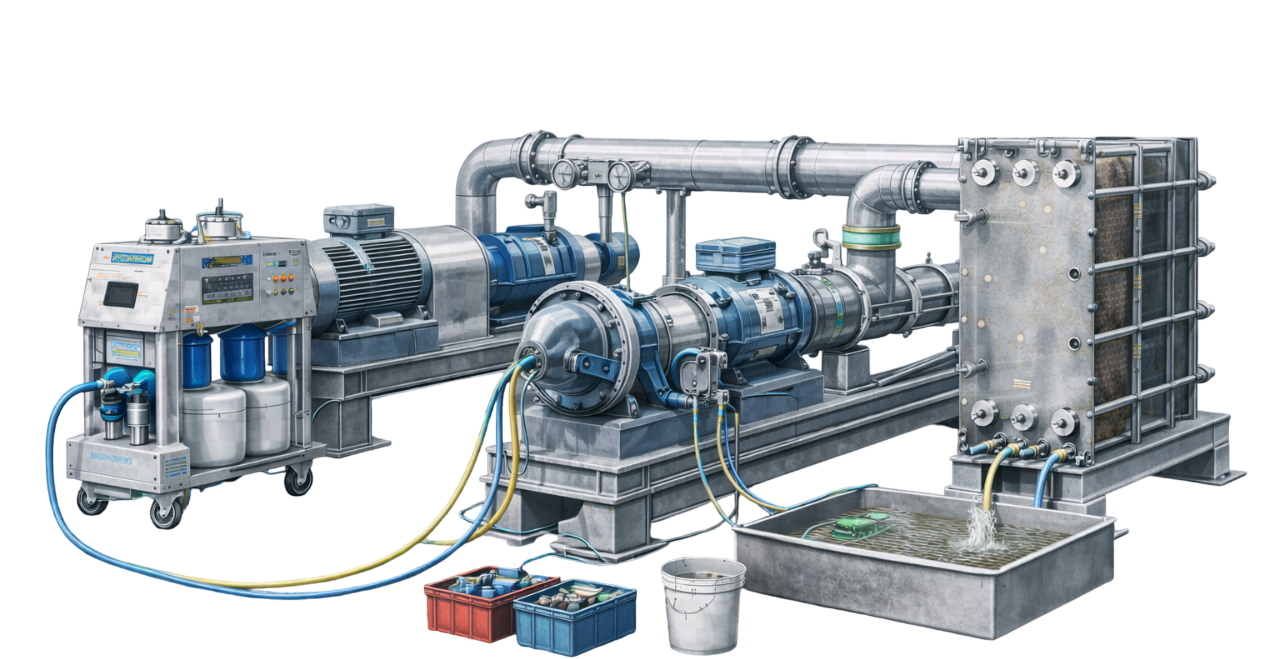
These contaminants commonly occur in:
- Chilled water pipelines
- Condenser water pipelines
- Heating water pipelines
- Process cooling pipelines
- Utility circulation networks
Contamination in HVAC pipelines can cause:
- Reduced fluid flow and pressure drop
- Increased pump energy consumption
- Uneven cooling distribution across AHUs and FCUs
- Heat exchanger fouling
- Pipeline corrosion and structural damage
Compress India provides complete engineering execution services including chemical descaling, pipeline flushing, contamination removal, system neutralization, restoration, and preventive treatment for HVAC pipeline networks.
Why HVAC Pipeline Cleaning Is Critical
HVAC pipelines operate continuously and are exposed to contaminants that accumulate gradually.
Major causes of contamination include:
Mineral scaling from water hardness
Rust formation in steel pipelines
Installation debris and welding residues
Sludge buildup in low-flow areas
Biological growth such as algae and bacteria
If pipelines remain untreated, systems may experience:
Reduced heat transfer efficiency
Pump overload and cavitation risk
System flow imbalance
Frequent maintenance shutdowns
Proper pipeline cleaning restores hydraulic efficiency and system reliability.
Types of HVAC Pipeline Cleaning Methods
Chemical Descaling Cleaning
Chemical solutions are circulated through pipelines to dissolve scale and corrosion deposits.
Common applications include:
- Calcium scale removal
- Rust and oxide removal
- Mineral deposit cleaning
Descaling chemicals restore internal pipe diameter and improve fluid flow.
High Velocity Pipeline Flushing
High-flow water circulation removes loose debris and sludge from the system.
Benefits include:
- Clearing pipeline blockages
- Removing construction debris
- Restoring fluid circulation
High velocity flushing is often used during system commissioning or after chemical cleaning.
Sludge & Sediment Removal
Sludge accumulation occurs in low-flow zones of pipeline networks.
Removal techniques include:
- Chemical sludge dispersants
- Circulation flushing
- Filtration systems
These processes remove accumulated sediment and restore flow capacity.
Biofouling Treatment
Microbial contamination can form biofilms inside pipelines.
Treatment involves:
- Biocide chemical dosing
- Biofilm dissolving agents
- Circulation cleaning
This prevents microbial corrosion and contamination.
System Inspection & Pipeline Analysis
Before cleaning begins, our engineers perform:
- Internal contamination assessment
- Water quality analysis
- Pressure drop measurement
- Flow restriction inspection
- Corrosion severity evaluation
System Inspection & Pipeline Analysis
These diagnostics help determine the correct cleaning method.
Chemical Cleaning Process
The pipeline cleaning process includes:
- System isolation and preparation
- Temporary circulation pump installation
- Chemical dosing and circulation
- Continuous monitoring of cleaning reaction
- Scale dissolution and debris suspension
Chemical Cleaning Process
The cleaning cycle continues until contaminants are fully removed.
Flushing & Neutralization
After chemical cleaning:
- Pipelines are flushed with clean water
- Neutralizing agents restore safe pH levels
- Suspended contaminants are removed from the system
Flushing & Neutralization
This process ensures safe recommissioning.
System Restoration & Performance Verification
After cleaning, we verify system performance through:
- Flow rate testing
- Pressure drop measurement
- Pump performance verification
- Heat transfer efficiency evaluation
System Restoration & Performance Verification
Testing confirms restoration of pipeline efficiency.
Preventive Maintenance & Water Treatment
To prevent recurring contamination, we implement:
- Corrosion inhibitor treatment
- Biocide dosing programs
- Water quality monitoring
- Periodic flushing programs
Preventive Maintenance & Water Treatment
Preventive maintenance helps maintain long-term pipeline health.
Connect with Our HVAC Engineering Team
For professional HVAC pipeline chemical cleaning, descaling, flushing, and hydronic system restoration services, connect with our HVAC engineering team for reliable pipeline maintenance solutions.
Related HVAC Systems & Engineering Services
HVAC Pipeline Cleaning & Descaling is closely associated with:
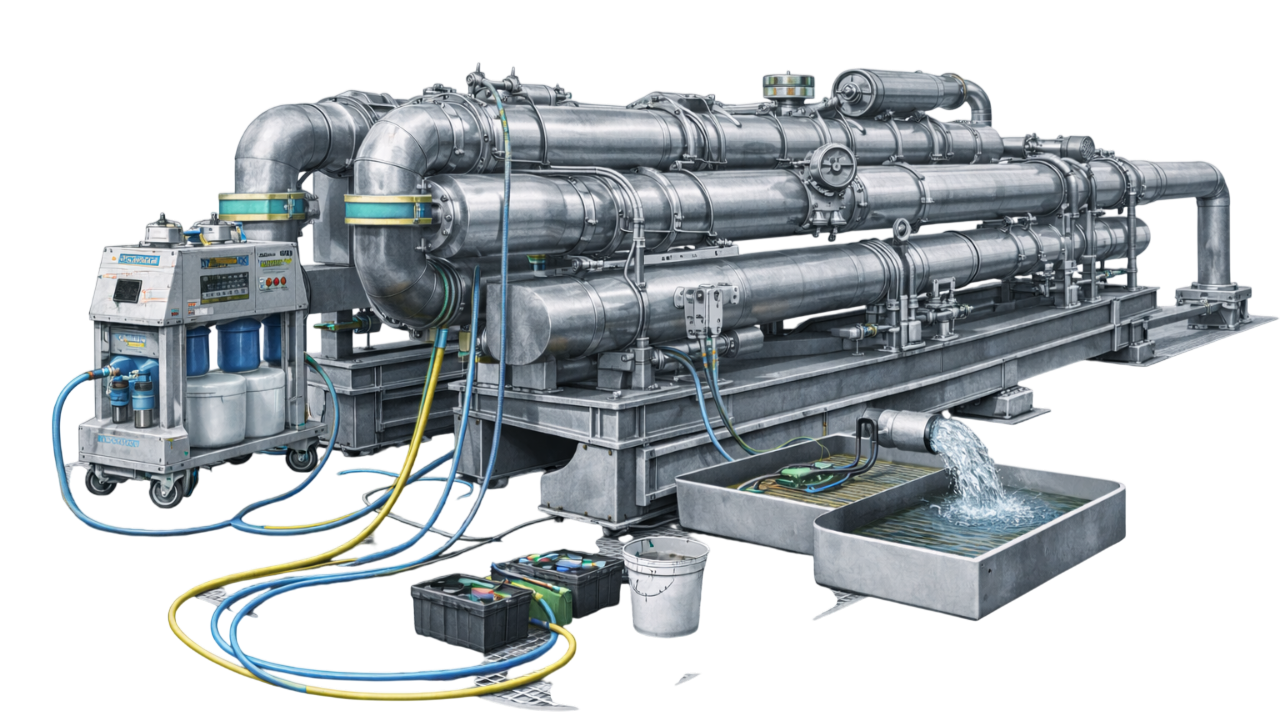
Chilled Water System Cleaning, Descaling & Flushing
Learn More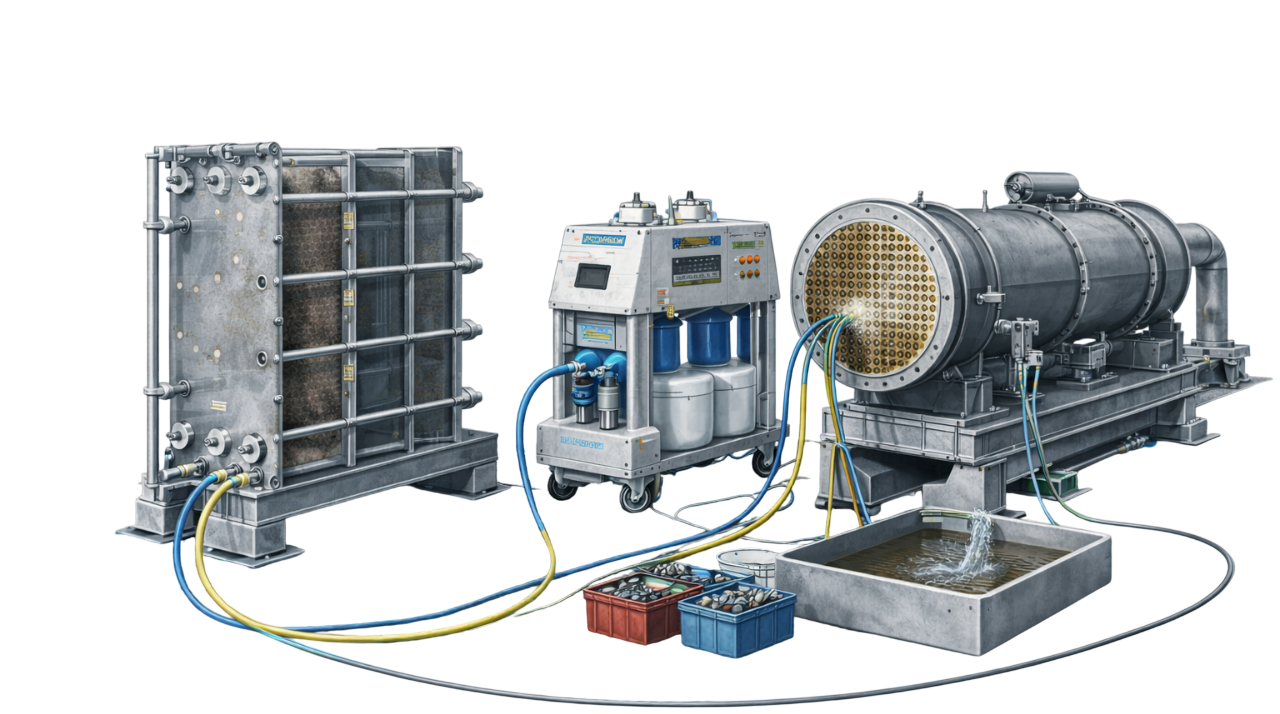
Heat Exchanger & Condenser Descaling
Learn More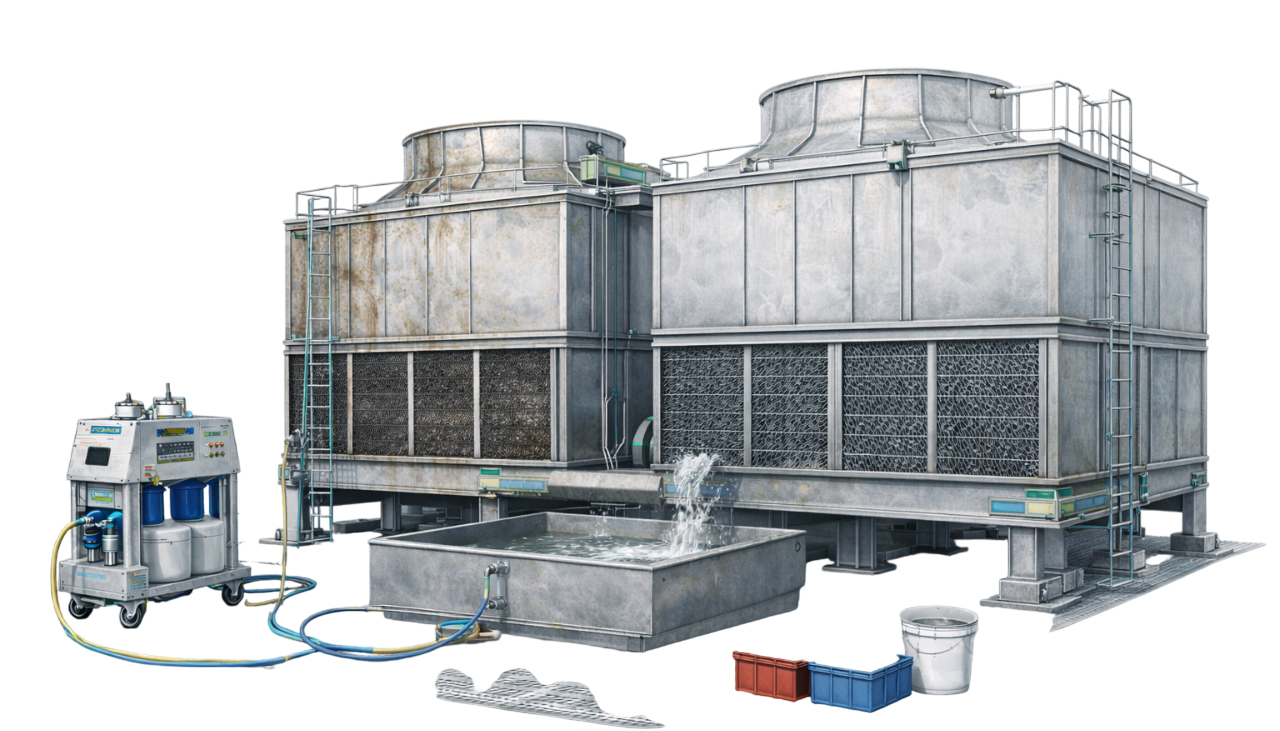
Cooling Tower Cleaning, Descaling & Restoration
Learn More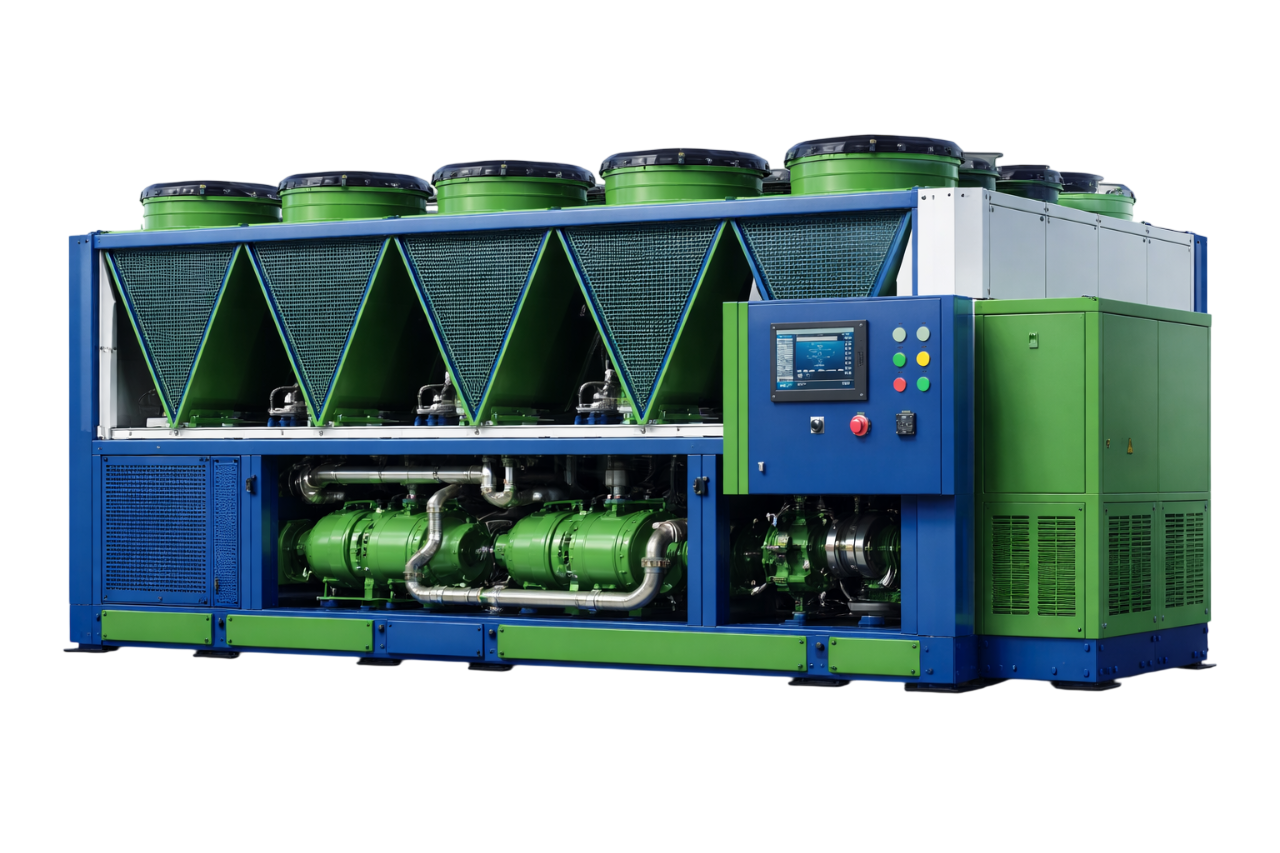
Chiller Plant Systems
Learn More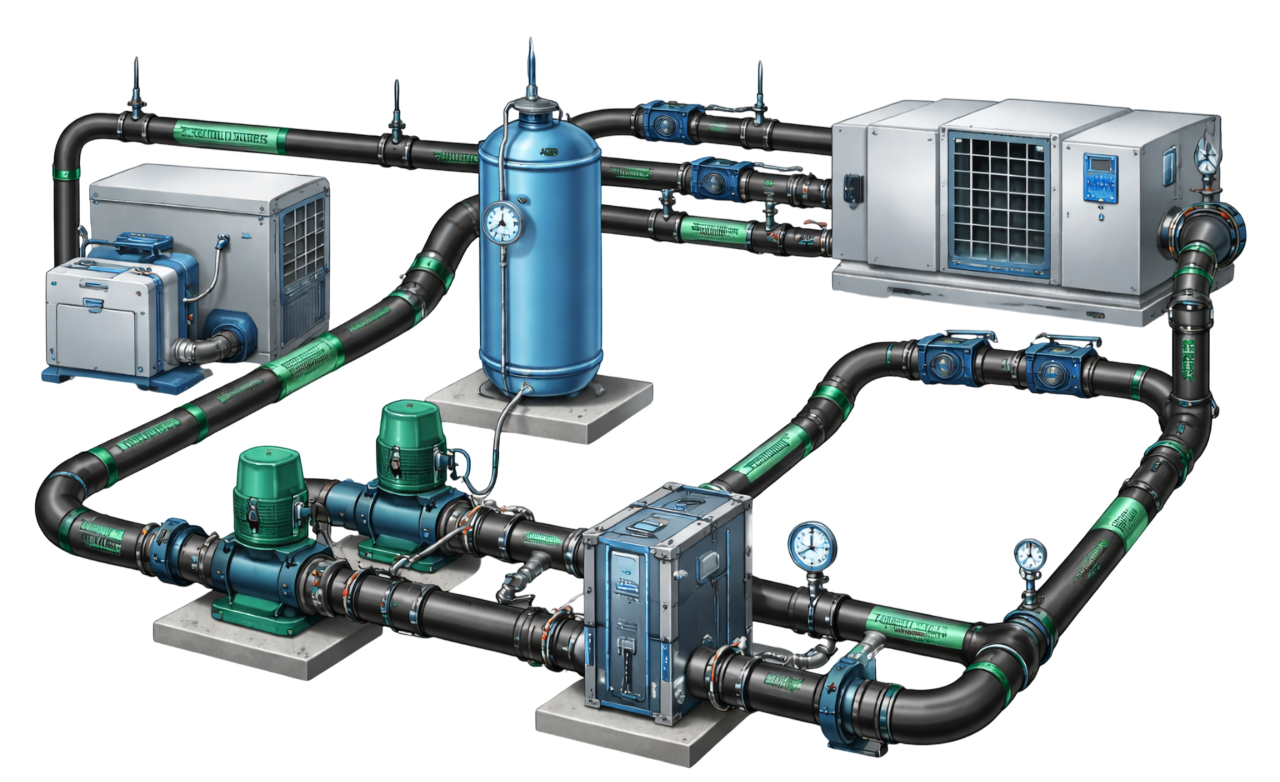
Chilled Water Piping Systems
Learn More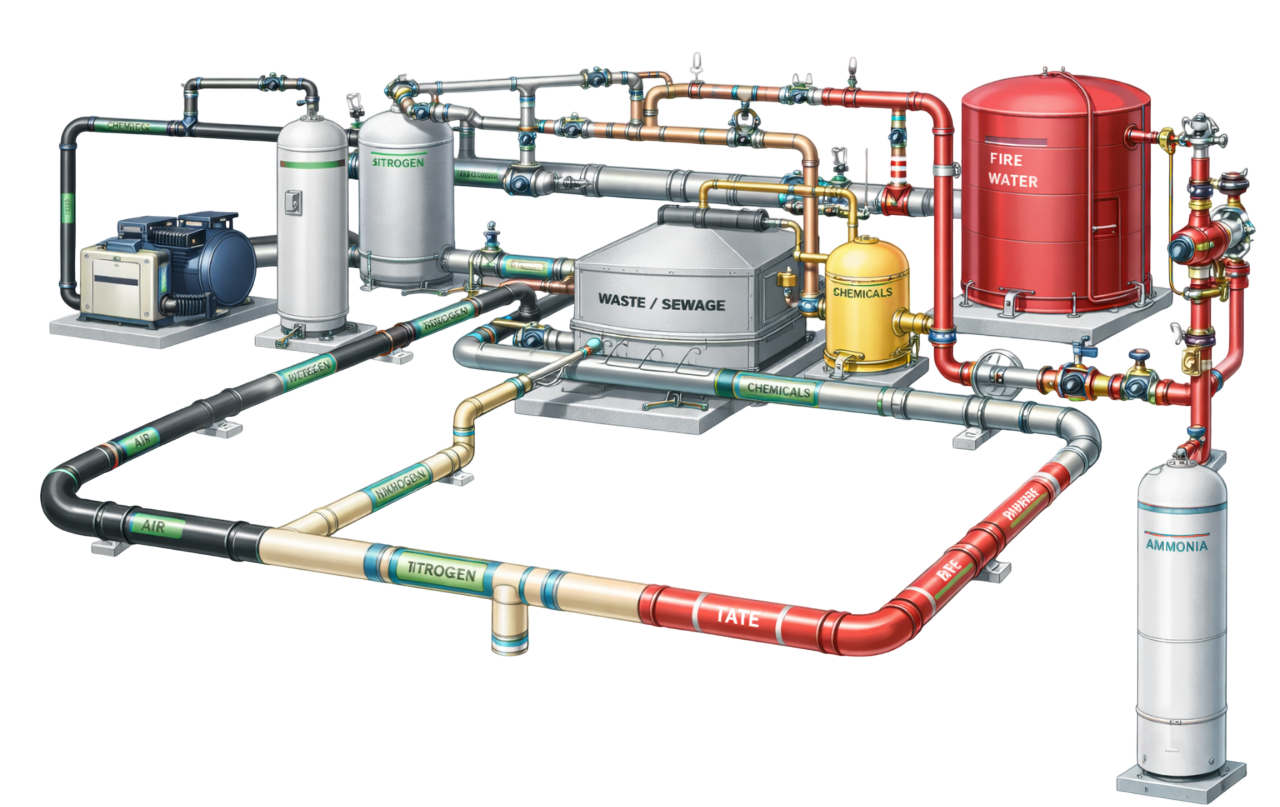
Process & Utility Piping Networks
Learn MoreFrequently Asked Questions
Why is HVAC pipeline cleaning critical?
Over time, pipelines accumulate scale, rust, sludge, and biofilm, which restrict flow, increase energy consumption, cause pressure drops, and lead to equipment inefficiency. Cleaning restores hydraulic performance.
What cleaning methods do you use for pipelines?
We use chemical descaling for scale and rust, high-velocity flushing for debris, sludge removal techniques, and biofouling treatment with biocides to eliminate microbial growth.
How do you assess pipeline contamination?
Our engineers perform internal contamination assessments, water quality analysis, pressure drop measurements, and flow restriction inspections to determine the correct cleaning method.
What does your preventive maintenance include?
We implement corrosion inhibitor treatments, biocide dosing programs, regular water quality monitoring, and periodic flushing programs to prevent recurring contamination.
Is this service suitable for all pipeline materials?
Yes, our cleaning and descaling methods are safe for various pipeline materials including steel, copper, and other metals commonly used in HVAC systems, with chemicals selected to be non-damaging.
How do you verify the success of pipeline cleaning?
We perform flow rate testing, pressure drop measurement, pump performance verification, and heat transfer efficiency evaluation to confirm the restoration of pipeline efficiency.
How long does pipeline cleaning take?
The duration depends on the system size and contamination level. After our initial inspection, we provide a detailed timeline. Most projects are completed efficiently with minimal disruption.
Are the cleaning chemicals safe for my system?
Yes, we use specialized descaling and cleaning chemicals that are effective against deposits but safe for system metallurgy. The process is carefully monitored and followed by thorough neutralization.