Tower / Vertical Fan Coil Units (FCU) – Dedicated Zone Cooling Units
(Supply, Installation, Commissioning, Service & AMC for Chilled Water Tower & Vertical FCUs)
Supply, Installation, Commissioning, Service & AMC for Chilled Water Tower & Vertical FCUs
Not every room has space for a false ceiling or a wall-mounted unit. Heritage buildings, glass-fronted offices, hotel rooms, and apartments often need a cooling solution that works from the floor. Dedicated Zone Cooling Units – (FCU): Tower / Vertical Units are the answer. They are floor standing, easy to install and service, and powered by an efficient central chilled water plant.
A vertical fan coil unit looks similar to a floor standing tower AC, but instead of refrigerant and an outdoor unit, it runs on chilled water from the building's chiller. Compress India supplies, installs, commissions, and maintains chilled water tower and vertical FCUs for hotels, hospitals, offices, apartments, and retrofit buildings, giving every zone quiet, efficient, and independently controlled comfort.
Planning a new project or replacing old units? Share your requirements with Compress India and get a technical proposal and quotation.
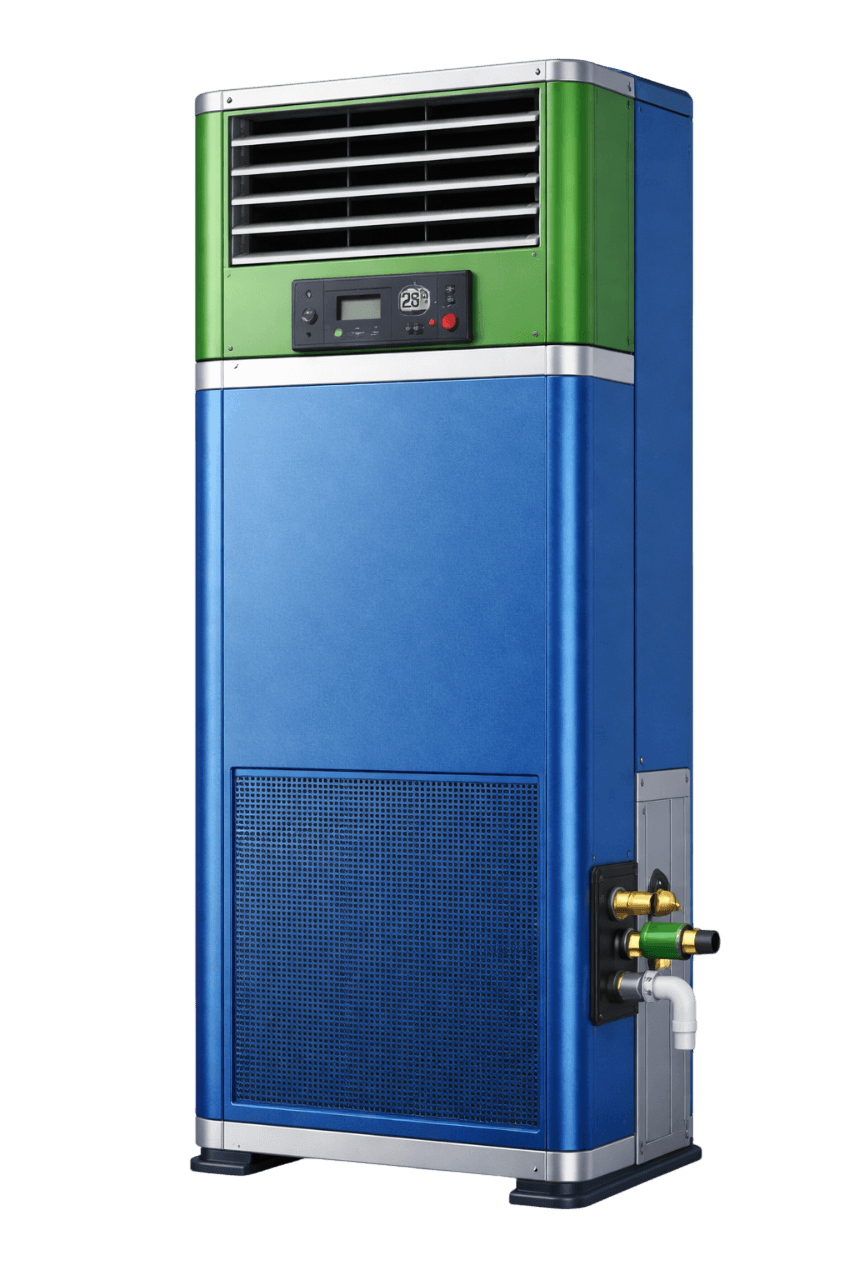
Compress India offers complete solutions for tower and vertical fan coil units, handled by one experienced team:
- Supply: Floor standing tower FCUs, exposed cabinet units, concealed and recessed vertical FCUs, console units, vertical stack FCUs, 2 pipe and 4 pipe models, and EC motor FCUs from leading brands.
- Installation: Floor fixing, chilled water piping, valve kits, insulation, condensate drain, and electrical wiring.
- Commissioning: Flushing, air venting, valve setting, airflow checks, and thermostat or BMS testing.
- Service & AMC: Preventive vertical FCU maintenance, breakdown support, retrofits, and annual maintenance contracts.
What Is a Tower / Vertical Fan Coil Unit (FCU)?
A tower or vertical fan coil unit (FCU) is a floor standing FCU that cools a room or zone using chilled water from a central chiller plant. Room air enters through a lower return grille, passes over a chilled water coil, and is discharged upward or forward through louvers.
Also known as a tower fan coil unit, floor standing fan coil unit, floor mounted FCU, or hydronic vertical fan coil unit, it looks similar to a DX vertical AC unit from the room side. The key difference is that a chilled water vertical FCU has no compressor and no outdoor unit. It is connected to the building's central chilled water system, which makes it quieter and more efficient in buildings with a central plant.
In simple terms, a vertical cooling unit on chilled water gives each zone floor-level convenience, backed by the efficiency of central chilled water cooling.
Role of Vertical FCUs in Dedicated Zone Cooling
In a central chilled water system, the chiller plant produces chilled water for the whole building. AHUs usually serve large areas and fresh air, while FCUs cool individual zones.
As a zone cooling fan coil unit, each vertical FCU has its own thermostat, valve, and fan control. This allows:
- Room-wise temperature control for hotel rooms, cabins, wards, and apartments.
- Targeted perimeter cooling near glass facades, where heat gain is highest.
- Efficient central plant operation, with chilled water supplied only where needed.
This makes the floor standing FCU for dedicated zone cooling a practical choice for buildings where ceiling or wall installation is not possible.
How a Tower / Vertical FCU Works
Chilled Water Supply from the Central Plant
Chilled water, typically around 7°C, is pumped from the central chiller plant to each vertical FCU through insulated supply pipes, with warmer water returning to the plant.
Room Air Drawn Through the Lower Return Grille
The blower pulls room air in through a return grille at the bottom or front of the unit, then through the air filter.
Air Cooled Across the Chilled Water Coil
The filtered air passes across the vertical FCU cooling coil, where chilled water absorbs heat and removes moisture.
Vertical Air Discharge Through Top or Front Louvers
Cooled air is discharged upward through top louvers or forward through front grilles. Upward discharge is especially effective near windows, where it counters heat gain from glass.
Control Valve & Thermostat Regulating Cooling
The vertical FCU thermostat senses room temperature and signals the vertical FCU control valve and fan to maintain the set temperature.
Condensate Drain Removal
Condensate from the coil collects in the vertical FCU drain pan and flows out through a sloped drain line to a floor or wall drain point.
Main Components of a Tower / Vertical FCU
Floor-Standing Cabinet
Exposed units have a finished, powder-coated cabinet designed to look neat in the room. Concealed units have a basic chassis designed to fit inside a wall recess, cupboard, or enclosure.
Chilled Water Cooling Coil
The chilled water coil FCU section uses copper tubes and aluminium fins, selected to deliver the required cooling capacity at the building's chilled water conditions.
Centrifugal Blower & Motor (AC / EC)
The vertical FCU fan is typically a centrifugal blower driven by a standard AC motor as a 3 speed fan coil unit, or by an EC motor for variable speed and lower energy use.
Air Filter
A washable vertical FCU air filter at the return grille traps dust and protects the coil, improving indoor air quality.
Drain Pan
An insulated, sloped drain pan collects condensate below the coil and directs it to the drain connection.
Control Valve & Actuator
A two-way, three-way, or PICV valve with an actuator controls chilled water flow based on the thermostat signal.
Thermostat / Controller
A unit-mounted controller, wall thermostat, remote, or BMS-connected vertical fan coil controller manages temperature, fan speed, and operating mode.
Discharge Grille & Louvers
Top or front discharge grilles with adjustable louvers direct airflow for comfortable, even cooling across the room.
Tower / Vertical FCU vs DX Tower AC
- Cooling Source: A vertical FCU uses chilled water from a central plant; a DX tower AC, or vertical split air conditioner, uses refrigerant and its own compressor.
- Outdoor Unit: A vertical FCU needs no outdoor unit; every vertical split AC unit needs an outdoor condenser.
- Piping: FCUs use chilled water piping; DX tower ACs need refrigerant piping to each unit.
- Efficiency: In buildings with a central chiller, chilled water vertical FCUs are usually more efficient than multiple DX vertical air conditioning units.
- Noise: FCUs have no compressor at the room level, so they run quieter.
- Best For: Chilled water vertical FCUs for hotels, hospitals, offices, and apartments with central plant; DX floor standing ACs for standalone spaces without a chiller.
When comparing vertical FCU vs floor standing AC, the deciding factor is whether the building has, or plans to have, a central chilled water system. Compress India can help you evaluate both.
Types of Tower / Vertical FCUs
Floor-Standing Tower FCUs
Tall, slim tower units with upward or front discharge are suited to offices, lobbies, and larger rooms where strong air throw is needed.
Exposed Cabinet Vertical FCUs
An exposed vertical fan coil unit, also called a cabinet fan coil unit, has a finished cabinet that stands against the wall or below a window. It is quick to install and easy to service.
Concealed Vertical FCUs
A vertical concealed fan coil unit is installed inside a wall recess, cupboard, or enclosure, with only grilles visible. A recessed vertical FCU gives a cleaner interior finish where ceiling space is not available for a horizontal fan coil unit.
When comparing exposed vertical FCU vs concealed vertical FCU, exposed units are simpler and cheaper to install, while concealed units deliver a premium, hidden look.
Console / Low-Height Floor FCUs
Low-height console units fit under windows or along perimeter walls. An under window fan coil unit counters heat gain from glass and keeps the view unobstructed.
Vertical Stack FCUs for Hotels & Apartments
Vertical stack FCUs have factory-fitted riser pipes and are installed one above the other on successive floors in hotels and apartment towers. This reduces site piping, speeds up installation, and simplifies the building's chilled water distribution.
2-Pipe vs 4-Pipe Vertical FCUs
A 2 pipe vertical fan coil unit has one supply and one return connection and usually provides cooling only. A 4 pipe vertical fan coil unit has separate chilled water and hot water circuits, allowing cooling or heating at any time. 2-pipe units suit most Indian applications, while 4-pipe units suit hospitals, premium hotels, and cooler regions.
AC Motor vs EC Motor Vertical FCUs
AC motor units use standard multi-speed motors. An EC motor vertical FCU uses an electronically commutated motor for lower energy use and smoother, quieter speed control.
Tower / Vertical FCU Capacity & Selection Guide
Common Vertical FCU Capacities (TR & CFM)
Vertical FCUs are commonly available from about 0.75 TR to 4 TR, with airflow of roughly 250 to 1,400 CFM. Console units cover the lower end, while tower units cover the higher end. Exact ranges vary by brand and model.
Area vs FCU Capacity
Vertical FCU sizing depends on area, occupancy, glass exposure, lighting, and equipment load. Compress India carries out heat load calculations for accurate vertical FCU selection and cooling capacity for each zone.
Air Throw & Discharge Direction
Upward discharge works best near windows and glass facades, while front discharge suits rooms where air needs to reach deeper into the space. Vertical FCU airflow and throw are matched to the room layout.
Chilled Water Temperature & Coil Rows
Actual capacity depends on chilled water supply and return temperatures. Coil rows are selected to deliver the required output at your building's chilled water conditions.
Fan Speed Settings & Noise Levels
Since the unit sits inside the room, a low noise vertical FCU is selected to meet the cooling load comfortably on medium or low speed, especially for hotel rooms, bedrooms, and wards.
Control Valves for Vertical FCUs
On/Off Two-Way Valves
A 2 way valve FCU setup opens or closes chilled water flow based on the thermostat, supporting variable flow systems and saving pump energy.
Three-Way Valves
A 3 way valve FCU setup bypasses water around the coil when cooling is not needed. It keeps flow constant but offers lower energy savings.
PICVs for Vertical FCUs
A PICV for vertical FCU combines balancing and control in one valve. A vertical FCU with PICV maintains stable room temperatures and simplifies commissioning.
Balancing Valves & Strainers
A vertical FCU balancing valve sets the design flow for each unit, while strainers protect the coil and valve from debris.
Vertical FCU Controls & Thermostats
Unit-Mounted & Wall Thermostats
Controls can be mounted on the unit itself for easy access, or on the wall for more accurate room temperature sensing.
Wireless Remote Controls
Remote controls offer convenient operation in hotel rooms, apartments, and cabins.
Fan Speed Control (Low / Medium / High / Auto)
Occupants can select fan speed manually or use auto mode, where the controller adjusts speed based on room load.
BMS-Connected FCU Controllers
A vertical FCU with BMS integration enables central monitoring, scheduling, setpoint limits, and fault alarms across the building.
Occupancy & Keycard Integration for Hotels
In hotel rooms, the vertical FCU can be linked to keycard switches or occupancy sensors to set back temperatures when guests leave.
Energy Efficiency in Vertical FCUs
EC Motor Energy Savings
EC motors consume significantly less power, especially at low and medium speeds, where vertical FCUs run most of the time.
Variable Flow with Two-Way Valves / PICVs
Two-way valves and PICVs enable variable flow chilled water systems, reducing pumping energy and improving chiller efficiency.
Setpoint & Schedule Control
Setpoint limits, schedules, and occupancy control prevent overcooling. Together, these features make an energy efficient vertical FCU system.
Benefits of Tower / Vertical FCUs
No False Ceiling Required
Vertical FCUs stand on the floor, making them ideal for rooms without a false ceiling or with high, exposed ceilings.
Easy Installation & Service Access at Floor Level
Filters, coils, valves, and drains are all reachable at floor level, so no ladders or ceiling access panels are needed.
Ideal Where Wall or Ceiling Space Is Limited
Where walls are glazed or ceilings are decorative, vertical FCUs provide cooling without affecting the architecture.
Perimeter Cooling Near Glass Façades
Placed below or beside windows, vertical FCUs counter solar heat gain at the source, improving comfort near glass.
Individual Zone Temperature Control
Each unit has its own thermostat and valve, allowing independent comfort in every room.
No Outdoor Unit or Refrigerant Piping
Unlike DX tower units, vertical FCUs need no outdoor condenser and no refrigerant piping inside the building.
Quick Retrofit in Existing Buildings
Vertical FCUs can be added to existing buildings with minimal civil work, making them ideal for renovation projects.
Limitations of Tower / Vertical FCUs
Requires a Central Chilled Water System
Vertical FCUs need a chiller plant or district cooling supply to operate.
Occupies Floor Space
The unit takes up some floor area, which must be considered in space planning.
Visible Unit in the Room
Exposed units are visible. Where aesthetics are critical, concealed or recessed units are recommended.
Limited Air Throw in Large Halls
Vertical FCUs suit rooms and perimeter zones. Large halls are better served by cassette FCUs, ducted FCUs, or AHUs.
No Fresh Air Without Separate Provision
Vertical FCUs recirculate room air. Fresh air must be supplied through a separate treated fresh air system.
Compress India plans unit placement, concealment, and fresh air provisions from the start, so these limitations are easily managed.
Tower / Vertical FCU vs Hi Wall FCU
- Installation: Vertical FCUs stand on the floor; hi wall FCUs mount high on the wall.
- Service Access: Vertical FCUs are serviced at floor level; hi wall FCUs need a ladder.
- Air Discharge: Vertical FCUs discharge upward or forward; hi wall FCUs throw air downward from above.
- Space: Vertical FCUs use floor space; hi wall FCUs use wall space.
- Best For: Vertical FCUs for glazed walls, perimeter zones, and heritage buildings; hi wall FCUs for rooms with free wall space.
Tower / Vertical FCU vs Cassette FCU
- Installation: Vertical FCUs need no false ceiling; cassette FCUs require one.
- Air Distribution: Cassettes spread air in four directions from the ceiling; vertical FCUs discharge from the floor.
- Maintenance: Vertical FCUs are easier to service at floor level.
- Space: Cassettes save floor and wall space; vertical FCUs occupy floor area.
- Best For: Vertical FCUs for rooms without false ceilings and perimeter zones; cassette FCUs for open offices and large rooms with false ceilings.
Where Tower / Vertical FCUs Are Used
Hotel Rooms & Suites
A vertical FCU for hotels, whether a concealed unit in a wall recess or a vertical stack unit, delivers quiet, individually controlled comfort with keycard integration.
Hospital Rooms & Wards
Vertical FCUs provide quiet cooling in private rooms and wards, with easy floor-level cleaning and maintenance.
Offices & Cabins
A vertical FCU for offices cools cabins and perimeter workspaces, especially near glass facades.
Residential Apartments with Central Chilled Water
A vertical FCU for apartments suits residential towers and district cooling projects. It offers the convenience of a vertical AC for home, without outdoor units on the facade.
Perimeter Zones Near Glass Façades
Console and under-window units counter solar heat gain along glazed walls in offices, showrooms, and lounges.
Heritage & Retrofit Buildings Without False Ceilings
In heritage and older buildings, vertical FCUs add central chilled water cooling without altering ceilings or architectural features.
Lobbies & Waiting Areas
Tower units provide strong airflow in lobbies, reception areas, and waiting lounges. As a vertical FCU for commercial buildings, it adapts to a wide range of spaces.
Top Tower / Vertical FCU Brands in India
Several reputed HVAC brands offer tower and vertical FCUs in India. Compress India supplies and installs units from leading brands based on your project needs, budget, and specifications.
Blue Star
Blue Star is a well-known Indian HVAC brand offering chilled water fan coil units, including floor standing models, for commercial and hospitality projects.
Voltas
Voltas offers fan coil units, including floor standing options, as part of its central air conditioning range.
Daikin
Daikin offers chilled water floor standing and vertical fan coil units for hotels, offices, and residences.
Carrier
Carrier provides vertical and floor standing fan coil units for chilled water systems in commercial and hospitality buildings.
Trane
Trane offers vertical FCUs designed for commercial and institutional buildings with central chilled water plants.
Johnson Controls (York)
Johnson Controls, through its York range, offers vertical and floor standing FCUs for central chilled water systems.
Other FCU Brands
Several other floor standing FCU manufacturers and specialised suppliers offer quality units. Compress India recommends the most suitable brand and model based on capacity, noise levels, aesthetics, and service support.
Tower / Vertical FCU Installation Guide
Correct vertical FCU installation ensures quiet, leak-free, and efficient performance. Compress India follows a proven installation process.
Choosing the Right Floor Location
Units are placed near windows or perimeter walls for effective air throw, with clear access for maintenance and a practical route for piping and drainage.
Floor Fixing & Levelling
The unit is fixed securely to the floor or wall and levelled with a slight slope towards the drain for proper condensate flow.
Chilled Water Piping Connections & Valve Kit
Supply and return pipes are connected through a valve kit with isolation valves, a strainer, and a control valve. Riser connections are used for vertical stack units.
Pipe Insulation & Vapour Barrier
All chilled water pipes, valves, and fittings are insulated with a continuous vapour barrier to prevent condensation on floors and walls.
Condensate Drain Slope & Disposal
The drain line is laid with a continuous slope to a floor trap or drain point, avoiding sags that trap water.
Electrical & Thermostat Wiring
Power, thermostat, and BMS wiring are installed safely and neatly.
Flushing, Air Venting & Testing
The piping is flushed to remove debris, air is vented from the coil, and the system is pressure tested and checked for leaks before commissioning.
Tower / Vertical FCU Service, Maintenance & AMC
Regular maintenance keeps vertical FCUs efficient, quiet, and hygienic. Compress India offers preventive maintenance and AMC plans for vertical FCUs in hotels, hospitals, offices, and residential buildings.
Filter Cleaning Frequency
Filters should typically be cleaned every two to four weeks, depending on dust levels and usage. Floor-level units can collect more dust, so regular cleaning is important.
Coil & Blower Cleaning
Periodic coil and blower cleaning restores cooling performance, reduces noise, and prevents odours.
Drain Pan & Drain Line Cleaning
The drain pan and drain line are cleaned and flushed to prevent choking and floor leakage.
Valve & Actuator Checks
Control valves and actuators are checked for correct operation, leaks, and response to thermostat signals.
Comprehensive vs Non-Comprehensive AMC
- Comprehensive AMC: Covers scheduled maintenance plus specified spare parts, with predictable annual costs.
- Non-Comprehensive AMC: Covers scheduled maintenance and service visits, with spare parts charged separately.
Common Tower / Vertical FCU Problems & Solutions
Water Leakage onto the Floor
Causes: blocked drain, wrong slope, cracked drain pan, or poor pipe insulation.
Solution: Clean the drain, correct the slope, repair the pan, and fix insulation.
Vertical FCU Not Cooling
Causes: closed or stuck valve, air in the coil, dirty filter or coil, or low chilled water supply.
Solution: Check the valve, vent air, clean the filter and coil, and verify chilled water flow and temperature.
Weak Airflow
Causes: clogged filter, dirty blower, blocked return grille, or low fan speed.
Solution: Clean the filter and blower, clear the grille, and adjust fan speed.
Condensation on Pipes & Valves
Causes: damaged insulation or gaps in the vapour barrier.
Solution: Re-insulate pipes and valves and seal joints properly.
Noise from the Blower
Causes: dirty blower, worn bearings, loose panels, or high fan speed.
Solution: Clean the blower, replace bearings, tighten panels, and adjust speed.
Bad Smell from the Unit
Causes: stagnant water in the drain pan, dirty coil, or microbial growth.
Solution: Clean and sanitize the coil, pan, and drain line, and follow a regular cleaning schedule.
Valve Stuck or Actuator Failure
Causes: dirt in the valve, actuator motor failure, or wiring faults.
Solution: Clean or replace the valve and repair or replace the actuator.
Tower / Vertical FCU Retrofit & Upgrades
Replacing Old Vertical FCUs
Ageing, noisy, or inefficient units can be replaced with modern vertical FCUs that deliver better cooling, lower noise, and lower energy use.
EC Motor Upgrades
Switching to EC motor units cuts fan energy significantly and provides quieter operation.
Adding PICVs & Smart Thermostats
Upgrading to PICVs and smart or BMS-connected thermostats improves temperature stability and energy savings.
Replacing DX Tower ACs with Chilled Water Vertical FCUs
Buildings with many DX tower units can move to a central chiller with chilled water vertical FCUs. This removes outdoor units, reduces refrigerant use, and lowers long-term running costs.
Tower / Vertical FCU Price in India
The vertical FCU price in India depends on capacity, cabinet type, motor type, valve kit, controls, and installation scope. Compress India provides a detailed quotation after understanding your requirements.
Vertical FCU Price by Capacity
Higher capacity tower units cost more than smaller console units. Concealed and vertical stack units are priced differently from exposed cabinet units, and EC motor models cost more upfront but save energy over their life.
Valve Kit & Installation Cost
Valve kits, PICVs, thermostats, chilled water piping, insulation, drain lines, recess or enclosure work, and electrical wiring make up a significant part of the total installed cost.
Factors Affecting Price
Brand, exposed or concealed design, 2-pipe or 4-pipe configuration, motor type, valve type, BMS integration, and site conditions all affect the final price.
Share your room list and layout with Compress India to receive an accurate vertical FCU quotation.
Tower / Vertical FCU Supply, Installation & Service in Mumbai, Navi Mumbai & Thane
As an experienced vertical FCU supplier, Compress India provides supply, installation, commissioning, service, and AMC across Mumbai, Navi Mumbai, and Thane. We understand the humid climate of the region and focus on proper insulation and drainage for leak-free and condensation-free performance.
Whether you are fitting out a hotel, cooling a glass-fronted office, or retrofitting a heritage building, our local team offers fast site visits and reliable support.
Why Choose Compress India for Tower / Vertical FCUs?
Chilled Water System Design
We design the complete chilled water system, including piping, pumping, and valves, so every vertical FCU receives the right flow.
FCU Selection & Multi-Brand Supply
We work with leading brands and recommend the right tower, console, concealed, or stack unit for each zone based on load, aesthetics, noise, and budget.
Chilled Water Piping & Insulation Execution
Our team executes piping, insulation, and drain lines with quality workmanship to prevent leaks and condensation.
Valve & Thermostat Integration
We install and integrate valves, actuators, thermostats, and BMS controllers for accurate zone control.
Flushing, Balancing & Commissioning
Every system is flushed, vented, balanced, and commissioned to deliver design cooling in every room.
AMC & Retrofit Support
We provide preventive maintenance, AMC plans, and retrofit upgrades to keep your vertical FCUs efficient and trouble-free.
Get a Tower / Vertical FCU Solution from Compress India
Need floor-level, quiet, room-by-room cooling without a false ceiling? Compress India delivers complete chilled water vertical fan coil unit solutions, from selection and supply to installation, commissioning, and long-term service.
Connect with Our HVAC Team
Share your project details, room list, or current FCU issues with our team. Call us or fill in the enquiry form to schedule a site visit and receive a detailed technical proposal and quotation.
Related Chiller, Piping & FCU Solutions
Along with vertical FCUs, Compress India offers chillers, chilled water piping, hi wall, cassette, and ducted FCUs, AHUs, treated fresh air units, and complete central air conditioning solutions.
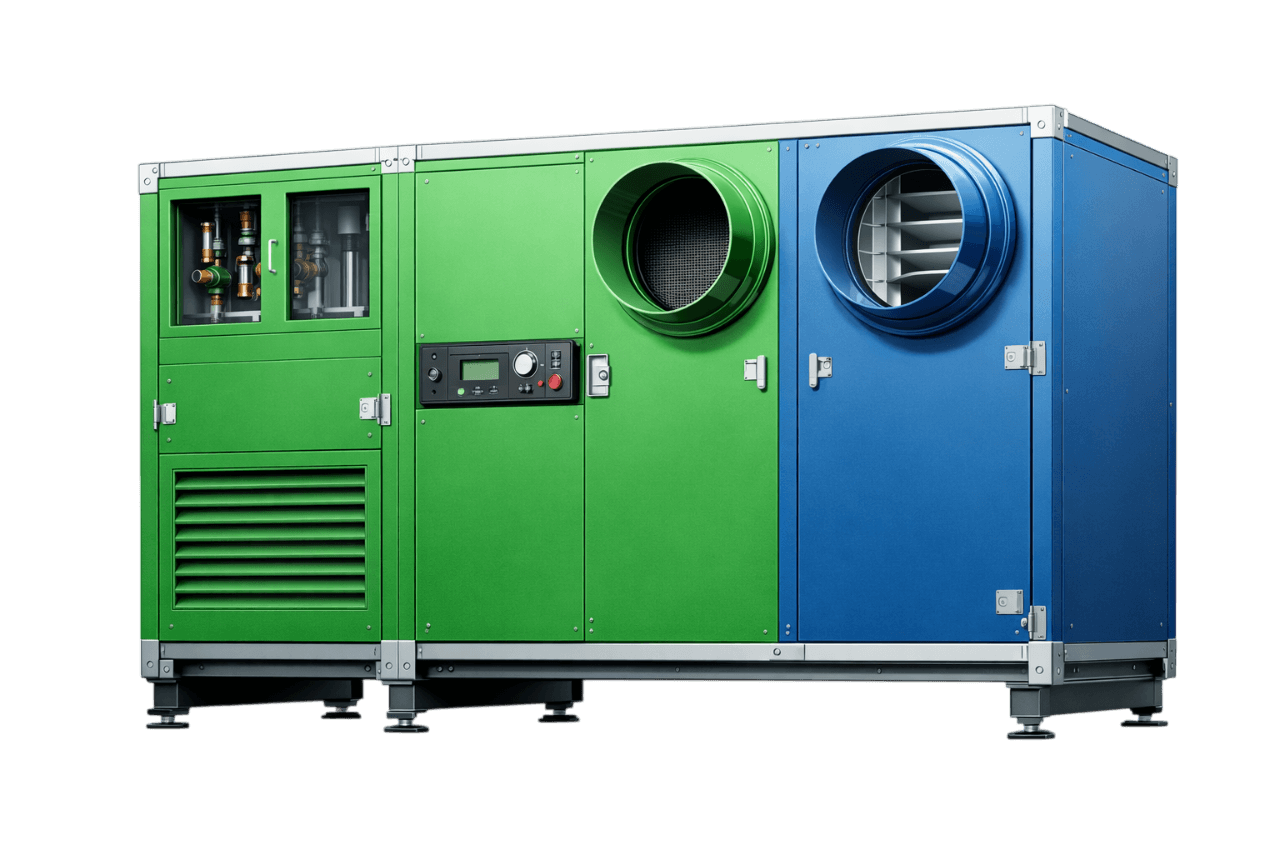
Floor Mounted Air Handling Units
Learn More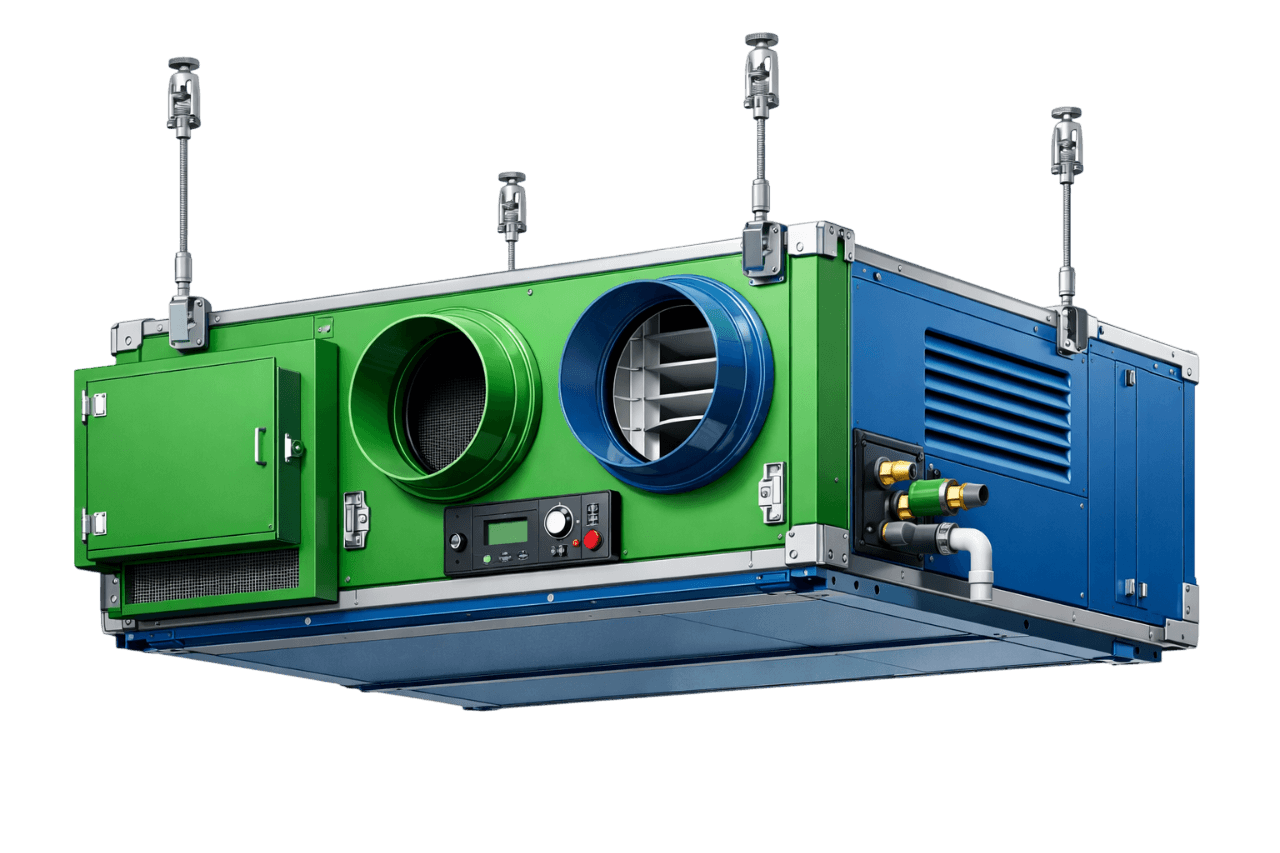
Ceiling Suspended Air Handling Units
Learn More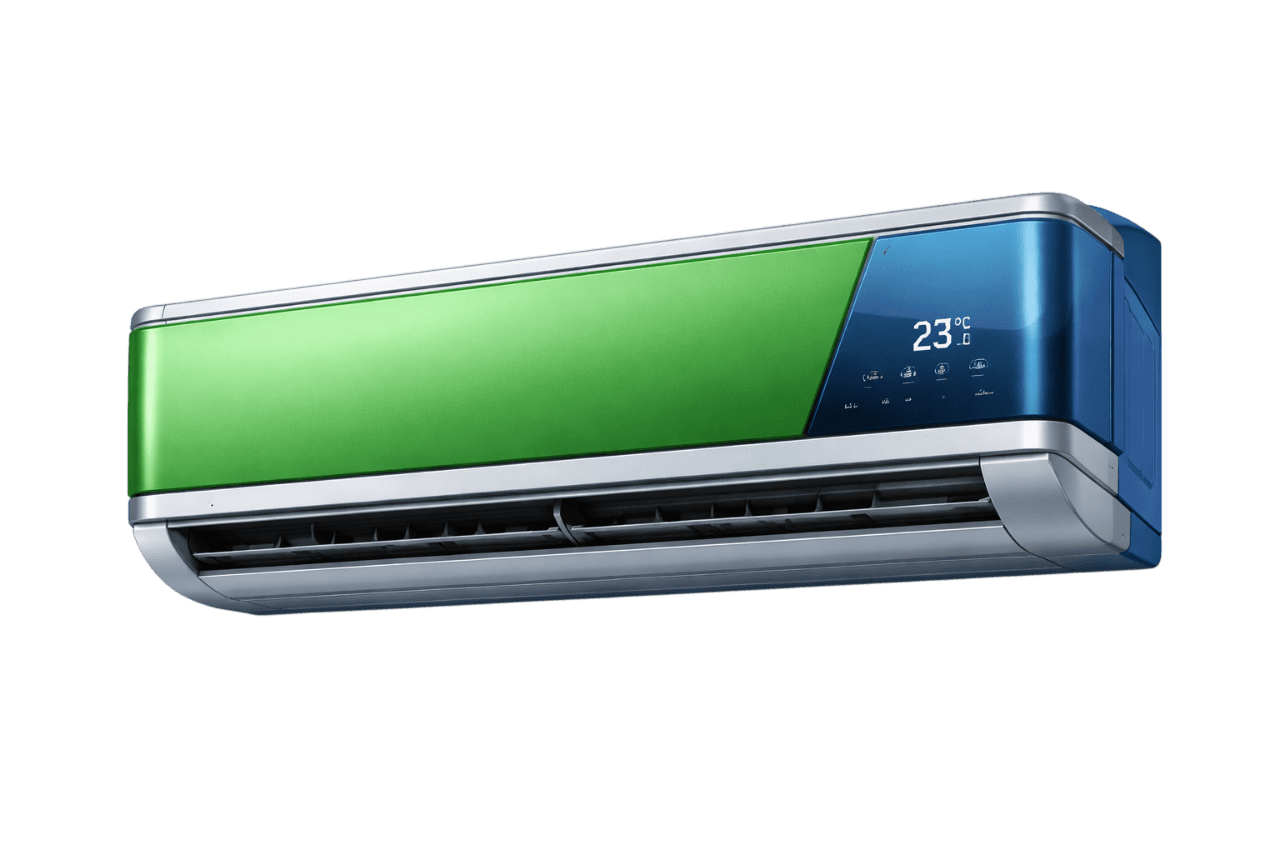
Split / Hi Wall Units
Learn More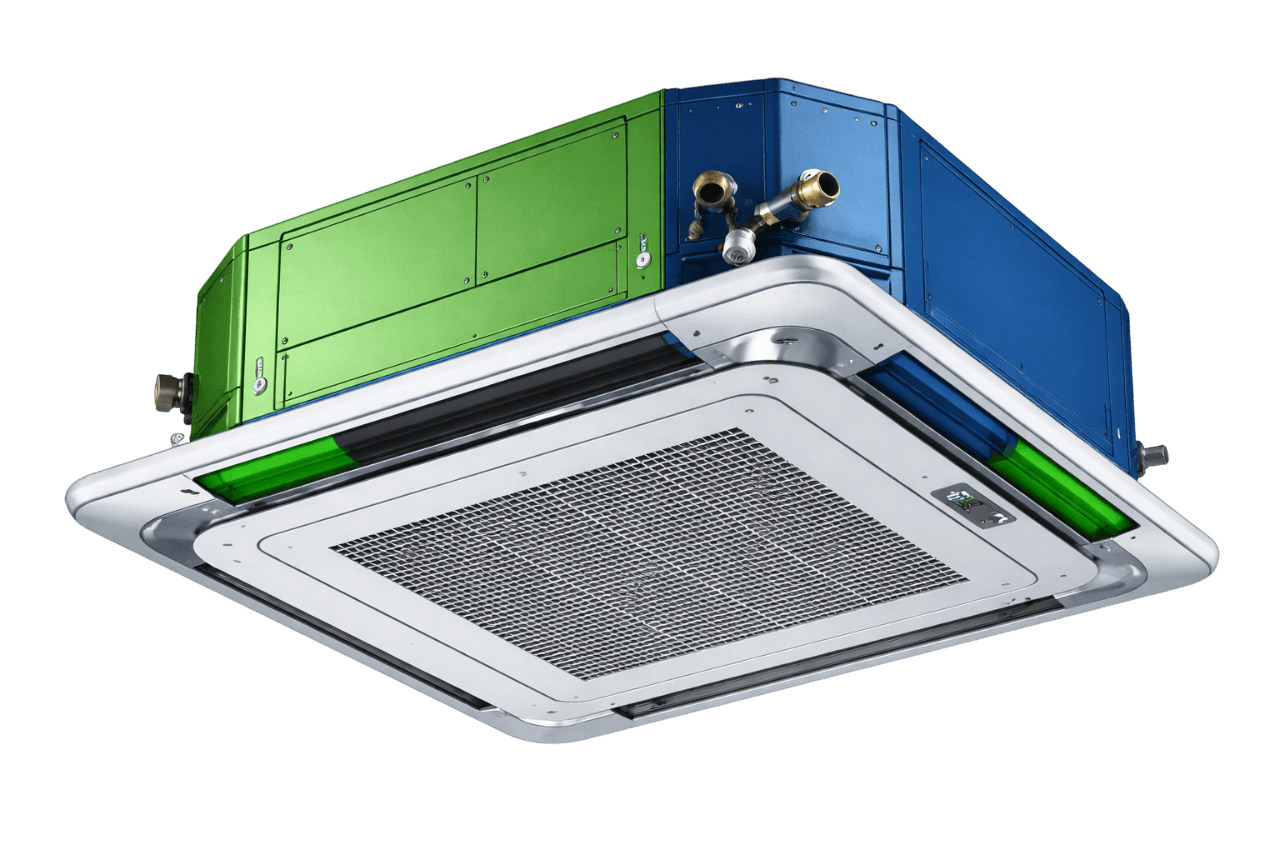
Cassette Units
Learn More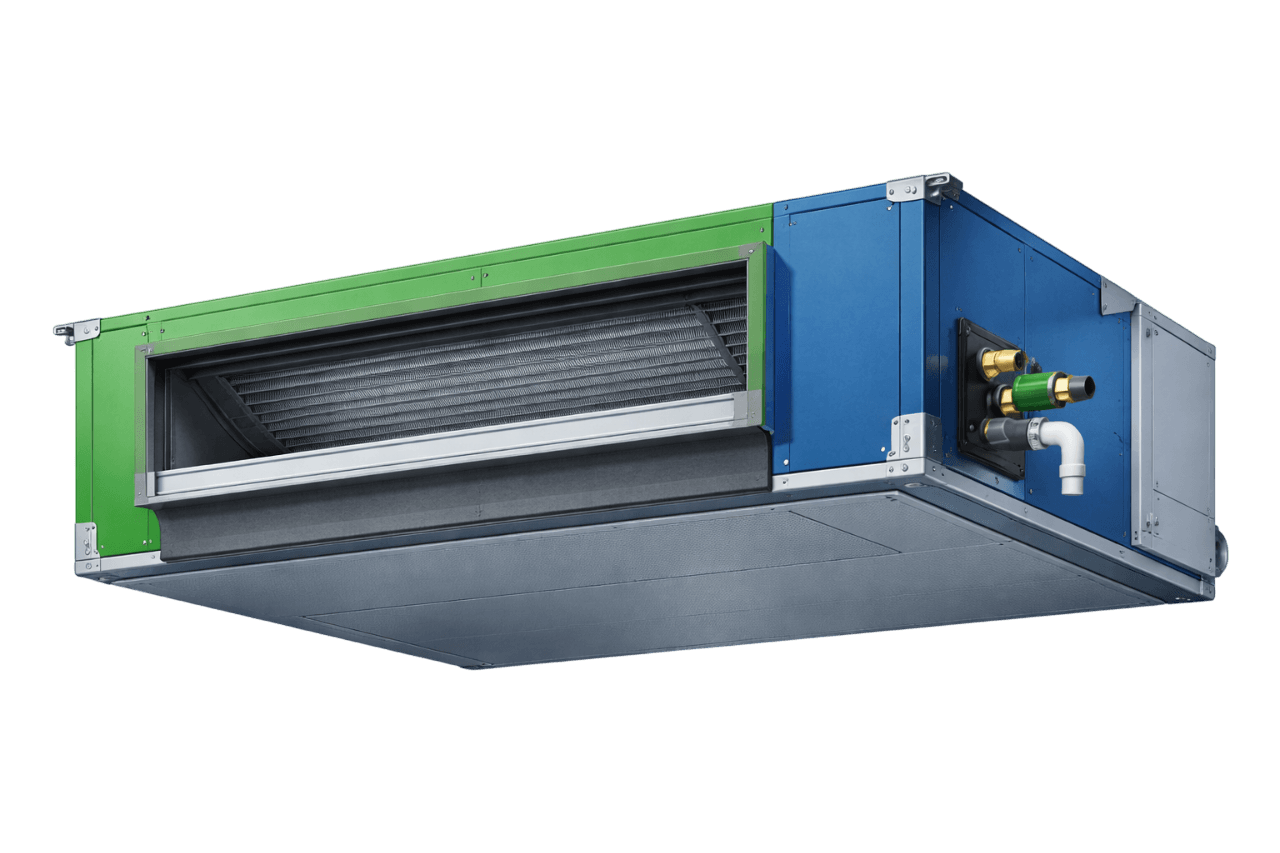
Ducted Units
Learn More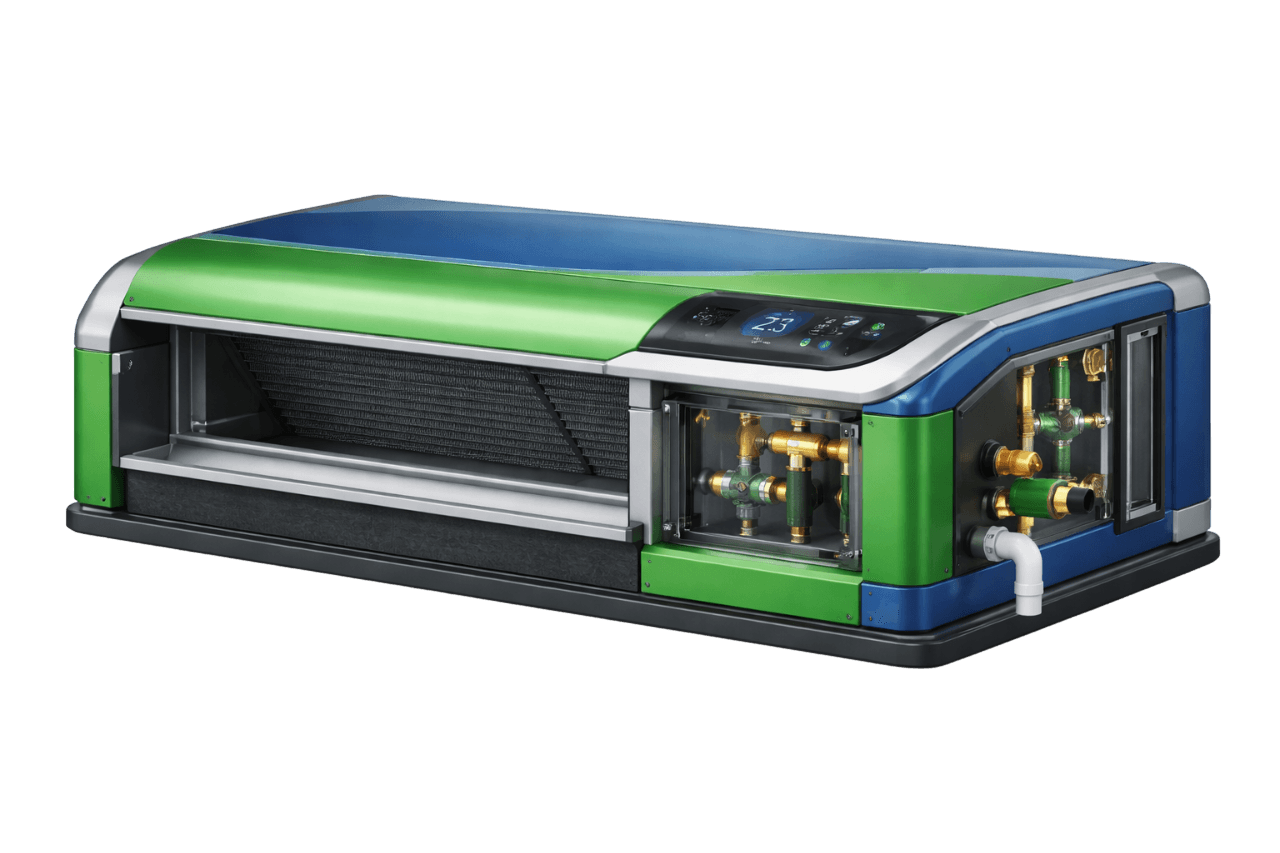
Custom Fan Coil Units
Learn MoreFrequently Asked Questions
Q1: What is a tower / vertical fan coil unit (FCU)?
A tower or vertical FCU is a floor standing fan coil unit that cools a room using chilled water from a central chiller plant. It draws air in at the bottom and discharges cooled air upward or forward.
Q2: How does a vertical FCU work?
The blower draws room air through a lower return grille, cools it across a chilled water coil, and discharges it through top or front louvers. A thermostat controls the valve and fan to maintain the set temperature.
Q3: What is the difference between a vertical FCU and a tower AC?
A vertical FCU uses chilled water from a central plant and needs no outdoor unit. A tower AC uses refrigerant and its own compressor and needs an outdoor condenser.
Q4: Does a vertical FCU need an outdoor unit?
No. A vertical FCU is connected to the building's central chilled water system, so no outdoor unit is required.
Q5: What is the difference between exposed and concealed vertical FCUs?
Exposed vertical FCUs have a finished cabinet that stands visibly in the room. Concealed vertical FCUs are installed inside a wall recess or enclosure, with only grilles visible.
Q6: What is a vertical stack fan coil unit?
A vertical stack FCU has built-in riser pipes and is installed one above another on successive floors in hotels and apartments, reducing site piping and speeding up installation.
Q7: What capacity vertical FCU do I need?
Capacity depends on room size, occupancy, glass exposure, and equipment load. Vertical FCUs typically range from about 0.75 TR to 4 TR. Compress India carries out heat load calculations to select the right unit.
Q8: Is a vertical FCU better than a hi wall FCU?
It depends on the room. Vertical FCUs are better for glazed walls, perimeter zones, and easy floor-level servicing, while hi wall FCUs save floor space in rooms with free wall area.
Q9: Does a vertical FCU need a false ceiling?
No. Vertical FCUs stand on the floor or fit in wall recesses, so no false ceiling is required.
Q10: How often should a vertical FCU be serviced?
Filters should be cleaned every two to four weeks, with coil, drain, and valve servicing done quarterly or as per usage. An AMC with Compress India keeps maintenance on schedule.
Q11: What is the price of a vertical FCU in India?
The price depends on capacity, cabinet type, motor type, valve kit, controls, and installation scope. Contact Compress India with your requirements for an accurate quotation.
Q12: Does Compress India supply and install vertical FCUs in Mumbai?
Yes. Compress India supplies, installs, commissions, and services tower and vertical FCUs across Mumbai, Navi Mumbai, and Thane, along with AMC and retrofit support.