Dampers & Airflow Control Devices
(Installation, Fire Compliance, Air Balancing & Control System Services)
Dampers & Airflow Control Devices – Engineering Execution & Field Services
Dampers and Airflow Control Devices are critical components in HVAC ducting systems designed to regulate airflow, isolate zones, ensure fire safety compliance, and maintain pressure balance within air distribution networks.
These devices are engineered to:
- Control airflow volume
- Maintain pressure balance
- Isolate duct sections
- Prevent fire and smoke spread
- Enable zoning control
- Support air balancing
Dampers are mandatory in commercial, industrial, healthcare, and high-rise buildings to meet HVAC performance standards and fire safety regulations.
Compress India provides complete engineering execution services for Dampers & Airflow Control Devices including installation, testing, commissioning, retrofitting, repair, fire compliance validation, and AMC services.
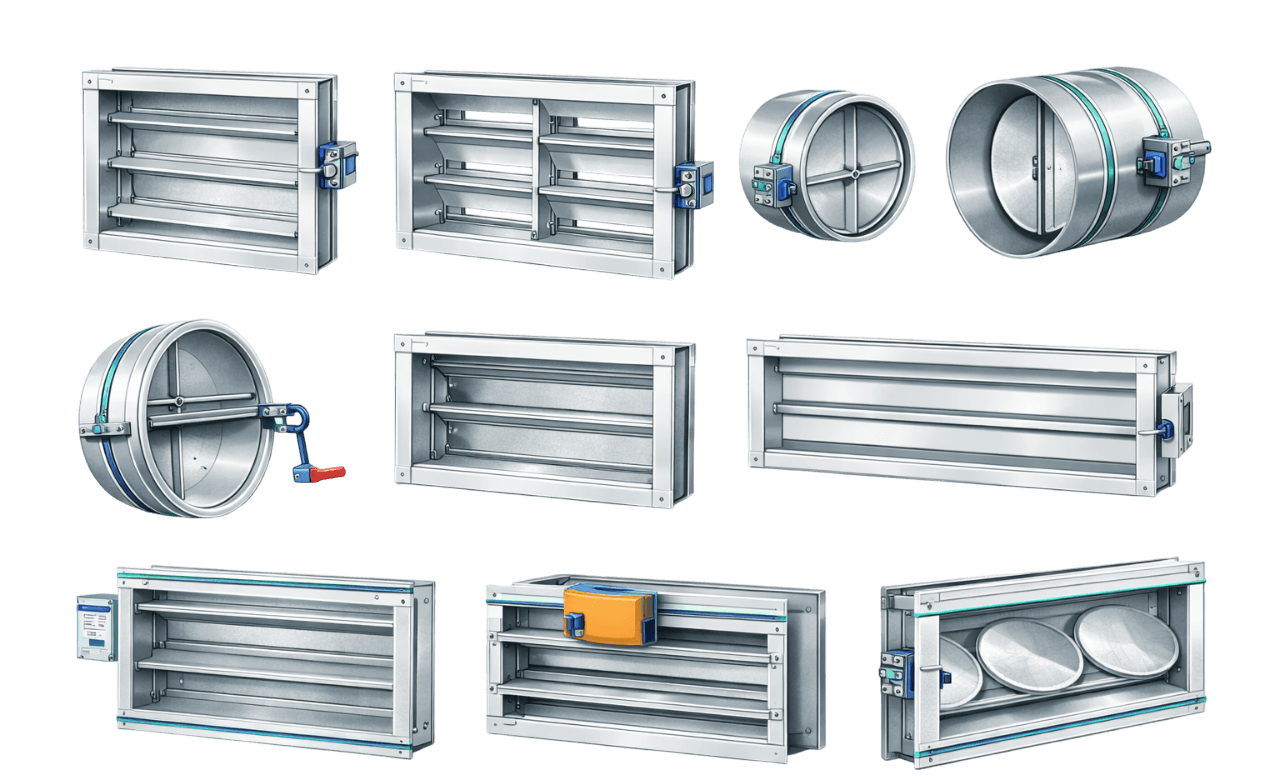
Types of Dampers We Install & Service
Comprehensive range of airflow control and safety dampers for professional HVAC installations, ensuring optimal performance and regulatory compliance.


Damper Installation & Site Execution
We execute damper installation as per project drawings and fire safety guidelines.
Scope of work includes:
Damper frame installation
Sleeve and flange fixing
Duct integration and sealing
Access door installation
Motorized actuator installation
Control wiring termination
Fire barrier penetration sealing
Position indicator integration
End switch testing
Engineering focus areas:
Damper sizing calculation
Pressure drop evaluation
Blade alignment verification
Actuator torque validation
Fire rating compliance (1 hr / 2 hr etc.)
Leakage class compliance
Accessibility for inspection
Fire & Smoke Compliance Testing
Fire and smoke dampers require periodic inspection and validation.
Our testing services include:
- Drop test (fire damper)
- Fusible link inspection
- Motorized actuator testing
- End switch validation
- Smoke seal inspection
- Leakage testing
- Fire alarm integration testing
- Compliance documentation
Audit Readiness
Testing ensures readiness for fire audits and authority inspections.
Airflow Balancing & Control Integration
Proper airflow control ensures system efficiency.
We provide:
- Branch airflow balancing
- Damper position calibration
- Static pressure adjustment
- BMS integration
- Zoning logic configuration
- Pressure differential control
System Performance
Accurate control improves comfort and system performance.
Damper Repair & Rectification Services
We provide corrective services for:
- Damper blade jam
- Actuator failure
- Fusible link replacement
- Excessive leakage
- Corrosion damage
- Control wiring faults
- Improper airflow control
Root Cause Analysis
Root cause analysis ensures restoration of airflow control and safety compliance.
Retrofitting & Compliance Upgradation
Older buildings often require damper upgrades.
We execute:
- Fire damper retrofitting
- Motorization of manual dampers
- FSD installation in existing ducts
- Pressure control upgrades
- Compliance-driven replacements
- Access door addition
Enhanced Safety
Retrofitting improves fire safety and operational control.
Preventive Maintenance & AMC Services
Routine inspection ensures long-term reliability and compliance.
Our AMC services include:
- Damper blade inspection
- Actuator testing
- Fusible link replacement
- Seal inspection
- End switch testing
- Lubrication and cleaning
- Documentation maintenance
Customized AMC Plans
Customized Annual Maintenance Contracts (AMC) are structured for commercial and institutional facilities.
System Safety & Operational Optimization
Proper damper performance improves both safety and efficiency.
We conduct:
- Pressure distribution analysis
- Leakage reduction
- Fire safety readiness audit
- System performance benchmarking
- Control logic refinement
Enhanced Safety & Comfort
Optimized airflow control enhances occupant safety and comfort.
Connect with Our HVAC Engineering Team
For professional installation, fire compliance testing, repair, retrofitting, automation integration, or AMC services for Dampers & Airflow Control Devices, connect with our HVAC engineering team for reliable airflow control and safety-compliant duct systems.
Related HVAC Systems & Engineering Services
Dampers & Airflow Control Devices are closely associated with:
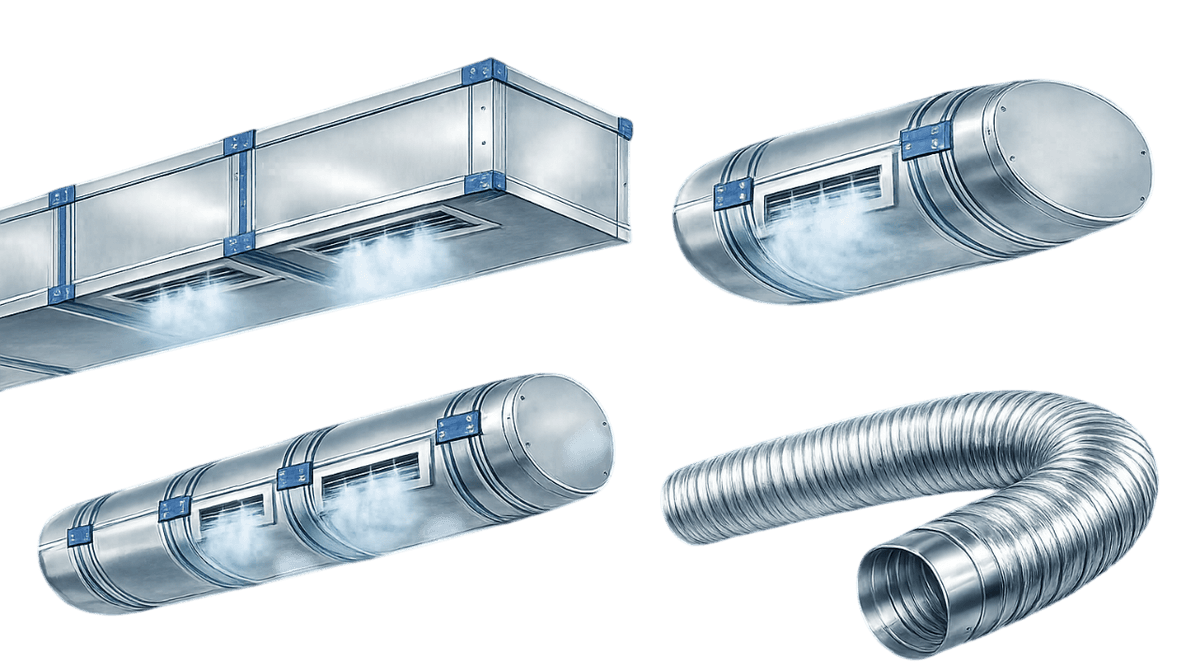
GI / MS / SS / Aluminium Ducting Systems
Learn More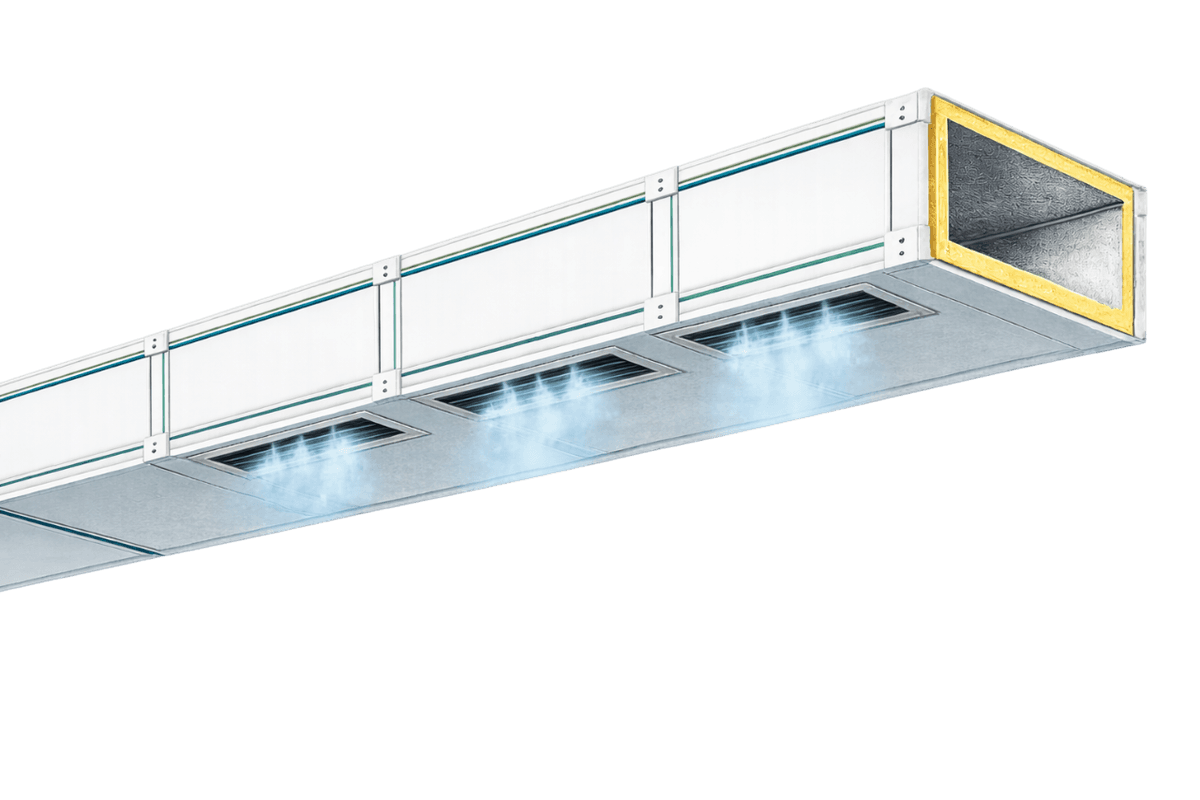
Pre-Insulated (PIR / PUF) Ducting
Learn More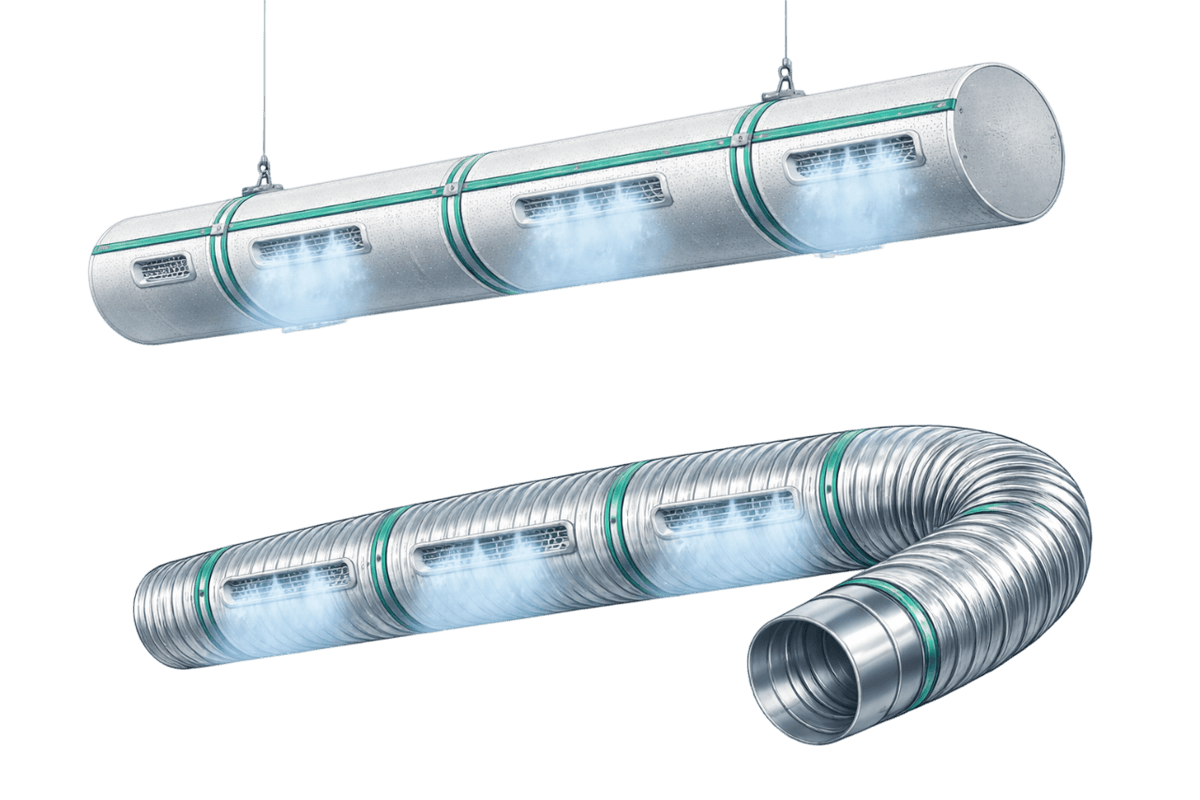
Fabric & Flexible Duct Systems
Learn More
Air Diffusers & Grilles
Learn More
Canvas & Connection Joints
Learn More
Smoke Management Systems
Learn More
Staircase & Lobby Pressurisation Systems
Learn MoreFrequently Asked Questions
What is the difference between a fire damper and a smoke damper?
Fire dampers are designed to close automatically when heat activates a fusible link, preventing fire from spreading through ducts across fire-rated compartments. Smoke dampers are designed to control the movement of smoke, opening or closing as part of a smoke management system. Fire & Smoke Dampers (FSD) combine both functions.
How often should fire dampers be tested?
Fire dampers require periodic testing as per local fire safety regulations, typically annually or every 2-4 years depending on the building type and authority requirements. Our testing services include drop tests, fusible link inspection, actuator testing, and end switch validation to ensure compliance.
What are Volume Control Dampers (VCD) used for?
Volume Control Dampers (VCD) are manually adjustable devices installed in duct branches to balance airflow. They allow technicians to regulate the volume of air delivered to different zones, ensuring proper air distribution, maintaining pressure balance, and enabling precise air balancing across the system.
What causes damper actuators to fail?
Common causes include electrical faults, control wiring issues, mechanical binding of damper blades, corrosion, incorrect torque specifications, and end-of-life wear. Our repair services address actuator failure through diagnosis, replacement, and testing to restore proper operation.
Do you provide AMC for dampers?
Yes, we offer Annual Maintenance Contracts (AMC) for dampers and airflow control devices. Our services include damper blade inspection, actuator testing, fusible link replacement, seal inspection, end switch testing, lubrication, cleaning, and documentation maintenance for compliance.
What is a backdraft damper and where is it used?
Backdraft dampers are one-way devices that allow airflow in only one direction and automatically close to prevent reverse airflow. They are commonly used in exhaust systems, fresh air intakes, and applications where backflow prevention is critical to maintain pressure balance and prevent contamination.
Can manual dampers be motorized later?
Yes, we execute retrofitting projects where manual dampers are motorized for BMS integration and automatic control. This involves installing actuators, control wiring, and position indicators, along with validation of torque requirements and integration with building automation systems.
What is the purpose of pressure relief dampers?
Pressure relief dampers are designed to automatically open or close to maintain safe pressure levels in pressurized spaces such as stairwells, lobbies, or cleanrooms. They prevent over-pressurization, ensure proper door operation, and maintain pressure differentials required for smoke control and contamination control.
How do you ensure fire damper compliance?
We ensure compliance through proper damper sizing, fire rating verification (1hr/2hr), correct installation with sleeves and fire barrier sealing, periodic drop testing, fusible link inspection, and thorough documentation. Our testing validates readiness for fire audits and authority inspections.
What engineering factors are important for damper selection?
Key factors include damper sizing calculation, pressure drop evaluation, blade alignment, actuator torque validation, fire rating compliance, leakage class requirements, and accessibility for inspection. Proper selection ensures reliable operation, safety compliance, and system efficiency.