Air Cooled Reciprocating Chiller
(Installation, Commissioning, Repair, Retrofitting & Lifecycle Support Services)
Air-Cooled Chiller Systems – Field Execution & Technical Services
Compress India provides Air Cooled Reciprocating Chillers and complete chilled water solutions for industrial process cooling, commercial HVAC, manufacturing facilities, pharmaceutical plants, plastic processing, food production and other temperature-controlled applications.
An Air Cooled Reciprocating Chiller combines a reciprocating compressor with an air-cooled condenser to remove heat from chilled water or process fluid without depending on a conventional cooling tower for condenser heat rejection.
These systems can be a practical solution for small to medium industrial cooling loads where dependable operation, straightforward maintenance, flexible capacity selection and compact plant infrastructure are important.
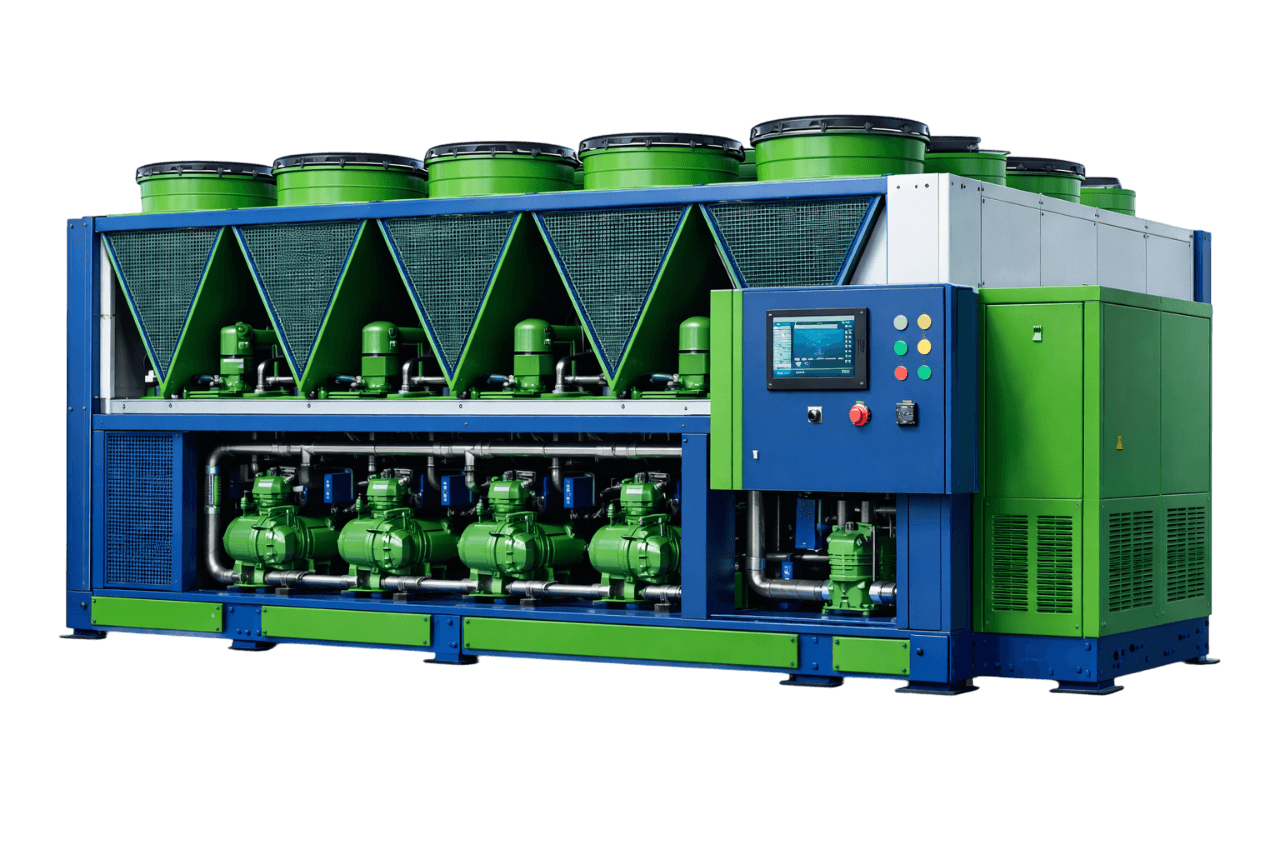
Compress India supports complete chiller projects with equipment selection, supply coordination, installation, chilled water piping, electrical integration, controls, commissioning, troubleshooting, compressor servicing, retrofitting, preventive maintenance and AMC support.
Whether your requirement is for a 5 TR Air Cooled Reciprocating Chiller, 10 TR, 20 TR, 30 TR, 50 TR or a customized industrial chilling plant, our team can evaluate the cooling load and recommend an appropriate system configuration.
Need an Air Cooled Reciprocating Chiller for your facility?
Share your required cooling capacity, application, chilled water temperature, project location and operating conditions with Compress India for a suitable technical and commercial solution.
What Is an Air Cooled Reciprocating Chiller?
An Air Cooled Reciprocating Chiller is a refrigeration system that uses a reciprocating compressor to produce chilled water while rejecting condenser heat directly to ambient air.
The system normally consists of:
Reciprocating compressor
Air cooled condenser
Condenser fans
Evaporator
Expansion device
Refrigerant circuit
Chilled water circuit
Electrical control panel
Temperature and pressure controls
Safety switches
Pumps and hydronic accessories where required
The reciprocating compressor uses pistons operating inside cylinders to compress refrigerant.
Because the condenser rejects heat directly into surrounding air, an Air Cooled Reciprocating Compressor Chiller generally does not require the cooling tower and condenser-water circuit associated with a water-cooled chiller.
This can simplify the cooling plant and make the system particularly useful for factories, process plants and commercial facilities where cooling tower installation is not preferred.
Air Cooled Reciprocating Chiller Working Principle
Understanding the Air Cooled Reciprocating Chiller Working Principle helps in selecting, operating and maintaining the system correctly.
The chiller works through a closed refrigeration cycle involving four primary stages.
1. Evaporation and Heat Removal
Warm process water or return chilled water enters the evaporator.
Liquid refrigerant inside the evaporator absorbs heat from the water or process fluid.
As heat is removed, the water temperature decreases and chilled water is supplied back to the manufacturing process, HVAC system or cooling equipment.
2. Reciprocating Compression
Low-pressure refrigerant vapour enters the Air Cooled Reciprocating Chiller Compressor.
Inside the compressor, pistons move within cylinders and compress the refrigerant.
This compression increases refrigerant pressure and temperature before it enters the condenser.
3. Air Cooled Condensation
The high-pressure refrigerant moves into the Air Cooled Reciprocating Chiller Condenser.
Condenser fans draw ambient air across the condenser coil.
Heat from the refrigerant is transferred into the surrounding air, causing the refrigerant to condense.
4. Expansion and Refrigerant Cooling
The refrigerant then passes through an expansion device.
Pressure and temperature decrease before the refrigerant enters the evaporator again.
The cycle continues until the required chilled water or process temperature is achieved.
Reciprocating Compressor Chiller Technology
A Reciprocating Compressor Chiller uses piston-type compression technology.
The operating principle is similar to an internal combustion piston mechanism, but instead of compressing an air-fuel mixture, the compressor compresses refrigerant.
The compressor typically includes:
Compressor housing
Pistons
Cylinders
Connecting rods
Crankshaft
Suction valves
Discharge valves
Lubrication system
Motor
Capacity control mechanism
Reciprocating compressors have been widely used in industrial refrigeration and chilled water applications because they are mechanically serviceable and suitable for a broad range of medium and smaller industrial cooling requirements.
Air Cooled Reciprocating Chiller with Semi Hermetic Compressor
An Air Cooled Reciprocating Chiller with Semi Hermetic Compressor can be advantageous for industrial applications where compressor servicing and repairability are important.
Semi-hermetic designs allow trained service engineers to access internal compressor components during major repair or overhaul work.
Depending on the chiller configuration, servicing may involve inspection or replacement of:
Compressor valves
Pistons
Connecting rods
Bearings
Gaskets
Motor windings
Lubrication components
Electrical components
This serviceability makes reciprocating technology useful for industrial facilities where maintaining existing equipment may be preferable to immediate replacement.
Advantages of Air Cooled Reciprocating Chillers
The correct chiller technology depends on the cooling application, but Air Cooled Reciprocating Chillers can provide several practical advantages.
No Conventional Cooling Tower Required
Air-cooled condensers reject heat directly to ambient air.
For suitable installations, this eliminates the requirement for:
Cooling tower
Condenser water pump
Condenser water piping
Cooling tower water treatment
Cooling tower cleaning
Reduced Water Dependency
An Air Cooled Water Chiller uses water on the chilled-water side but does not normally require condenser water for heat rejection.
This can be useful where water availability is limited or where reducing water-related plant infrastructure is preferred.
Suitable for Small and Medium Industrial Loads
Reciprocating chillers can be suitable for cooling requirements such as:
5 TR
10 TR
15 TR
20 TR
25 TR
30 TR
40 TR
50 TR
Actual available capacity depends on equipment configuration and operating conditions.
Serviceable Compressor Technology
Reciprocating compressors have mechanical components that can often be inspected, serviced or overhauled by experienced technicians.
Flexible Industrial Applications
An Industrial Air Cooled Reciprocating Chiller can serve process cooling, equipment cooling and HVAC applications across multiple industries.
Simplified Installation
Removing the condenser-water system can reduce overall plant complexity compared with a conventional water-cooled arrangement.
Air Cooled Reciprocating Chiller Applications
Air Cooled Reciprocating Chiller Applications range from comfort cooling to specialized industrial process cooling.
Compress India supports chilled water projects for manufacturing, industrial and commercial facilities.
Air Cooled Reciprocating Chiller for Industrial Cooling
An Air Cooled Reciprocating Chiller for Industrial Cooling can provide chilled water for:
Manufacturing equipment
Heat exchangers
Hydraulic systems
Process machinery
Production lines
Utility cooling
Machine components
Industrial tanks
Air Cooled Reciprocating Chiller for Process Cooling
A dedicated Air Cooled Reciprocating Chiller for Process Cooling can maintain controlled temperatures where production quality or equipment operation depends on consistent cooling.
Typical process parameters include:
Required outlet temperature
Return-water temperature
Flow rate
Heat load
Production hours
Minimum load
Maximum load
Ambient temperature
Air Cooled Reciprocating Chiller for Manufacturing Plant
Manufacturing plants can use reciprocating chillers for centralized or localized cooling of machinery, production lines and industrial processes.
The system can be engineered according to machine load, production cycles and temperature requirements.
Air Cooled Reciprocating Chiller for Factory Cooling
An Air Cooled Reciprocating Chiller for Factory Cooling can serve equipment cooling, process cooling or chilled water HVAC requirements depending on plant conditions.
Air Cooled Reciprocating Chiller for Pharmaceutical Industry
Pharmaceutical manufacturing can require reliable temperature control across processes, utilities and controlled production areas.
An Air Cooled Reciprocating Chiller for Pharmaceutical Industry applications may supply chilled water to:
Manufacturing equipment
Process heat exchangers
AHUs
Utility systems
Laboratories
Controlled processing areas
Production machinery
Correct system design should consider operating temperature, redundancy, process criticality and maintenance requirements.
Air Cooled Reciprocating Chiller for Plastic Industry
Plastic processing generates significant process heat.
An Air Cooled Reciprocating Chiller for Plastic Industry applications can provide chilled water for cooling:
Injection moulding machines
Extrusion equipment
Plastic moulds
Hydraulic circuits
Process machinery
Oil systems
Production lines
Air Cooled Reciprocating Chiller for Injection Moulding
An Air Cooled Reciprocating Chiller for Injection Moulding can help maintain controlled mould temperatures and remove process heat generated during production.
Stable cooling can support consistent processing conditions and continuous machine operation.
Air Cooled Reciprocating Chiller for Chemical Industry
Chemical production can involve processes where temperature must be controlled continuously.
An Air Cooled Reciprocating Chiller for Chemical Industry applications may support:
Reactor cooling
Jacket cooling
Heat exchangers
Process tanks
Production equipment
Utility cooling
Process fluid cooling
Chemical compatibility, required temperatures and process conditions should be evaluated before equipment selection.
Air Cooled Reciprocating Chiller for Food Processing
Food manufacturing and processing facilities frequently require temperature-controlled water or process cooling.
An Air Cooled Reciprocating Chiller for Food Processing can be used for suitable cooling applications involving processing equipment, production utilities and temperature-controlled operations.
Air Cooled Reciprocating Chiller for Beverage Industry
Beverage manufacturing can require chilled water for processing equipment, product-related production systems and factory utilities.
Air Cooled Reciprocating Chiller for Dairy Industry
Dairy processing facilities may require chilled water for manufacturing equipment and process temperature control.
System selection should be based on the actual heat load and required operating temperature.
Other Industrial Applications
Air cooled reciprocating chillers can also support specialized manufacturing operations.
Packaging Industry
An Air Cooled Reciprocating Chiller for Packaging Industry can support equipment and process cooling where machinery produces continuous heat.
Printing Industry
Printing processes and associated equipment may require temperature-controlled cooling for stable operation.
Machine Cooling
An Air Cooled Reciprocating Chiller for Machine Cooling can be connected to equipment requiring controlled chilled-water circulation.
Commercial HVAC
A Commercial Reciprocating Chiller or HVAC Reciprocating Chiller can supply chilled water to AHUs, FCUs and other hydronic air-conditioning systems where capacity and operating conditions suit reciprocating technology.
Air Cooled Reciprocating Chiller Capacity
The correct Air Cooled Reciprocating Chiller Capacity depends on actual heat load rather than only the size of the facility.
Important parameters include:
Heat generated by equipment
Required supply-water temperature
Return-water temperature
Water-flow requirement
Operating hours
Production schedule
Outdoor ambient temperature
Safety margin
Future load expansion
Cooling redundancy
5 TR Air Cooled Reciprocating Chiller
A 5 TR Air Cooled Reciprocating Chiller can suit smaller process equipment, localized cooling loads and compact industrial applications.
10 TR Air Cooled Reciprocating Chiller
A 10 TR Air Cooled Reciprocating Chiller can serve machine cooling, small process lines and selected HVAC applications.
15 TR Air Cooled Reciprocating Chiller
A 15 TR system may be suitable where the calculated process load falls between smaller packaged chillers and higher-capacity industrial systems.
20 TR Air Cooled Reciprocating Chiller
A 20 TR Air Cooled Reciprocating Chiller can support medium-scale industrial process cooling and centralized equipment cooling.
25 TR Air Cooled Reciprocating Chiller
A 25 TR reciprocating chiller can be evaluated for manufacturing facilities with medium process loads and suitable operating conditions.
30 TR Air Cooled Reciprocating Chiller
A 30 TR Air Cooled Reciprocating Chiller can support larger manufacturing equipment, process cooling and industrial chilled-water systems.
40 TR Air Cooled Reciprocating Chiller
A 40 TR system may be selected where process loads require additional cooling capacity while remaining appropriate for reciprocating technology.
50 TR Air Cooled Reciprocating Chiller
A 50 TR Air Cooled Reciprocating Chiller can be evaluated for higher industrial cooling demands. For larger loads, system designers may also compare reciprocating technology with scroll, screw or other chiller technologies.
Air Cooled Reciprocating Chiller Specifications
Correct Air Cooled Reciprocating Chiller Specifications depend on application and operating conditions.
Important technical parameters include:
Cooling Capacity
Air Cooled Reciprocating Chiller Cooling Capacity should be selected according to calculated heat load rather than assumptions based on machine size alone.
Chilled Water Temperature
Required chilled-water inlet and outlet temperatures influence compressor operation, evaporator performance and overall equipment selection.
Water Flow Rate
Correct flow is essential for maintaining designed heat transfer and stable chilled-water temperatures.
Compressor Configuration
Depending on the system, the chiller may use one or multiple reciprocating compressors.
Refrigerant
Air Cooled Reciprocating Chiller Refrigerant depends on equipment design, existing system configuration and applicable technical requirements. Existing machines should be evaluated before refrigerant replacement or retrofit work.
Condenser
The Air Cooled Reciprocating Chiller Condenser should be sized for the expected outdoor ambient conditions. Condenser airflow must remain unobstructed for effective heat rejection.
Evaporator
The Air Cooled Reciprocating Chiller Evaporator transfers heat from water or process fluid to the refrigerant. Correct flow and heat exchanger condition are essential for efficient operation.
Electrical Supply
System selection should consider voltage, frequency, connected load, starting current, running current, protection requirements and control power requirements.
Controls
Modernization or new systems may incorporate digital temperature controls, pressure monitoring, compressor staging, safety interlocks, alarm systems, BMS connectivity and remote monitoring.
Air Cooled Reciprocating Chiller Temperature Range
The Air Cooled Reciprocating Chiller Temperature Range depends on equipment design, refrigerant, compressor operating envelope, evaporator design and process fluid.
Standard chilled water applications and low-temperature applications can require different equipment configurations.
The required temperature should therefore be specified before equipment selection.
Low Temperature Reciprocating Chiller Solutions
A Low Temperature Reciprocating Chiller may be required for industrial processes operating below conventional comfort-cooling water temperatures.
Potential applications can include:
Specialized process cooling
Chemical processes
Production equipment
Food processing
Industrial refrigeration support
Glycol-based cooling circuits
For lower operating temperatures, factors such as refrigerant selection, glycol concentration, evaporator design and compressor operating limits become increasingly important.
Air Cooled Reciprocating Chiller Efficiency
Air Cooled Reciprocating Chiller Efficiency is influenced by the chiller itself and the complete cooling system.
Major factors include:
Outdoor ambient temperature
Compressor condition
Condenser cleanliness
Refrigerant charge
Evaporator performance
Water flow
Chilled-water setpoint
Compressor unloading
Compressor staging
Pump performance
Electrical condition
Controls
Maintenance quality
Air Cooled Reciprocating Chiller COP
Air Cooled Reciprocating Chiller COP represents the relationship between useful cooling produced and electrical power consumed. Actual operating COP changes with cooling load, ambient conditions, water temperature and equipment condition.
Air Cooled Reciprocating Chiller Power Consumption
Air Cooled Reciprocating Chiller Power Consumption depends on TR capacity, compressor efficiency, refrigerant conditions, ambient temperature, condenser condition, chilled water temperature, pumping system, operating load and maintenance condition.
For existing chillers, high power consumption may indicate system or equipment problems that require technical investigation.
High Efficiency Air Cooled Reciprocating Chiller
A High Efficiency Air Cooled Reciprocating Chiller should be evaluated as part of the overall chilled-water system.
Energy performance can be supported through:
Correct capacity selection
Clean condenser coils
Correct refrigerant charge
Efficient pumps
Proper water flow
Optimized temperature settings
Compressor staging
Correct electrical operation
Preventive maintenance
Automation and controls
An Energy Efficient Air Cooled Reciprocating Chiller system therefore depends on both equipment condition and plant-level engineering.
Air Cooled Reciprocating Chiller vs Screw Chiller
The choice between an Air Cooled Reciprocating Chiller vs Screw Chiller depends primarily on capacity, operating profile and application.
| Parameter | Air Cooled Reciprocating Chiller | Air Cooled Screw Chiller |
|---|---|---|
| Compressor Technology | Piston reciprocating compressor | Rotary screw compressor |
| Typical Application | Small to medium industrial loads | Medium to large industrial loads |
| Mechanical Design | Piston and cylinder mechanism | Twin or single screw rotor system |
| Serviceability | Mechanically serviceable | Specialized compressor servicing |
| Capacity Modulation | Compressor staging/unloading | Advanced unloading or VFD options |
| Industrial Process Cooling | Suitable | Highly suitable for larger loads |
| Large Central Plants | Less common | Common |
Reciprocating Compressor vs Screw Compressor Chiller
A Reciprocating Compressor vs Screw Compressor Chiller comparison should consider required tonnage, minimum cooling load, maximum cooling load, daily operating hours, part-load operation, maintenance strategy, electrical demand, future capacity requirements and lifecycle costs.
The appropriate compressor technology should be selected from actual plant conditions.
Reciprocating Chiller vs Scroll Chiller
A Reciprocating Chiller vs Scroll Chiller comparison involves two different positive-displacement compressor technologies.
| Parameter | Reciprocating Chiller | Scroll Chiller |
|---|---|---|
| Compression Method | Piston and cylinder | Orbiting scrolls |
| Mechanical Components | More moving components | Fewer moving components |
| Serviceability | Often repairable depending on design | Many compressors replaced as assemblies |
| Noise & Vibration | Application dependent | Often smoother at smaller capacities |
| Typical Usage | Industrial and legacy systems | Modern small-to-medium packaged chillers |
| Capacity Staging | Available | Common with multiple scroll compressors |
Existing plant condition, spare availability, service capability and cooling load should be considered before selecting between technologies.
Air Cooled Reciprocating Chiller vs Water Cooled Chiller
An Air Cooled Reciprocating Chiller vs Water Cooled Chiller comparison primarily concerns the condenser heat-rejection method.
| Parameter | Air Cooled Reciprocating Chiller | Water Cooled Chiller |
|---|---|---|
| Heat Rejection | Ambient air | Condenser water |
| Cooling Tower | Normally not required | Normally required |
| Condenser Pump | Normally not required | Required |
| Water Consumption | Lower | Higher |
| Outdoor Installation | Common | Chiller generally installed indoors |
| Plant Complexity | Relatively simpler | Additional condenser-water equipment |
| Water Treatment | Reduced | Important for cooling tower circuit |
The correct configuration depends on cooling demand, site conditions, operating hours, water availability and lifecycle requirements.
Air Cooled Reciprocating Chiller Price in India
Air Cooled Reciprocating Chiller Price in India varies according to technical specifications and project scope.
Two chillers with the same nominal tonnage may have different prices because their compressor configuration, controls, design temperatures and accessories differ.
Major factors affecting Air Cooled Reciprocating Chiller Price include:
Cooling capacity
Compressor make and configuration
Number of compressors
Refrigerant
Evaporator design
Condenser size
Condenser fan configuration
Design ambient temperature
Required chilled water temperature
Control system
Electrical panel
Pumping equipment
Buffer tank
Installation requirements
Chilled water piping
Insulation
Electrical work
Transportation
Commissioning
Automation integration
AMC requirement
Air Cooled Reciprocating Chiller Cost
The total Air Cooled Reciprocating Chiller Cost should include more than the equipment purchase price. Project costing may involve chiller equipment, installation, piping, pumps, valves, insulation, electrical connections, controls, civil support, commissioning and maintenance.
Air Cooled Reciprocating Chiller Quotation
For an accurate Air Cooled Reciprocating Chiller Quotation, provide required TR capacity, application, chilled water inlet temperature, chilled water outlet temperature, flow rate, ambient temperature, operating hours, project location, electrical supply, existing or new installation, preferred equipment configuration and installation scope.
Air Cooled Reciprocating Chiller Installation
Professional Air Cooled Reciprocating Chiller Installation is essential for reliable plant operation.
Compress India can support complete project execution covering:
Equipment Positioning
Proper positioning ensures adequate condenser airflow, maintenance access, correct service clearances, safe electrical access and suitable equipment support.
Chilled Water Piping
Correct piping design should consider pipe diameter, water velocity, pressure drop, valves, strainers, air vents, drain points, insulation and flexible connections.
Pump Integration
Chilled water pumps should provide the required flow and head for the complete system.
Electrical Integration
Installation can involve power cabling, protection devices, control wiring, earthing, interlocks and control-panel connections.
Testing and Commissioning
Before regular operation, the system should be inspected, tested and commissioned under suitable operating conditions.
Air Cooled Reciprocating Chiller Maintenance
Regular Air Cooled Reciprocating Chiller Maintenance supports system reliability and can reduce unexpected breakdowns.
Preventive maintenance can include:
Compressor inspection
Oil inspection
Refrigerant checks
Condenser cleaning
Evaporator inspection
Electrical-panel inspection
Compressor current checks
Temperature monitoring
Pressure monitoring
Safety-control testing
Water-flow inspection
Pump inspection
Sensor checks
Reciprocating Compressor Maintenance
The compressor should be inspected when operating symptoms indicate potential mechanical or electrical problems.
Depending on compressor design and condition, service work can involve valve inspection, bearing inspection, oil servicing, motor checks, winding inspection, mechanical repair, electrical rectification and leak testing.
Common Air Cooled Reciprocating Chiller Problems
Reciprocating chillers can develop problems due to age, operating conditions, maintenance quality or connected system issues.
Common symptoms include:
Insufficient cooling
High discharge pressure
Low suction pressure
Compressor overheating
Excessive vibration
Unusual compressor noise
Frequent electrical trips
High power consumption
Refrigerant leakage
Oil-related issues
Dirty condenser coils
Poor chilled-water flow
Sensor failure
Control-panel faults
Correct troubleshooting should identify the root cause instead of repeatedly resetting the equipment.
Air Cooled Reciprocating Chiller Repair & Compressor Service
Compress India supports reciprocating chiller repair and lifecycle servicing for industrial and commercial cooling plants.
Service scope can include:
Breakdown troubleshooting
Reciprocating compressor repair
Compressor winding work
Mechanical repairs
Electrical rectification
Refrigerant leakage testing
Pressure testing
Gas charging
Condenser cleaning
Controls troubleshooting
Pump servicing
Chilled water system inspection
System recommissioning
Air Cooled Reciprocating Chiller AMC
A structured AMC can help maintain equipment condition and identify developing problems before they cause production or HVAC downtime.
An Air Cooled Reciprocating Chiller AMC can include, depending on the agreed contract:
Scheduled preventive maintenance
Compressor inspection
Electrical inspection
Refrigerant circuit checks
Condenser cleaning
Temperature and pressure checks
Safety-control testing
Pump inspection
Breakdown support
Performance observations
Maintenance reporting
Air Cooled Reciprocating Chilling Plant Solutions
An Air Cooled Reciprocating Chilling Plant includes more than the chiller itself.
The overall system can contain:
Reciprocating chiller
Chilled water pumps
Buffer tank
Expansion tank
Supply and return piping
Isolation valves
Balancing valves
Strainers
Temperature sensors
Pressure gauges
Flow measurement
Insulation
Electrical panels
Plant controls
Compress India can support the complete Air Cooled Chilling Plant from system planning through installation, commissioning and lifecycle maintenance.
Industrial Air Cooled Reciprocating Chiller Solutions
An Industrial Air Cooled Reciprocating Chiller must be selected according to the actual production environment.
Industrial cooling loads can vary significantly because of:
Machine duty cycles
Process temperature
Production speed
Shift patterns
Ambient conditions
Process fluid
Equipment heat generation
Compress India evaluates these project conditions to develop a suitable industrial chilled-water solution rather than selecting equipment only by nominal TR.
Air Cooled Reciprocating Chiller Supplier in India
For projects requiring an Air Cooled Reciprocating Chiller Supplier in India, Compress India supports equipment selection and supply coordination together with engineering execution and lifecycle services.
Our project capabilities can include:
Cooling-load evaluation
Chiller selection
Supply coordination
Installation
Chilled-water piping
Pump integration
Electrical work
Controls
Testing
Commissioning
Repair
Retrofit
Preventive maintenance
AMC support
This system-level approach helps ensure that the chiller is integrated correctly with the wider plant instead of being treated as an isolated piece of equipment.
Air Cooled Reciprocating Chiller Manufacturer in India – Selecting the Right System
Companies searching for an Air Cooled Reciprocating Chiller Manufacturer in India, Reciprocating Chiller Manufacturer in India or Industrial Air Cooled Reciprocating Chiller Manufacturer in India should evaluate more than equipment tonnage.
Important selection parameters include:
Compressor technology
Cooling capacity
Design temperature
Ambient operating limits
Refrigerant
Energy performance
Controls
Service accessibility
Spare-part availability
Installation requirements
Lifecycle maintenance
Compress India focuses on chiller system selection, supply coordination, engineering execution, installation, servicing and lifecycle support rather than manufacturing the chiller equipment itself.
Air Cooled Reciprocating Chiller Supplier in Mumbai
For industrial projects searching for an Air Cooled Reciprocating Chiller Supplier in Mumbai, Compress India provides engineering and chiller support for industrial and commercial cooling requirements.
Project requirements can be evaluated for:
Mumbai
Navi Mumbai
Thane
Maharashtra
Pune
Other industrial locations across India
Services can extend from equipment selection and project execution through commissioning, repair and preventive maintenance.
Air Cooled Reciprocating Chiller Manufacturer in Mumbai, Navi Mumbai & Maharashtra
Searches such as Air Cooled Reciprocating Chiller Manufacturer in Mumbai, Air Cooled Reciprocating Chiller Manufacturer in Navi Mumbai, Air Cooled Reciprocating Chiller Manufacturer in Thane, Air Cooled Reciprocating Chiller Manufacturer in Maharashtra and Air Cooled Reciprocating Chiller Manufacturer in Pune often come from industrial facilities looking for a complete cooling solution.
When evaluating equipment for these projects, the chiller must be matched with:
Local ambient conditions
Industrial cooling load
Available electrical power
Required chilled water temperature
Installation area
Operating hours
Maintenance accessibility
Compress India can support the engineering, supply coordination, installation, commissioning and lifecycle requirements surrounding the selected chiller system.
Existing Carrier, Trane, York & Other Reciprocating Chillers
Industrial plants may have existing Carrier reciprocating chiller, Trane reciprocating chiller, York reciprocating chiller, Voltas or other reciprocating equipment.
Legacy chiller plants may require:
Condition assessment
Compressor repair
Electrical troubleshooting
Refrigerant system servicing
Controls repair
Condenser cleaning
Pump maintenance
Performance evaluation
Retrofit assessment
Replacement planning
For existing equipment, the make, model, compressor condition, refrigerant, cooling capacity and operating history should be evaluated before determining the appropriate repair or replacement strategy.
Why Choose Compress India for Air Cooled Reciprocating Chillers?
Compress India approaches chilled-water projects as complete HVAC and industrial cooling systems.
Engineering-Based Chiller Selection
We evaluate cooling requirements, operating temperatures and site conditions before defining the system configuration.
Complete Installation Support
Project scope can include equipment installation, chilled-water piping, pumps, electrical work and control integration.
Chiller Commissioning
The installed cooling system can be tested and commissioned to verify operating conditions and plant functionality.
Reciprocating Compressor Service
Our chiller service capabilities include mechanical, electrical and compressor-related work for reciprocating systems.
Retrofit and Modernization
Existing plants can be evaluated for controls upgrades, electrical improvements, pumping modifications or other modernization work.
Preventive Maintenance and AMC
Lifecycle support helps maintain reliability after installation and commissioning.
Industrial Cooling Experience
We support industrial and commercial HVAC requirements where cooling continuity, maintainability and practical field execution are important.
How to Select the Right Air Cooled Reciprocating Chiller
Before selecting an Air Cooled Reciprocating Chiller, define the actual operating requirement.
Important questions include:
What is the required cooling load in TR or kW?
What is the required chilled-water outlet temperature?
What is the return-water temperature?
What water-flow rate is required?
What is the maximum ambient temperature?
How many hours per day will the chiller operate?
Is the cooling process critical to production?
Is standby capacity required?
Is water or glycol circulating through the system?
What electrical supply is available?
Where will the chiller be installed?
Is the project new or replacing an existing chiller?
Is installation included in the requirement?
Is automation or BMS integration required?
Is an AMC required after commissioning?
Providing these details allows a more accurate technical and commercial proposal.
Get an Air Cooled Reciprocating Chiller Solution from Compress India
For industrial process cooling, manufacturing, commercial HVAC or existing chiller replacement, Compress India provides engineering-led Air Cooled Reciprocating Chiller solutions based on actual operating requirements.
Our team can support requirements for:
5 TR Air Cooled Reciprocating Chiller
10 TR Air Cooled Reciprocating Chiller
15 TR Air Cooled Reciprocating Chiller
20 TR Air Cooled Reciprocating Chiller
25 TR Air Cooled Reciprocating Chiller
30 TR Air Cooled Reciprocating Chiller
40 TR Air Cooled Reciprocating Chiller
50 TR Air Cooled Reciprocating Chiller
Industrial Reciprocating Chiller
Process Cooling Chiller
Low Temperature Reciprocating Chiller
Existing reciprocating chiller repair
Chiller replacement
Compressor repair
Chiller installation
Chiller commissioning
Chiller retrofit
Preventive maintenance
AMC and lifecycle support
Contact Compress India with your cooling capacity, application, required temperature, project location and operating conditions to discuss the right Air Cooled Reciprocating Chiller solution for your facility.
Connect with Our HVAC Execution Team
Need help with your cooling project? Connect with our team for technical support, project coordination, installation, service and lifecycle assistance.
Related Air-Cooled Chillers
Explore other air-cooled chiller systems available within our cooling solutions range.
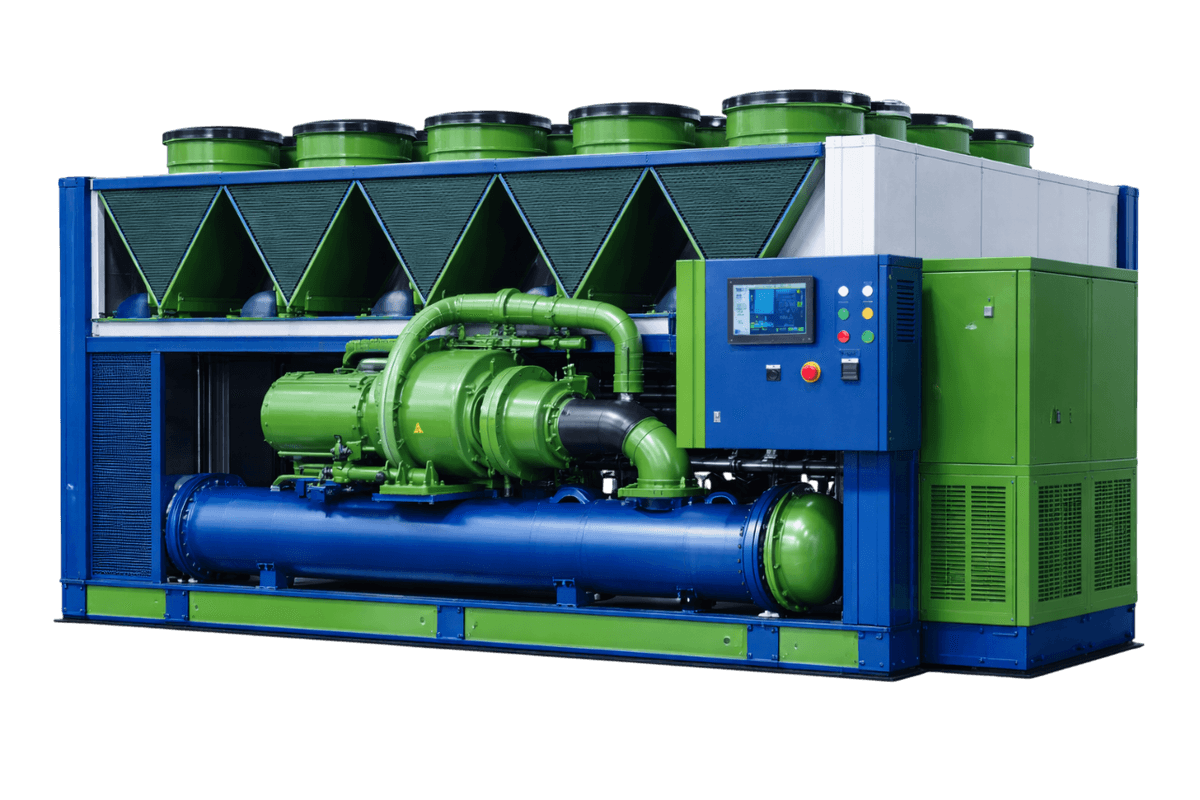
Air Cooled Centrifugal Chillers
Learn More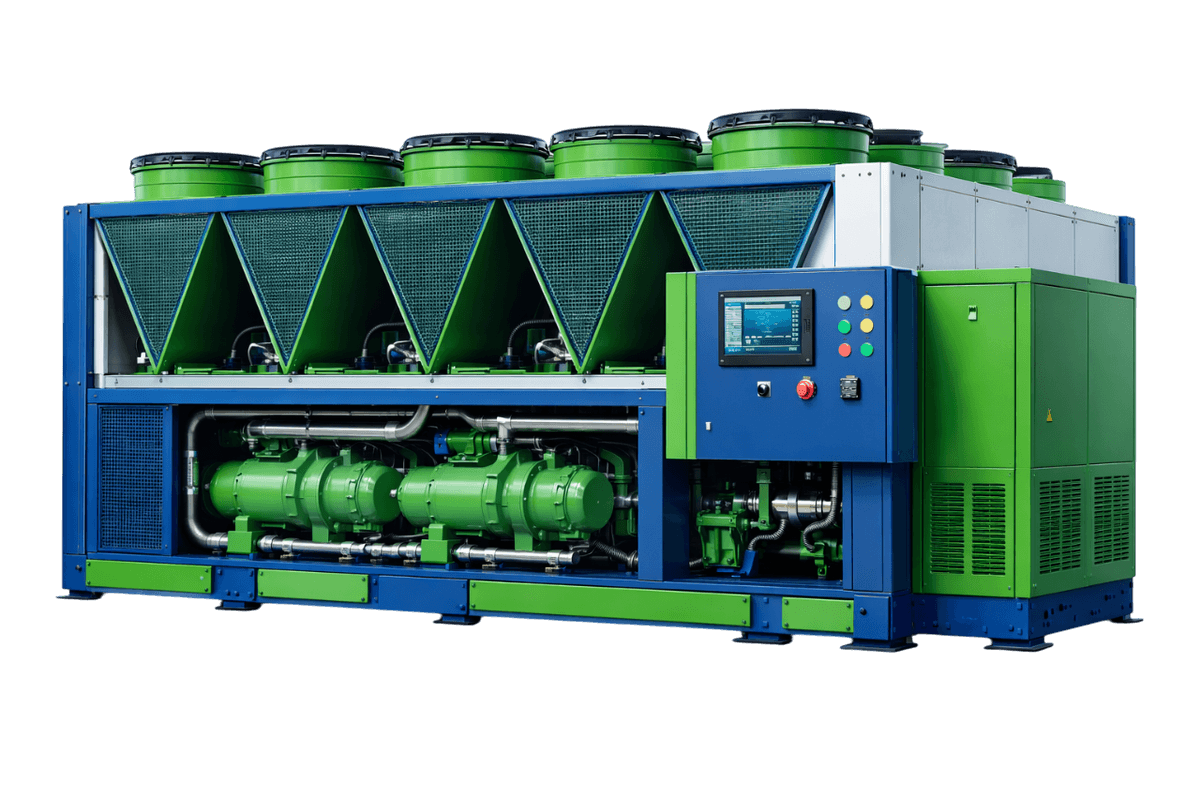
Air Cooled Screw Chillers
Learn More
Air Cooled Scroll Chillers
Learn MoreFrequently Asked Questions
What is an Air Cooled Reciprocating Chiller?
An Air Cooled Reciprocating Chiller is a chilled-water refrigeration system that uses a piston-type reciprocating compressor and an air cooled condenser to remove heat from water or process fluid and reject that heat into ambient air.
How does an Air Cooled Reciprocating Chiller work?
The system removes heat from chilled water inside the evaporator. Refrigerant vapour is compressed by the reciprocating compressor, cooled and condensed through the air cooled condenser, expanded through an expansion device and returned to the evaporator to repeat the refrigeration cycle.
Where are Air Cooled Reciprocating Chillers used?
They can be used for industrial process cooling, machine cooling, manufacturing, injection moulding, pharmaceuticals, chemical processing, food production, beverage plants and suitable commercial HVAC applications.
What capacities are available for Air Cooled Reciprocating Chillers?
Common requirements can include 5 TR, 10 TR, 15 TR, 20 TR, 25 TR, 30 TR, 40 TR and 50 TR. Actual available capacities depend on equipment configuration and operating conditions.
What is the Air Cooled Reciprocating Chiller Price in India?
Air Cooled Reciprocating Chiller Price in India depends on cooling capacity, compressor configuration, refrigerant, controls, operating temperature, condenser design, accessories and the installation scope. A technical requirement is needed for an accurate quotation.
Is an Air Cooled Reciprocating Chiller suitable for industrial process cooling?
Yes. An Industrial Air Cooled Reciprocating Chiller can be suitable for small and medium process cooling applications when the equipment capacity and operating range match the required industrial load.
Does an Air Cooled Reciprocating Chiller require a cooling tower?
Normally, no. The condenser rejects heat directly to outdoor air using condenser coils and fans, which removes the conventional cooling tower requirement.
What is a semi-hermetic reciprocating compressor?
A semi-hermetic compressor houses the compressor and motor within a serviceable enclosure. Depending on compressor design, trained technicians can access internal components for inspection and repair.
What is the difference between a reciprocating chiller and a screw chiller?
A reciprocating chiller uses piston compressors, while a screw chiller uses rotary screw compressors. Reciprocating systems are commonly suited to small and medium cooling loads, while screw chillers are widely used for larger industrial and commercial capacities.
What is the difference between a reciprocating chiller and a scroll chiller?
Reciprocating compressors use pistons and cylinders, while scroll compressors use orbiting scroll elements. System selection depends on capacity, equipment design, service strategy and application.
Can an existing reciprocating chiller be repaired?
Depending on equipment condition and spare availability, reciprocating chillers may be repaired through compressor servicing, mechanical repair, winding work, electrical rectification, refrigerant servicing, controls repair and other corrective work.
How often should an Air Cooled Reciprocating Chiller be serviced?
Maintenance frequency depends on operating hours, industrial conditions, manufacturer recommendations and equipment condition. Facilities operating continuously generally require more frequent monitoring and planned preventive maintenance.
What information is required for an Air Cooled Reciprocating Chiller quotation?
Provide cooling capacity, process application, water inlet and outlet temperatures, flow rate, ambient conditions, electrical supply, operating hours, site location and required installation scope.
Does Compress India manufacture Air Cooled Reciprocating Chillers?
Compress India focuses on chiller selection, supply coordination, engineering execution, installation, commissioning, repair, retrofitting and lifecycle services rather than manufacturing chiller equipment.
Can Compress India support existing Carrier, Trane, York or Voltas reciprocating chillers?
Existing reciprocating chiller requirements can be evaluated based on equipment make, model, compressor condition, refrigerant, cooling capacity, fault history and spare-part requirements before determining the appropriate service scope.