In-Row Cooling Systems
(Design, Supply, Installation, Commissioning, Service & AMC for In-Row Precision Cooling)
Design, Supply, Installation, Commissioning, Service & AMC for In-Row Precision Cooling
Server racks are getting hotter every year. What used to be 3–5 kW per rack is now 15, 30, or even more in AI and GPU environments. Traditional perimeter cooling struggles to push cold air far enough and fast enough to reach these racks. In-Row Cooling Systems solve this by placing the cooling right where the heat is generated: between the racks.
Compress India designs, supplies, installs, commissions, and maintains in-row precision cooling systems for data centers, edge sites, AI and GPU clusters, server rooms, and telecom facilities. From rack density analysis and containment design to chilled water or DX piping, DCIM integration, and 24/7 AMC, we deliver row-based cooling that keeps your IT running at full performance.
Facing hot spots or planning high-density racks? Share your IT load and rack layout with Compress India and get an in-row cooling design and quotation.
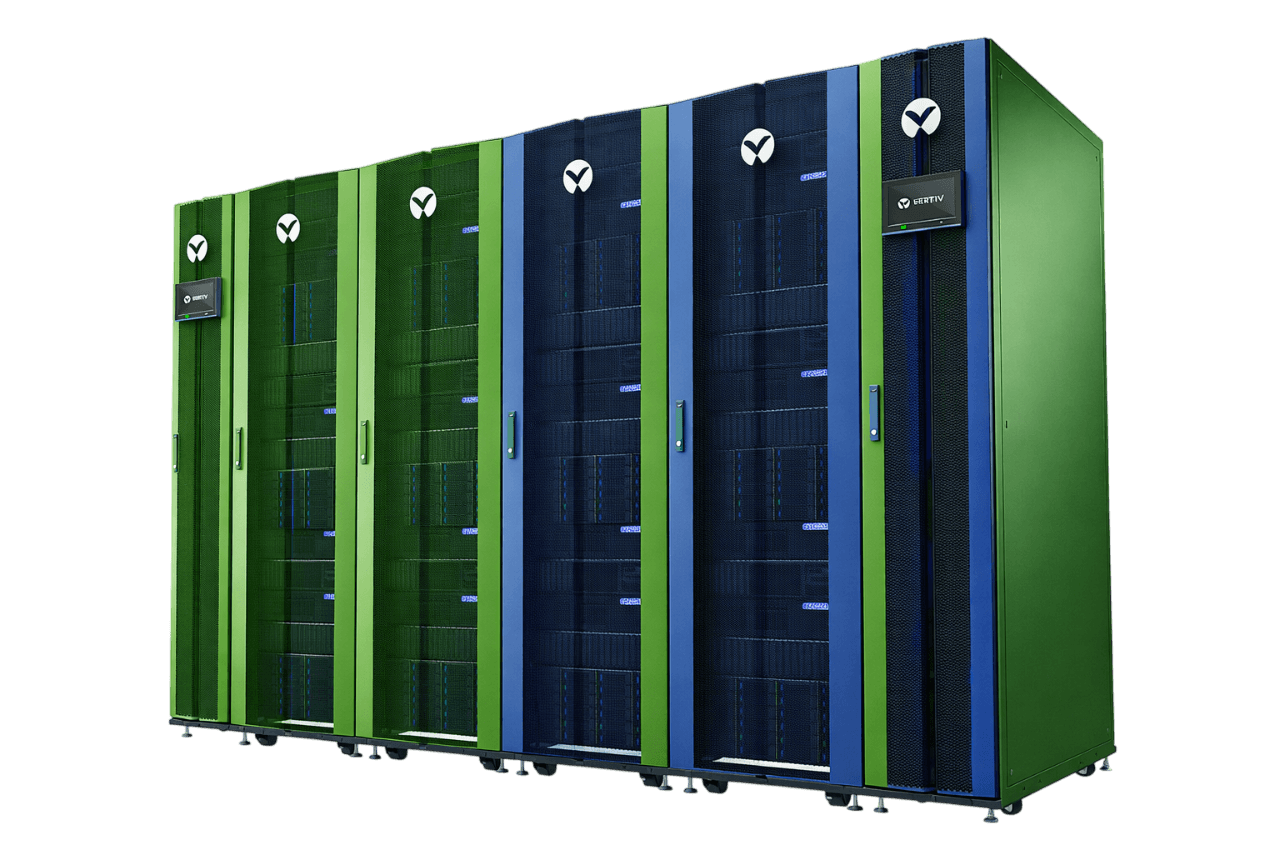
Compress India offers complete, end-to-end in-row cooling solutions, managed by one experienced team:
- Design: Rack density analysis, in-row cooling sizing, redundancy planning, containment design, and piping layouts.
- Supply: Chilled water and DX in-row units, containment systems, rear door heat exchangers, and controls from leading precision cooling brands.
- Installation: Row layout, containment, chilled water or refrigerant piping, drip trays, leak detection, condensate drains, and electrical work.
- Commissioning: Sensor setup, group control configuration, load bank testing, and BMS or DCIM integration.
- Service & AMC: Quarterly preventive maintenance, 24/7 breakdown support, retrofits, and annual maintenance contracts.
What Is an In-Row Cooling System?
An in-row cooling system is a precision cooling solution in which cooling units are installed within the row of server racks, sitting side by side with the IT equipment. Each unit draws hot air from the hot aisle, cools it through a chilled water or DX coil, and supplies cold air directly into the cold aisle in front of the racks.
This row-based cooling system shortens the air path dramatically compared with perimeter units. As a result, in-row cooling handles much higher rack densities, eliminates hot spots, and operates more efficiently.
In-row cooling is also called data center row cooling, precision row cooling, or close-coupled cooling.
Why Data Centers Are Moving to In-Row Cooling
Rising Rack Densities
Modern servers, storage, and GPUs pack more power into each rack. High density in-row cooling is designed to handle loads that perimeter systems struggle with.
Shorter Airflow Path
Air travels only a short distance between the cooling unit and the rack, reducing mixing, losses, and fan energy.
Eliminating Hot Spots
Cooling is delivered exactly where it is needed, making in-row units an effective hot spot cooling system.
No Raised Floor Required
In-row cooling without a raised floor makes it ideal for new builds, retrofits, and edge sites where raised floors are impractical.
How an In-Row Cooling System Works
Units Installed Between Server Racks
In-row units are the same height and depth as server racks and are placed within the rack row.
Hot Air Drawn from the Hot Aisle
Units pull hot exhaust air from the hot aisle behind the racks.
Air Cooled Through Chilled Water or DX Coil
The air passes over a chilled water coil or a DX coil, where heat is removed.
Cold Air Supplied Directly to the Cold Aisle
Cooled air is discharged from the front or sides of the unit into the cold aisle, directly at the rack inlets. Front discharge and side discharge in-row cooling options suit different layouts.
EC Fans Responding to Rack Inlet Temperature
In-row EC fans adjust speed based on rack inlet temperature, delivering precise rack inlet temperature control.
Containment for Maximum Efficiency
Hot aisle or cold aisle containment keeps hot and cold air separated, maximising in-row cooling efficiency.
Main Components of an In-Row Cooling Unit
Rack-Width Cabinet (Half-Rack & Full-Rack)
Units come in half-rack (around 300 mm) and full-rack (around 600 mm) widths to fit standard rack rows.
Cooling Coil (Chilled Water / DX)
A high-capacity coil removes heat efficiently, using either chilled water or refrigerant.
EC Fans
Multiple EC fans deliver horizontal airflow with variable speed control and built-in redundancy.
Air Filters
Filters protect the coil and fans from dust.
Control Valve or Compressor
Chilled water units use a modulating valve, while DX units use a variable speed compressor.
Rack Inlet Temperature Sensors
Remote sensors at rack inlets provide accurate feedback for control.
Condensate Pump & Drain
A built-in condensate pump removes any moisture from the coil.
Controller & Leak Detection
An intelligent controller manages operation, alarms, and communication, supported by leak detection sensors.
Types of In-Row Cooling Units
Chilled Water In-Row Units
A chilled water in-row unit connects to a central chiller plant. CW in-row cooling offers high capacity, excellent efficiency, and no compressors in the data hall.
DX In-Row Units (Air Cooled with Remote Condenser)
A DX in-row cooling unit has its own compressor and connects to an outdoor condenser. Air cooled in-row cooling suits sites without a chilled water plant.
Water / Glycol Cooled DX In-Row Units
Water cooled in-row cooling and glycol cooled in-row cooling reject heat to a water or glycol loop, allowing longer distances to outdoor equipment.
Half-Rack vs Full-Rack Width Units
Half-rack units suit smaller loads and tight spaces, while full-rack units deliver higher capacity per unit.
In-Row Units for Micro Data Centers
Compact in-row units cool micro data centers and self-contained rack pods for branch offices and edge sites.
Other Close-Coupled Cooling Options
Rear Door Heat Exchangers
Chilled water coils fitted on the rack rear door cool exhaust air before it leaves the rack.
Overhead Cooling Units
Cooling units mounted above racks supply cold air downward, saving floor space.
Integrated Rack Cooling Solutions
Enclosed rack systems with built-in cooling provide in-rack cooling for individual racks. When comparing in-row cooling vs in-rack cooling, in-row serves the whole row, while in-rack cooling serves a single enclosed rack.
In-Row Cooling vs Perimeter CRAC / CRAH Cooling
- Location: In-row units sit between racks; perimeter CRAC and CRAH units sit along room walls.
- Air Path: In-row cooling has a very short air path; perimeter cooling pushes air across the room or through a raised floor.
- Density: In-row cooling handles much higher rack densities.
- Raised Floor: In-row cooling does not need a raised floor; perimeter cooling often uses one.
- Scalability: In-row units can be added row by row as IT grows.
- Best For: In-row cooling for high-density and modular data centers; perimeter cooling for lower-density, traditional rooms.
When comparing in-row cooling vs CRAC or in-row cooling vs CRAH, many facilities combine both, with in-row cooling for high-density zones and perimeter units for general areas.
Chilled Water vs DX In-Row Cooling
- Cooling Source: Chilled water in-row units use a central chiller; DX in-row units have their own compressors.
- Capacity: Chilled water units usually offer higher capacity per unit.
- Efficiency: Chilled water systems are generally more efficient at scale, especially with free cooling.
- Infrastructure: DX units need only outdoor condensers; chilled water units need a chiller plant and piping.
- Best For: Chilled water for large and colocation data centers; DX for small data centers, edge sites, and server rooms.
In-Row Cooling vs Rear Door Heat Exchangers
- Placement: In-row units occupy space in the rack row; rear door heat exchangers mount on the rack door.
- Fans: In-row units have their own fans; passive rear doors rely on server fans, while active rear doors add fans.
- Capacity: Both handle high densities, and active rear doors can support very high rack loads.
- Flexibility: In-row units cool the whole row; rear doors cool individual racks.
- Best For: In-row cooling for rows with mixed densities; rear door heat exchangers for very high-density racks with limited floor space.
Containment with In-Row Cooling
Hot Aisle Containment
Hot aisle containment with in-row cooling encloses the hot aisle, so units draw only hot air. This raises return temperatures and improves efficiency.
Cold Aisle Containment
Cold aisle containment with in-row cooling encloses the cold aisle, keeping cold air in front of the racks.
Modular Pods & Smart Row Solutions
Pre-engineered pods combine racks, in-row units, containment, power, and monitoring into a single modular solution.
Blanking Panels & Bypass Air Sealing
Blanking panels and sealed gaps prevent bypass air and recirculation. In open aisle in-row cooling layouts without containment, these measures are even more important.
In-Row Cooling for AI, GPU & High-Density Racks
Cooling High kW per Rack Loads
In-row cooling for high density racks, combined with containment, can handle rack loads well beyond what perimeter cooling supports.
Handling GPU & HPC Cluster Heat Loads
In-row cooling for GPU racks and HPC in-row cooling deliver concentrated cooling for AI training and inference clusters. In-row cooling for AI data centers is often the first step in handling these heat loads.
When to Consider Liquid Cooling Beyond In-Row
When rack densities rise to very high levels, air cooling alone becomes impractical. When comparing in-row cooling vs liquid cooling, direct-to-chip or immersion cooling may be needed for the hottest racks, often alongside in-row cooling for the remaining air-cooled load.
In-Row Cooling Design & Sizing
IT Load & Rack Density (kW per Rack)
In-row cooling sizing starts with total IT load and kW per rack for each row.
Number of Units & Placement per Row
Units are distributed along each row to cover all racks evenly. Common in-row cooling capacity options include 30kW in-row cooling and 40kW in-row cooling units, with high capacity in-row cooling models available for larger loads.
Redundancy – N+1 per Row
N+1 in-row cooling adds one extra unit per row or group, maintaining cooling if a unit fails.
Airflow Matching with IT Equipment
In-row cooling airflow, or CFM, is matched to the airflow needed by the IT equipment to avoid bypass or recirculation.
Chilled Water Piping (Overhead / Underfloor)
Chilled water piping can run overhead or underfloor, with drip trays and leak detection.
Refrigerant Piping for DX Units
Refrigerant piping to outdoor condensers is sized and routed within manufacturer limits.
Condensate Management
Condensate pumps and drain lines are planned to handle any moisture safely.
Temperature & Humidity Standards for Data Centers
ASHRAE TC 9.9 Thermal Guidelines
ASHRAE TC 9.9 publishes widely followed thermal guidelines for data processing environments.
Recommended Rack Inlet Temperature
For most IT equipment, the recommended rack inlet temperature range is 18°C to 27°C. Always check the latest guidelines and equipment requirements.
Higher Return Air Temperatures
With containment, in-row units receive higher return air temperatures, which improves coil capacity and efficiency. In-row humidity control keeps moisture within recommended limits.
Energy Efficiency of In-Row Cooling
Lower Fan Energy with Short Air Path
Short air paths need less fan power to deliver the same cooling.
Variable Airflow with EC Fans
Variable speed in-row cooling with EC fans adjusts airflow to match IT load.
Higher Chilled Water Temperatures
Chilled water in-row units can operate with warmer water, improving chiller efficiency and enabling in-row free cooling through the chiller plant.
Containment for Better Efficiency
Containment prevents air mixing and raises return temperatures, improving efficiency.
Improving PUE with In-Row Cooling
An energy efficient in-row cooling system, with inverter in-row cooling for DX units, helps lower Power Usage Effectiveness (PUE).
In-Row Controls, Monitoring & DCIM Integration
Rack Inlet Temperature-Based Control
Units control cooling based on actual rack inlet temperature, the most accurate measure of IT conditions.
Group / Teamwork Control
Units in a row work together, sharing load, rotating duty, and responding to failures automatically. This group control provides built-in in-row cooling redundancy.
BMS & DCIM Integration (SNMP / Modbus / BACnet)
In-row cooling BMS integration and in-row cooling DCIM integration through SNMP, in-row cooling Modbus, or in-row cooling BACnet provide full visibility.
Remote Monitoring & Alarms
Remote monitoring sends instant alerts for faults, high temperatures, and leaks.
Water Leak Detection
Leak detection around units and piping provides early warning of water leaks.
Benefits of In-Row Cooling Systems
Handles High-Density Racks
In-row cooling supports much higher rack densities than perimeter cooling.
Eliminates Hot Spots
Targeted rack cooling delivers cold air exactly where it is needed.
No Raised Floor Required
In-row cooling works on slab floors, reducing construction cost. Raised floor in-row cooling is also possible where a raised floor already exists.
Modular & Scalable with IT Growth
Units can be added as racks and loads increase.
Energy-Efficient Targeted Cooling
Short air paths and variable airflow reduce energy use.
Ideal for Small, Edge & Micro Data Centers
In-row cooling for edge data centers is compact and efficient, making it a strong edge data center cooling solution.
Limitations of In-Row Cooling Systems
Occupies Space Within Rack Rows
In-row units take up rack positions that could otherwise hold IT equipment.
Water or Refrigerant Close to IT Racks
Chilled water or refrigerant runs close to IT equipment, requiring drip trays and leak detection.
More Units to Maintain
Distributed units mean more equipment to service than a few large perimeter units.
Higher Cost per kW at Low Densities
At low rack densities, perimeter cooling may be more economical.
Overhead Piping Complexity
Overhead piping must be coordinated with cable trays, lighting, and fire systems.
Compress India designs each in-row installation to balance density, cost, and reliability.
Where In-Row Cooling Systems Are Used
High-Density Data Centers
In-row cooling is the standard choice for high density data center cooling.
Colocation Data Centers
Colocation providers use in-row cooling to support varied tenant densities.
Edge & Micro Data Centers
Compact in-row units cool edge sites and micro data centers.
AI, GPU & HPC Clusters
In-row cooling supports AI training and HPC clusters with high heat loads.
Enterprise Server Rooms
In-row cooling upgrades enterprise server rooms without raised floors.
Telecom Facilities
Telecom hubs use in-row cooling for dense network equipment.
Banks & Financial Data Centers
Banks rely on redundant in-row cooling for critical systems.
Research & Academic Computing Labs
Universities and research institutes use in-row cooling for supercomputing and research clusters.
Top In-Row Cooling Brands in India
Compress India supplies and installs in-row cooling units from leading precision cooling brands, recommending the best-fit option for your density, redundancy, and budget.
Vertiv
Vertiv in-row cooling, including the Liebert CRV range, is widely used in Indian data centers. Liebert in-row cooling units are available in chilled water and DX options.
Schneider Electric (APC InRow)
Schneider in-row cooling, sold under the APC InRow range, including InRow RC chilled water units, is a popular choice for data centers of all sizes.
STULZ
STULZ offers in-row precision cooling units for high-density data centers.
Rittal
Rittal offers row-based and rack-based cooling solutions for IT environments.
Other Precision Cooling Brands
Other manufacturers also offer in-row cooling units. Compress India recommends the best-fit brand for your project.
In-Row Cooling Installation Guide
In-row cooling installation requires precision planning and data center experience.
Row Layout & Unit Placement
Units are positioned along each row based on rack densities and redundancy requirements.
Containment Installation
Hot or cold aisle containment is installed with doors, roofs, and sealing.
Chilled Water Piping with Drip Trays & Leak Detection
Chilled water piping is installed overhead or underfloor, with drip trays and leak detection.
Refrigerant Piping & Outdoor Condensers for DX Units
Refrigerant piping is installed with nitrogen brazing, pressure testing, and vacuuming, and condensers are placed outdoors with proper airflow.
Condensate Drain & Pump Connections
Condensate pumps and drain lines are connected and tested.
Dual Power Supply & Electrical Protection
Units are connected to dual power feeds for continuous operation.
Sensor Installation at Rack Inlets
Temperature sensors are installed at rack inlets for accurate control.
Commissioning & Load Bank Testing
Units are commissioned and tested with load banks to verify performance before IT goes live.
In-Row Cooling Service, Maintenance & AMC
Regular in-row cooling maintenance protects uptime. Compress India offers preventive maintenance and 24/7 AMC plans for in-row units of all major brands.
Quarterly Preventive Maintenance
Scheduled quarterly visits cover inspections, cleaning, testing, and performance checks.
Filter Replacement
Filters are replaced regularly to maintain airflow.
Coil & Fan Cleaning
Coils and fans are cleaned to maintain heat transfer and airflow.
Valve, Compressor & Refrigerant Checks
Valves, compressors, and refrigerant charge are checked for correct operation.
Condensate Pump Checks
Condensate pumps are tested to prevent leaks.
Sensor Calibration & Leak Detection Testing
Sensors are calibrated and leak detection systems tested.
24/7 Breakdown Support
Our team provides round-the-clock support for critical failures.
Common In-Row Cooling Problems & Solutions
High Rack Inlet Temperature Alarms
Causes: insufficient capacity, unit failure, or airflow problems.
Solution: Check unit operation, containment, and capacity, and add units if needed.
Hot Spots Despite In-Row Cooling
Causes: missing blanking panels, containment gaps, or poor unit placement.
Solution: Seal gaps, add blanking panels, and optimise placement.
Condensate Pump Failure & Water Leaks
Causes: pump wear, blocked drains, or float switch faults.
Solution: Repair or replace pumps and clean drains.
Insufficient Chilled Water Flow
Causes: clogged strainers, valve issues, or balancing problems.
Solution: Clean strainers, check valves, and rebalance flow.
Compressor Trips in DX Units
Causes: dirty condensers, refrigerant issues, or high ambient.
Solution: Clean condensers, check charge, and improve condenser airflow.
Fan Failure
Causes: EC fan motor or electronics failure.
Solution: Replace fans. Multiple fans maintain airflow during repair.
Containment Leaks & Bypass Air
Causes: open doors, gaps, or missing panels.
Solution: Seal containment and install blanking panels.
In-Row Cooling Retrofit & Upgrades
Adding In-Row Units to Perimeter-Cooled Rooms
In-row units can be added to existing rooms to handle new high-density racks and in-row cooling for hot spot reduction.
Retrofitting Aisle Containment
Containment can be retrofitted to improve efficiency.
Upgrading for AI & High-Density Racks
Existing facilities can be upgraded with higher capacity in-row units, and liquid cooling where needed.
EC Fan & Control Upgrades
Older units can be upgraded with EC fans and modern controllers.
In-Row Cooling System Price in India
The in-row cooling price in India depends on capacity, cooling type, unit width, containment, piping, controls, and installation scope. Compress India provides a detailed quotation after understanding your requirements.
In-Row Unit Price by kW Capacity
Higher capacity units cost more, while full-rack units cost more than half-rack units.
Chilled Water vs DX In-Row Cost
DX units include compressors and condensers. Chilled water units rely on the chiller plant, which affects the overall project cost.
Piping, Containment & Installation Cost
Piping, drip trays, leak detection, containment, electrical work, and commissioning form part of the installed cost.
Factors Affecting Total Project Cost
Brand, number of units, redundancy, containment, controls, and site conditions all affect the final price.
Share your rack layout and IT load with Compress India to receive an accurate in-row cooling quotation.
In-Row Cooling Supply, Installation & Service in Mumbai, Navi Mumbai & Thane
As an experienced in-row cooling supplier, Compress India provides design, supply, installation, commissioning, and 24/7 AMC across Mumbai, Navi Mumbai, and Thane. The region is one of India's fastest-growing data center hubs, with increasing demand for high-density and AI-ready cooling.
From edge sites and server rooms to colocation halls, our local team offers fast response and dependable support.
Why Choose Compress India for In-Row Cooling Systems?
Data Center Cooling Design
We design in-row cooling systems based on rack density, redundancy, and future growth.
Multi-Brand Precision Cooling Supply
We work with leading brands and recommend the best-fit in-row units for your facility.
Containment & Airflow Management
We design and install hot aisle and cold aisle containment for maximum efficiency.
Chilled Water & Refrigerant Piping Expertise
We install chilled water and refrigerant piping to data center standards.
BMS & DCIM Integration
We integrate in-row units with BMS and DCIM platforms for full visibility.
Testing & Commissioning
Every installation is commissioned with load bank testing and group control setup.
24/7 AMC & Breakdown Support
We provide preventive maintenance and round-the-clock breakdown support.
Get an In-Row Cooling Solution from Compress India
Ready to cool high-density racks efficiently? Compress India delivers complete in-row cooling systems for data centers, from design and supply to installation, commissioning, and 24/7 service.
Connect with Our HVAC Team
Share your IT load, rack layout, and existing infrastructure with our team. Call us or fill in the enquiry form to schedule a site survey and receive a detailed in-row cooling design and quotation.
Related Precision Air Conditioning Solutions
Along with in-row cooling, Compress India offers CRAC units, CRAH units, chillers, containment systems, and complete HVAC solutions for mission-critical facilities.
-Photoroom.png&w=3840&q=75)
CRAC Units
Learn More-Photoroom.png&w=3840&q=75)
CRAH Units
Learn More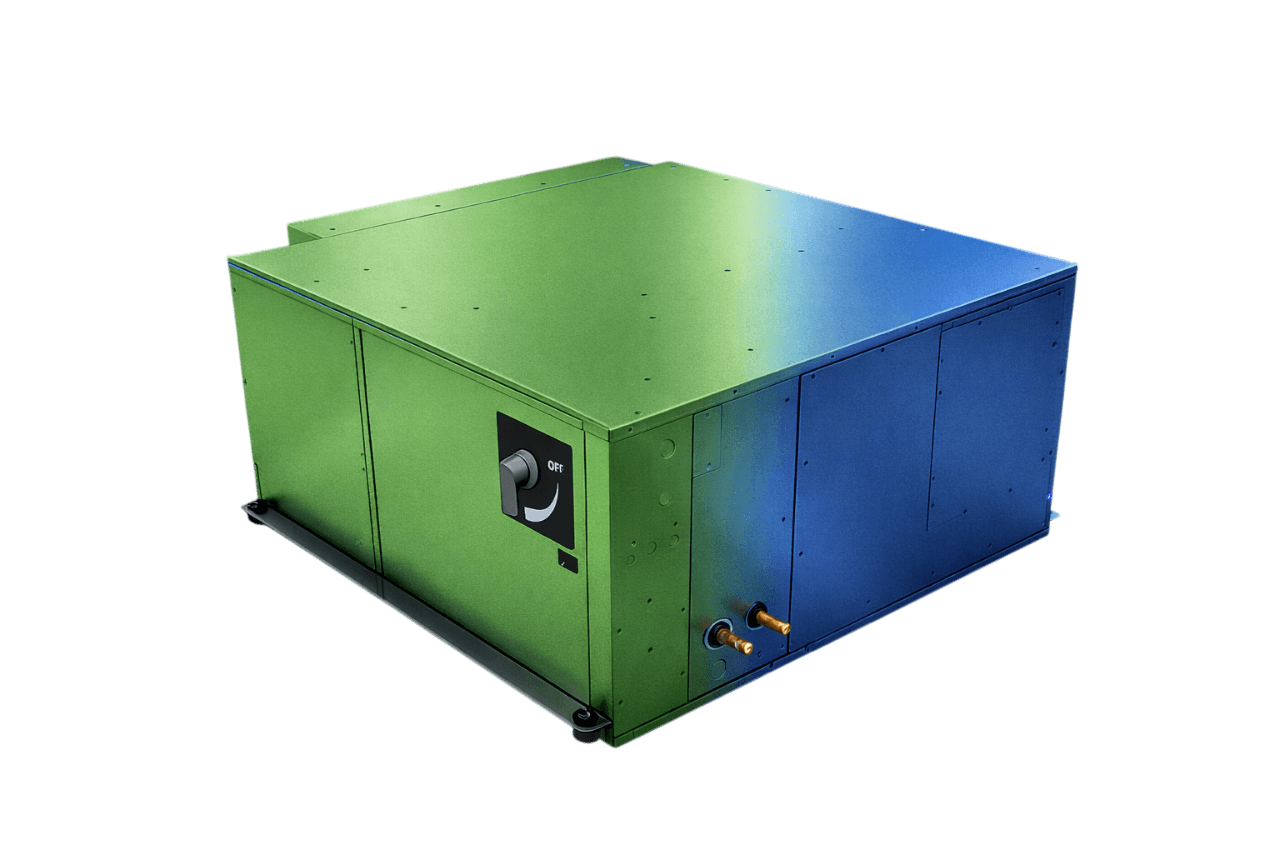
Ceiling Mounted Precision Units
Learn More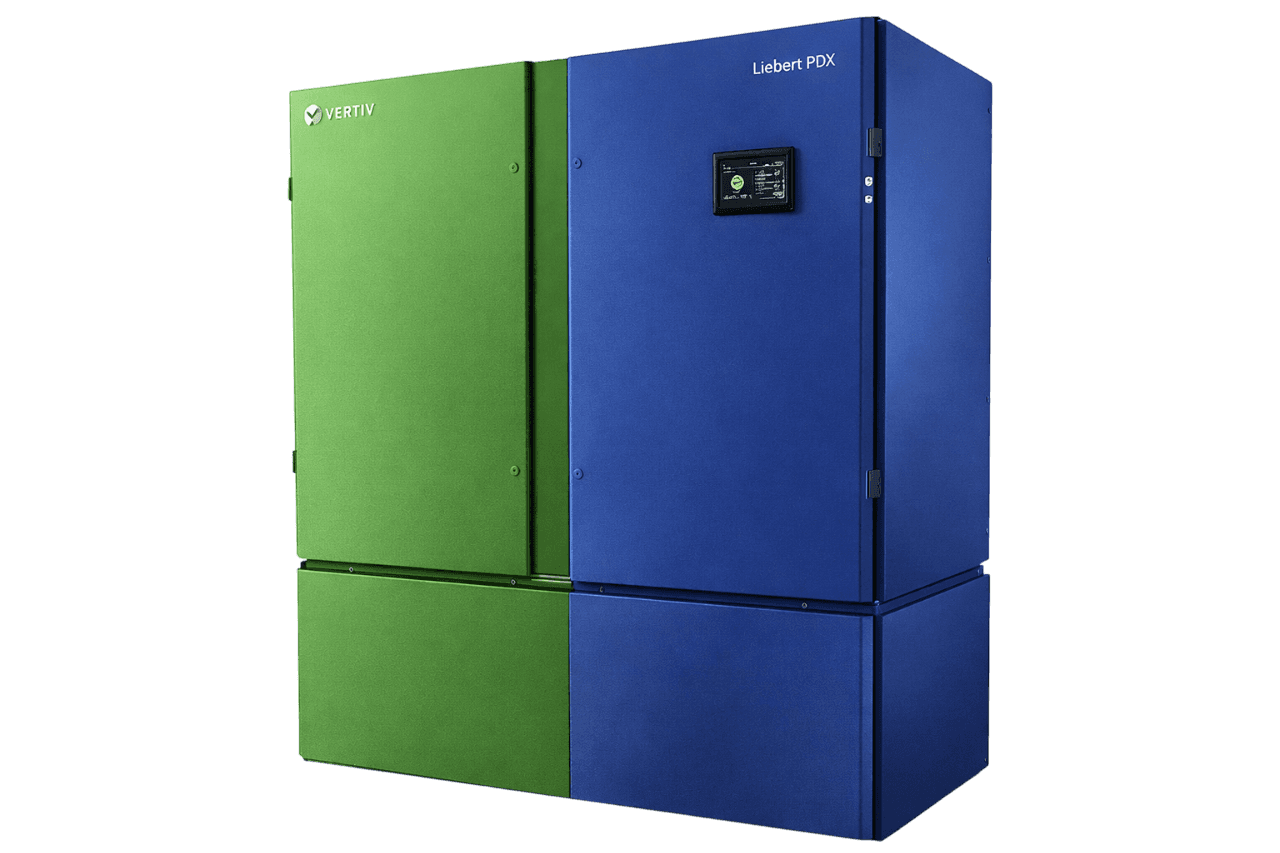
Floor Mounted Close Control Units
Learn More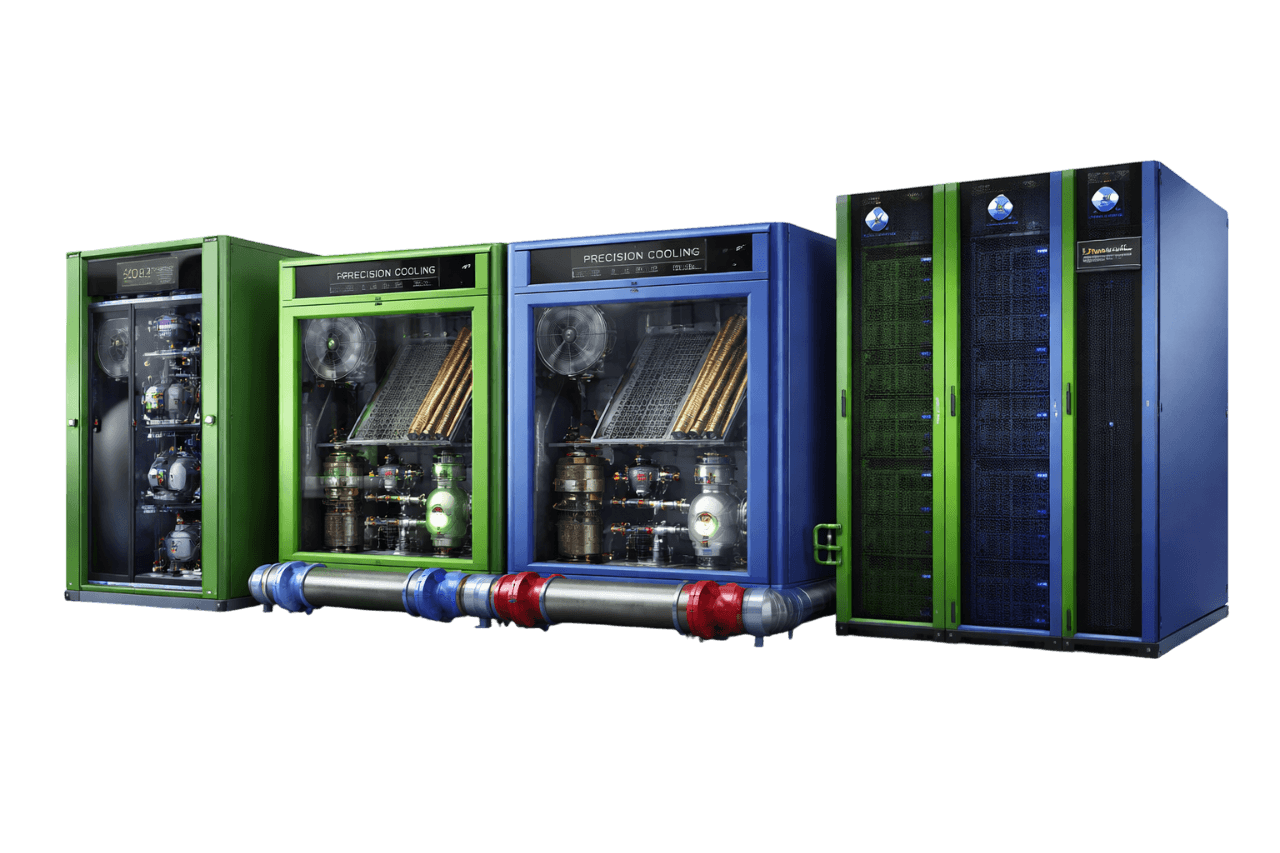
Modular Data Centre Cooling Systems
Learn MoreFrequently Asked Questions
Q1: What is an in-row cooling system?
An in-row cooling system is a precision cooling solution where cooling units are installed between server racks, drawing hot air from the hot aisle and supplying cold air directly to the cold aisle.
Q2: How does in-row cooling work?
In-row units pull hot exhaust air from behind the racks, cool it through a chilled water or DX coil, and discharge cold air in front of the racks, with EC fans responding to rack inlet temperature.
Q3: What is the difference between in-row cooling and perimeter CRAC / CRAH cooling?
In-row cooling sits between racks with a short air path and handles higher densities. Perimeter CRAC and CRAH units sit along room walls and push air across the room or through a raised floor.
Q4: What is the difference between chilled water and DX in-row cooling?
Chilled water in-row units use a central chiller plant. DX in-row units have their own compressors and connect to outdoor condensers.
Q5: Does in-row cooling need a raised floor?
No. In-row cooling works on slab floors, making it ideal for new builds, retrofits, and edge sites.
Q6: How many in-row cooling units are needed per rack row?
It depends on rack density, total IT load, unit capacity, and redundancy. Compress India calculates the exact number for each row.
Q7: What rack density can in-row cooling handle?
With containment, in-row cooling can handle rack densities well above what perimeter cooling supports. The exact limit depends on unit capacity and layout.
Q8: Is in-row cooling suitable for AI and GPU server racks?
Yes, for many AI and GPU racks. For the highest densities, liquid cooling may be needed alongside in-row cooling.
Q9: Why is hot aisle containment used with in-row cooling?
Hot aisle containment prevents hot and cold air from mixing, raises return air temperature, and improves cooling efficiency and capacity.
Q10: How often should in-row cooling units be serviced?
In-row units should receive preventive maintenance at least quarterly, with filters and condensate pumps checked more frequently.
Q11: What is the price of an in-row cooling unit in India?
The price depends on capacity, cooling type, unit width, and installation scope. Contact Compress India for an accurate quotation.
Q12: Does Compress India supply and install in-row cooling systems in Mumbai?
Yes. Compress India supplies, installs, commissions, and services in-row cooling systems across Mumbai, Navi Mumbai, and Thane, with 24/7 AMC and breakdown support.