Water-Cooled Reciprocating Chillers
(Reliable Cooling for Industrial & Commercial Applications)
Water-Cooled Reciprocating Chillers – Reliable Cooling for Industrial & Commercial Applications
Compress India provides Water-Cooled Reciprocating Chillers for industrial process cooling, commercial HVAC, manufacturing plants and temperature-controlled applications. Built around proven reciprocating compressor technology, these chillers are suitable for facilities requiring dependable cooling, stable chilled water temperatures and flexible operation across moderate cooling loads.
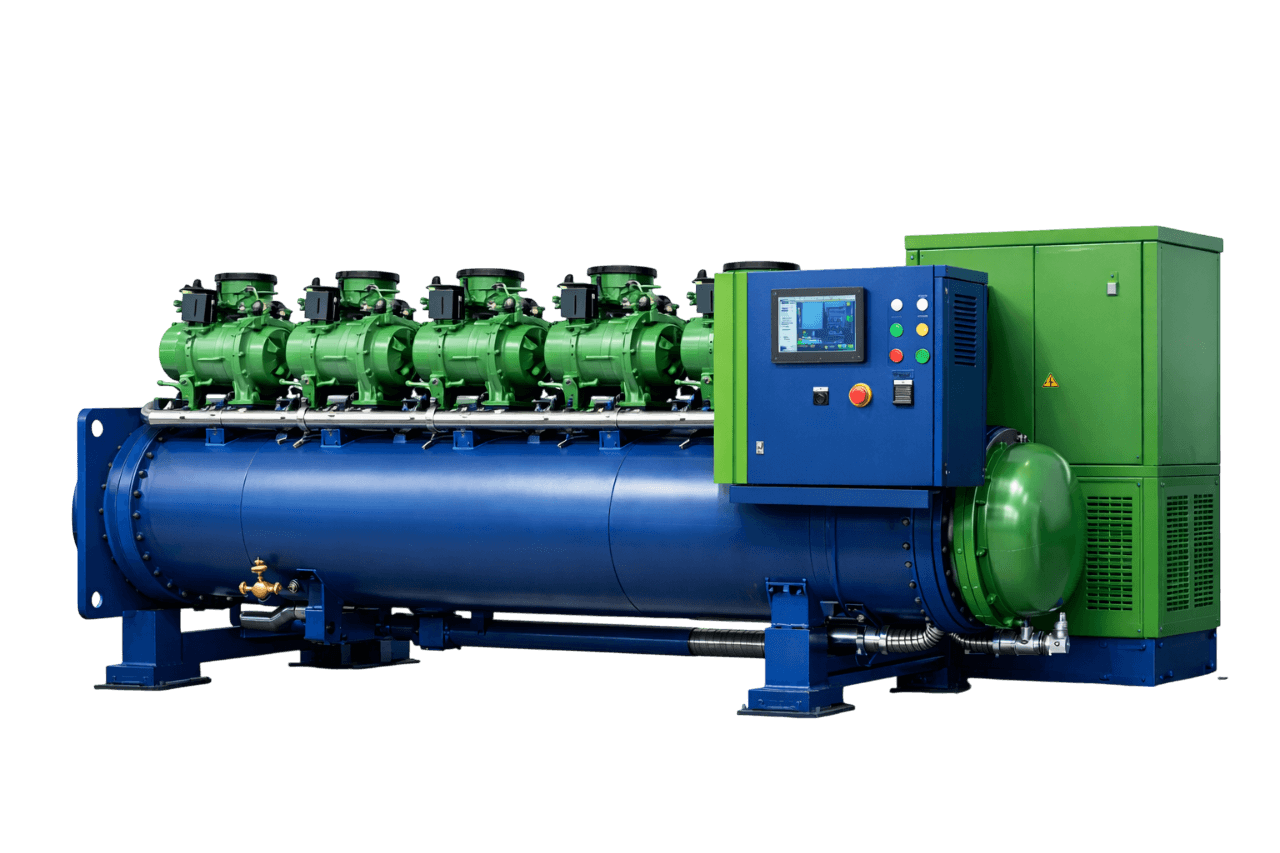
A Water Cooled Reciprocating Chiller uses one or more reciprocating compressors together with an evaporator, water-cooled condenser, refrigeration circuit and chilled water system to remove heat from industrial processes or commercial facilities.
Compress India supports customers looking for an Industrial Water Cooled Reciprocating Chiller, Water Cooled Process Chiller, Reciprocating Compressor Chiller, Industrial Process Chiller, HVAC Reciprocating Chiller and complete Water Cooled Reciprocating Chiller Plant solutions.
Our solutions can be configured for pharmaceutical manufacturing, plastic processing, chemical plants, food production, industrial machinery, commercial buildings, utility cooling and other applications requiring reliable chilled water.
Overview
A Reciprocating Chiller uses piston-type compressors to compress refrigerant and maintain the refrigeration cycle.
This compressor technology has been used for decades in commercial refrigeration, industrial cooling and process chilling applications because of its proven mechanical design, repairability and ability to operate efficiently across different load conditions.
A typical Water Cooled Reciprocating Compressor Chiller consists of:
Reciprocating compressor
Evaporator
Water-cooled condenser
Refrigeration circuit
Chilled water circuit
Condenser water circuit
Cooling tower
Pumps
Electrical panel
Control system
Safety devices
Depending on the required temperature and application, Compress India can help configure a standard chilled water system, low-temperature system or glycol-based cooling system.
How Water-Cooled Reciprocating Chillers Work
The Water Cooled Reciprocating Chiller Working Principle is based on transferring heat from process water or chilled water into refrigerant and then rejecting that heat through condenser water and a cooling tower.
Refrigeration Cycle
The refrigeration cycle normally consists of four main stages:
Evaporation
Compression
Condensation
Expansion
Warm return water enters the evaporator and transfers heat to the refrigerant.
The refrigerant absorbs the heat, changes state and moves toward the compressor.
After compression and condensation, the refrigerant passes through an expansion device before returning to the evaporator.
This cycle continues as long as cooling is required.
Reciprocating Compressor Operation
A reciprocating compressor works using pistons moving inside cylinders.
During the suction stroke, refrigerant vapour enters the compressor cylinder.
During the compression stroke, the piston compresses the refrigerant and increases its pressure and temperature.
The high-pressure refrigerant is then discharged toward the condenser.
Depending on the application, systems may use single or multiple compressors to provide staged cooling capacity.
Heat Rejection Process
After compression, hot refrigerant enters the water-cooled condenser.
Condenser water absorbs heat from the refrigerant.
The heated condenser water then travels to the cooling tower where the absorbed heat is rejected into the surrounding atmosphere.
The cooled condenser water returns to the chiller and repeats the cycle.
Chilled Water Circulation
Chilled water pumps circulate cooled water between the chiller and the connected process or HVAC system.
The water absorbs heat from production equipment, air-handling systems or industrial processes before returning to the evaporator.
Depending on operating temperature, the system may circulate:
Chilled water
Process water
Water-glycol mixture
Closed-loop cooling water
Note:Correct flow rate and chilled water temperature are important for maintaining stable performance.
Key Features of Water Cooled Reciprocating chillers
Reliable Cooling Performance
A properly selected Industrial Water Cooled Reciprocating Chiller can provide stable cooling for industrial machinery, production processes and centralized air-conditioning systems.
Water-cooled condenser operation provides controlled heat rejection through the condenser water and cooling tower system.
Proven Compressor Technology
Reciprocating compressor technology has been widely used in industrial and commercial refrigeration systems.
The mechanical construction allows technicians to inspect, repair and overhaul major compressor components when required.
Stable Temperature Control
Reciprocating chillers can maintain stable chilled water temperatures when correctly sized and controlled.
This makes them useful for applications where process temperature consistency is important.
Flexible Capacity Operation
Multiple-compressor configurations can stage compressor operation according to cooling demand.
For example, when cooling demand is lower, one compressor may operate while additional compressors remain off.
As the load increases, additional compressors can be activated.
Easy Serviceability
One of the advantages of reciprocating chillers is serviceability.
Components such as valves, pistons, bearings, crankshafts, oil systems and compressor assemblies can often be inspected and repaired individually.
This can be beneficial for facilities that already operate older reciprocating chiller installations.
System Configuration
Reciprocating Compressor Assembly
The compressor assembly can include:
Compressor motor
Pistons
Cylinders
Suction valves
Discharge valves
Crankshaft
Connecting rods
Bearings
Oil pump
Lubrication system
Capacity control devices
Safety controls
Proper compressor condition is important for maintaining cooling capacity and system reliability.
Evaporator
The evaporator removes heat from the circulating chilled water.
Depending on system configuration, shell-and-tube or other industrial heat exchanger arrangements may be used.
Efficient heat transfer depends on correct water flow and clean heat transfer surfaces.
Water-Cooled Condenser
The condenser removes heat from compressed refrigerant using circulating condenser water.
The condenser water is then cooled through a cooling tower.
Scale buildup or fouling inside condenser tubes can increase condensing pressure and reduce system efficiency.
Cooling Tower Connection
The cooling tower is connected to the condenser water circuit.
Proper cooling tower selection should consider:
Required heat rejection
Water flow rate
Ambient wet bulb conditions
Approach temperature
Water quality
Cooling tower fan capacity
Water Circulation System
A complete Water Cooled Chiller System can include:
Chilled water pumps
Condenser water pumps
Distribution piping
Isolation valves
Balancing valves
Strainers
Expansion tanks
Buffer tanks
Electrical and Control System
The electrical system may include:
Main electrical panel
Compressor starters
Contactors
Relays
Temperature sensors
Pressure sensors
Flow switches
Safety interlocks
PLC controls
BMS communication
Technical Specifications
Final Water Cooled Reciprocating Chiller Specifications depend on cooling requirement, chilled water temperature, ambient conditions, process requirement and system configuration.
Cooling Capacity
Water Cooled Reciprocating Chiller Capacity should be selected according to actual cooling load.
Common industrial requirements may include:
5 TR
5 TR Water Cooled Reciprocating Chiller
7.5 TR
7.5 TR Water Cooled Reciprocating Chiller
10 TR
10 TR Water Cooled Reciprocating Chiller
20 TR
20 TR Water Cooled Reciprocating Chiller
30 TR
30 TR Water Cooled Reciprocating Chiller
40 TR
40 TR Water Cooled Reciprocating Chiller
50 TR
50 TR Water Cooled Reciprocating Chiller
80 TR
80 TR Water Cooled Reciprocating Chiller
Actual capacity availability depends on compressor arrangement and system design.
Operating Temperature Range
Operating temperature depends on the application.
Standard systems may be used for chilled water cooling, while a Low Temperature Reciprocating Chiller may be configured for applications requiring lower process temperatures.
A glycol-water mixture may also be used where required.
Power Requirements
Electrical requirements depend on:
Compressor quantity
Compressor motor rating
Pump capacity
Cooling tower fans
Control equipment
Supply voltage
Starting method
Power availability should be evaluated before equipment selection.
Refrigerant Options
Refrigerant selection depends on:
Existing system
Compressor compatibility
Operating temperature
System design
Equipment configuration
Note:For retrofit projects, refrigerant compatibility should always be evaluated before changes are made.
Compressor Configuration
Possible configurations may include:
Single compressor
Dual compressor
Multiple compressor
Semi-hermetic reciprocating compressor
Staged compressor arrangement
A Semi Hermetic Reciprocating Chiller can provide service access to internal compressor components depending on equipment design.
Condenser and Evaporator Type
Industrial chillers commonly use robust heat exchangers suitable for continuous operation.
Final selection depends on water quality, required capacity, refrigerant and operating conditions.
Control Options
Control systems can include:
Local controller
Digital temperature controller
PLC
HMI
BMS connection
Alarm monitoring
Remote monitoring
Multi-compressor sequencing
Available Capacity Range
Compress India can support reciprocating chiller requirements across different industrial capacities.
Projects may require compact systems for machine cooling or larger multi-compressor systems for centralized process cooling.
Capacity selection should consider more than refrigeration tonnage alone.
Important factors include:
Process heat load
Required chilled water temperature
Return water temperature
Flow rate
Operating hours
Ambient conditions
Future expansion
Note:Correct sizing helps avoid insufficient cooling as well as excessive compressor cycling.
Industrial Applications
Pharmaceutical Facilities
A Water Cooled Reciprocating Chiller for Pharmaceutical Industry applications can support:
Process equipment cooling
Production area cooling
Manufacturing utilities
HVAC systems
Temperature-controlled processes
Laboratory cooling
Utility chilled water
Plastic Processing
A Water Cooled Reciprocating Chiller for Plastic Industry applications can support:
Injection moulding
Extrusion
Mould cooling
Hydraulic cooling
Process water
Production machinery
Stable cooling can help maintain consistent manufacturing conditions.
Chemical Processing
A Water Cooled Reciprocating Chiller for Chemical Industry applications may include:
Reactor cooling
Process vessel cooling
Batch cooling
Heat exchanger cooling
Production utilities
Temperature-controlled processing
Food and Beverage
A Water Cooled Reciprocating Chiller for Food Processing can support:
Process water cooling
Production equipment
Mixing processes
Beverage processing
Packaging operations
Utility cooling
Manufacturing
Industrial manufacturing facilities may use reciprocating chillers for:
Machinery cooling
Process cooling
Tool cooling
Production lines
Hydraulic systems
Central chilled water systems
Process Cooling
A Water Cooled Reciprocating Chiller for Process Cooling removes heat generated during manufacturing or production operations.
The chilled water circulates continuously between the process and evaporator.
Commercial Buildings
Reciprocating chillers can also be used for chilled water air-conditioning systems in suitable commercial applications.
These installations may support:
Offices
Institutional buildings
Hotels
Hospitals
Commercial facilities
Cold Storage and Utility Cooling
Depending on required temperature conditions, reciprocating cooling systems may support cold storage utilities, processing areas and auxiliary cooling applications.
Process Cooling Applications
Equipment Cooling
Production equipment can generate substantial heat.
A Process Cooling Chiller transfers this heat into circulating chilled water and helps maintain equipment within the required operating range.
Production Process Cooling
Process cooling may be required in manufacturing operations such as:
Plastic production
Chemical processing
Pharmaceutical production
Food manufacturing
Industrial machinery
Temperature-Controlled Operations
Some processes require stable temperature conditions to maintain repeatability and product quality.
A properly configured chiller can provide consistent chilled water to these operations.
Glycol Cooling Systems
Glycol can be added to chilled water systems for low-temperature applications or freeze protection.
Correct glycol concentration should be selected according to required operating temperature.
Continuous Process Cooling
Facilities operating continuously require a cooling system designed for sustained operation.
Correct compressor staging and plant capacity can help maintain stable performance during changing load conditions.
Complete Chiller Plant Setup
Compress India can support complete Water Cooled Reciprocating Chiller Plant requirements.
Chiller Unit
The chiller unit includes the core refrigeration system:
Compressor
Evaporator
Condenser
Refrigeration controls
Safety controls
Cooling Tower
The cooling tower removes heat from condenser water.
Correct cooling tower operation helps maintain appropriate condenser pressure.
Chilled Water Pumps
Chilled water pumps circulate water between the evaporator and connected cooling loads.
Pump selection depends on:
Flow rate
System pressure drop
Piping length
Equipment arrangement
Condenser Water Pumps
Condenser pumps circulate water between the condenser and cooling tower.
Incorrect flow can affect chiller performance.
Water Circulation Network
A complete Water Cooled Chilling Plant may include:
Main headers
Distribution pipes
Isolation valves
Balancing valves
Strainers
Flow switches
Temperature sensors
Expansion and Storage Systems
Additional plant components may include:
Expansion tanks
Buffer tanks
Air separators
Water treatment
Make-up water systems
Plant Controls
Central controls can coordinate:
Compressor staging
Chilled water pumps
Condenser pumps
Cooling tower fans
Temperature controls
Alarm systems
Installation and Commissioning
Site Assessment
Before installation, Compress India can evaluate:
Available space
Chiller location
Cooling tower location
Equipment access
Electrical supply
Piping route
Drainage
Maintenance access
Cooling Load Evaluation
Correct equipment selection begins with cooling load evaluation.
Factors can include:
Equipment heat generation
Product load
Process temperature
Operating hours
Ambient conditions
Safety margin
Mechanical Installation
Mechanical installation may include:
Equipment positioning
Pump installation
Cooling tower connection
Valves
Strainers
Supports
Insulation
Water Piping Integration
Proper piping design is required to achieve correct chilled water and condenser water flow.
Electrical Connections
Electrical work may include:
Power supply
Control wiring
Compressor starters
Protection devices
Interlocks
Sensors
BMS wiring
Testing and Commissioning
Commissioning may include checking:
Water flow
Chilled water temperature
Condenser water temperature
Refrigerant pressure
Compressor current
Control sequence
Safety systems
Cooling capacity
Service and Maintenance
Regular service helps maintain reliability and reduce the risk of unexpected breakdowns.
Preventive Maintenance
Preventive maintenance can include:
Operating parameter checks
Refrigerant inspection
Oil inspection
Water temperature checks
Compressor checks
Electrical inspection
Condenser cleaning
Compressor Inspection
The reciprocating compressor should be monitored for:
Abnormal noise
Vibration
Oil condition
Valve condition
Motor current
Discharge temperature
Refrigeration System Checks
Inspection may include:
Refrigerant level
Refrigerant leakage
Operating pressure
Superheat
Expansion controls
System temperature
Electrical and Control Checks
Electrical maintenance may cover:
Contactors
Relays
Terminals
Motor protection
Temperature controllers
Pressure switches
Sensors
Water-Side Maintenance
Water-side maintenance can include:
Condenser cleaning
Evaporator cleaning
Strainer cleaning
Flow checking
Pump inspection
Water treatment
Compressor Repair and Overhauling
Reciprocating compressors can often be dismantled, inspected and reconditioned depending on their construction and condition.
Valve Inspection and Replacement
Suction and discharge valves influence compressor capacity.
Damaged valves can reduce compression performance and cooling capacity.
Piston and Cylinder Inspection
Pistons, piston rings and cylinders should be checked for:
Wear
Scoring
Damage
Clearance
Lubrication condition
Bearing and Crankshaft Checks
Bearings and crankshafts are important mechanical components.
Inspection can help identify wear before severe mechanical damage occurs.
Oil System Maintenance
Proper lubrication helps protect moving compressor components.
Oil system maintenance may include:
Oil replacement
Filter cleaning
Oil pump inspection
Oil pressure checks
Compressor Reconditioning
Depending on compressor condition, reconditioning may include replacement or repair of internal mechanical components.
This can help extend the usable service life of suitable equipment.
Repair and Troubleshooting
Cooling Performance Issues
Reduced cooling capacity may be caused by:
Low refrigerant
Dirty condenser
Dirty evaporator
Compressor wear
Incorrect water flow
High condenser temperature
Refrigerant Leakage
Leaks should be identified and repaired before restoring the correct refrigerant charge.
Compressor Faults
Potential compressor problems may include:
Valve damage
Motor faults
Low oil pressure
Bearing wear
Piston damage
High discharge temperature
Electrical Faults
Electrical problems may include:
Compressor trip
Motor overload
Contactor failure
Loose connections
Sensor failure
Control voltage problems
Control System Faults
Control problems may include:
Incorrect temperature readings
Pressure switch faults
Sequencing problems
PLC faults
Communication errors
Emergency Breakdown Support
Unexpected industrial chiller breakdowns can interrupt production.
Systematic diagnosis helps determine whether the issue originates from the compressor, refrigeration circuit, electrical system, water circuit or controls.
Cleaning and Descaling
Condenser Tube Cleaning
Dirty condenser tubes can increase condensing pressure and compressor workload.
Regular cleaning helps maintain heat transfer.
Evaporator Cleaning
Evaporator fouling can reduce heat transfer and cooling capacity.
Chemical Descaling
Chemical descaling may be used where mineral deposits are present inside water-side surfaces.
Suitable cleaning chemicals and procedures should be selected according to equipment material and scale condition.
Cooling Tower Cleaning
Cooling tower maintenance can include:
Basin cleaning
Nozzle cleaning
Fill inspection
Fan inspection
Water treatment
Deposit removal
Water-Side Scale Removal
Scale buildup can increase energy consumption and reduce cooling performance.
Regular water treatment and cleaning help control deposits.
Retrofitting and System Upgrades
Older reciprocating chiller plants can sometimes be improved through targeted upgrades.
Compressor Upgrades
Existing compressor configurations may be reviewed where additional capacity, improved reliability or replacement equipment is required.
Control Panel Upgrades
Older control panels can be replaced or modernized using digital controllers, PLCs and modern protection devices.
Automation Integration
Chillers can be integrated into central plant controls or building management systems where compatible.
Pump Upgrades
Pump upgrades can improve water circulation and system control.
Cooling Tower Improvements
Cooling tower performance can be improved through:
Fan improvements
Cleaning
Water distribution corrections
Pump optimisation
Control improvements
Energy Efficiency Improvements
Possible improvements can include:
Improved compressor staging
Correct condenser water temperature
Heat exchanger cleaning
Pump optimisation
Cooling tower optimisation
Control upgrades
Automation and Monitoring
Control Panel Integration
Modern controls can improve monitoring of compressor and water system operation.
Building Management System Integration
BMS integration can provide centralized visibility of:
Chiller status
Temperature
Pressure
Alarm conditions
Equipment operation
Temperature Monitoring
Important temperatures may include:
Chilled water inlet
Chilled water outlet
Condenser water inlet
Condenser water outlet
Refrigerant discharge temperature
Pressure Monitoring
Pressure monitoring can provide information about:
Suction pressure
Discharge pressure
Oil pressure
Water pressure
Alarm and Fault Monitoring
Possible alarms include:
High pressure
Low pressure
Low oil pressure
Compressor overload
Low water flow
High temperature
Remote Monitoring
Remote monitoring can help maintenance teams review important operating conditions without remaining continuously near the chiller.
Energy Efficiency and Performance
Full-Load Performance
Full-load performance represents chiller operation near its rated capacity.
Actual performance varies according to operating temperatures and system condition.
Part-Load Performance
Multi-compressor reciprocating chillers can stage compressors according to cooling demand.
This provides flexible operation during reduced load conditions.
Power Consumption
Water Cooled Reciprocating Chiller Power Consumption depends on:
Required capacity
Compressor efficiency
Chilled water temperature
Condenser temperature
Cooling tower performance
Load conditions
Maintenance condition
Operating Conditions
Chiller performance can be affected by:
High condenser temperature
Low water flow
Dirty heat exchangers
Refrigerant shortage
Compressor wear
Incorrect controls
Performance Optimization
A High Efficiency Water Cooled Reciprocating Chiller installation requires both properly selected equipment and a correctly operating plant.
Performance improvements may include:
Condenser cleaning
Compressor maintenance
Proper water flow
Cooling tower optimisation
Correct refrigerant charge
Improved compressor staging
These measures can help maintain an Energy Efficient Water Cooled Reciprocating Chiller system.
Advantages of Reciprocating Chillers
Proven and Reliable Technology
Reciprocating compressors use established mechanical technology that has been used in refrigeration and industrial cooling applications for many years.
Flexible Capacity Control
Multiple compressors can be staged according to actual cooling demand.
This is useful where cooling loads vary throughout the operating cycle.
Ease of Maintenance
Many internal compressor components can be inspected or replaced during compressor overhauling.
Suitable for Moderate Cooling Loads
Reciprocating chillers can be suitable for small to moderate industrial cooling requirements where larger screw or centrifugal chillers may not be necessary.
Water-Cooled vs Air-Cooled Reciprocating Chillers
The main difference between water-cooled and air-cooled reciprocating chillers is the heat rejection method.
Water-Cooled
A Water Cooled Reciprocating Chiller uses condenser water and generally requires a cooling tower.
Water-cooled systems may be selected when:
- Stable condenser conditions are required
- Cooling tower infrastructure is available
- The system operates for long periods
- Industrial process cooling is required
Air-Cooled
An Air Cooled Reciprocating Chiller rejects condenser heat directly into ambient air using condenser coils and fans.
Air-cooled systems may be preferred where:
- Cooling tower installation is not practical
- Water availability is limited
- Simplified installation is required
The correct configuration depends on site conditions and project requirements.
Reciprocating Chillers vs Screw Chillers
When comparing a Water Cooled Reciprocating Chiller vs Screw Chiller, the compressor design and typical capacity range are major differences.
Reciprocating Chillers
Reciprocating compressors use pistons and cylinders.
Reciprocating chillers are often suitable for smaller and moderate cooling capacities where serviceability and staged compressor operation are important.
Screw Chillers
Screw compressors use rotating screw elements.
Screw chillers are generally considered for larger continuous industrial cooling loads.
Selection should consider:
Cooling capacity
Operating hours
Process temperature
Load profile
Maintenance requirements
Energy consumption
Existing infrastructure
Reciprocating Chillers vs Scroll Chillers
A Water Cooled Reciprocating Chiller vs Scroll Chiller comparison involves different compressor technologies.
Reciprocating Chillers
Reciprocating compressors use piston and cylinder assemblies.
Scroll Chillers
Scroll compressors use interlocking scroll elements to compress refrigerant.
Scroll chillers generally have fewer moving compression components, while reciprocating compressors can provide greater internal serviceability in certain industrial systems.
The appropriate technology depends on:
Required capacity
Cooling application
Maintenance strategy
Operating temperature
Existing plant equipment
How to Select the Right Chiller
Cooling Load
The first step is determining the amount of heat that must be removed from the process or facility.
Required Capacity
Cooling capacity should be selected after calculating the actual load.
Incorrect sizing can increase operating cost or create insufficient cooling.
Operating Temperature
Standard chilled water applications and low-temperature industrial cooling applications require different system configurations.
Site Conditions
Important site factors include:
Available space
Ambient conditions
Water availability
Cooling tower location
Equipment access
Power Availability
Electrical supply should be checked against compressor and auxiliary equipment requirements.
Maintenance Requirements
Consider:
Compressor service access
Spare parts
Heat exchanger cleaning
Cooling tower maintenance
Water treatment
Future Cooling Demand
Facilities expecting production growth should consider future cooling requirements during initial plant planning.
Pricing and Cost Considerations
Customers searching for Water Cooled Reciprocating Chiller Price, Water Cooled Reciprocating Chiller Price in India or Industrial Water Chiller Price should consider the complete system configuration.
There is no single standard price because industrial chillers are selected according to project requirements.
Cooling Capacity
A 5 TR reciprocating chiller has very different equipment requirements from a 50 TR or 80 TR system.
Capacity therefore influences the overall price significantly.
Compressor Configuration
Price can vary according to:
Number of compressors
Compressor capacity
Semi-hermetic configuration
Staging requirements
Low-temperature configuration
Equipment Selection
Additional cost factors include:
Evaporator
Condenser
Control panel
Cooling tower
Pumps
Automation
Accessories
Installation Cost
Installation expenses may include:
Piping
Electrical cabling
Pump installation
Cooling tower
Valves
Insulation
Commissioning
Operating Cost
Long-term operating cost depends heavily on:
Electricity consumption
Operating hours
Chilled water temperature
Cooling tower operation
Compressor condition
Maintenance Cost
Maintenance expenses may include:
Compressor servicing
Oil replacement
Valve replacement
Heat exchanger cleaning
Refrigerant service
Electrical maintenance
Note:For an accurate Water Cooled Reciprocating Chiller Price in India, Compress India can evaluate the application, required capacity and complete plant configuration before providing a quotation.
Brands and Systems We Support
Compress India supports different reciprocating and water-cooled chiller systems used across industrial and commercial facilities.
Support requirements may include systems associated with:
Carrier reciprocating chiller
Trane reciprocating chiller
York reciprocating chiller
Voltas water cooled reciprocating chiller
Carrier water cooled chiller
Trane water cooled chiller
York water cooled chiller
Blue Star chillers
Industrial reciprocating chillers
Reciprocating liquid chillers
Water cooled industrial chillers
Low temperature chillers
Every service requirement should be evaluated according to the actual model, compressor design, refrigerant and operating condition.
Why Choose Compress India
Compress India supports industrial customers requiring reliable cooling systems, technical assistance and ongoing chiller service.
Our capabilities can include:
Water cooled reciprocating chiller selection
Industrial process cooling systems
Chiller plant planning
Equipment installation
Commissioning
Preventive maintenance
Reciprocating compressor repair
Compressor overhauling
Chiller troubleshooting
Condenser cleaning
Evaporator cleaning
Chemical descaling
Control upgrades
Automation integration
Plant optimisation
Whether you are looking for a Water Cooled Reciprocating Chiller Manufacturer in India, Water Cooled Reciprocating Chiller Supplier in India, Reciprocating Chiller Manufacturer in India or service support for an existing chiller plant, Compress India can help evaluate the requirement and provide a suitable solution.
We can also support industrial projects requiring a Water Cooled Reciprocating Chiller Manufacturer in Mumbai and cooling solutions for facilities across different industrial sectors.
Request a Quote
Need a Water Cooled Reciprocating Chiller, industrial process chiller or complete chilled water plant?
Share your cooling requirement with Compress India for system evaluation.
Useful project information includes:
Required TR capacity
Process application
Chilled water inlet temperature
Chilled water outlet temperature
Required flow rate
Daily operating hours
Site location
Available electrical supply
Existing chiller details
Cooling tower availability
Required operating temperature
Future expansion requirement
Our team can assist with chiller selection, plant configuration, installation, commissioning, maintenance and repair support.
Connect with Our HVAC Execution Team
Need help with your cooling project? Connect with our team for technical support, project coordination, installation, service and lifecycle assistance.
Related Water-Cooled Chillers
Explore other water-cooled chiller systems available within our cooling solutions range.
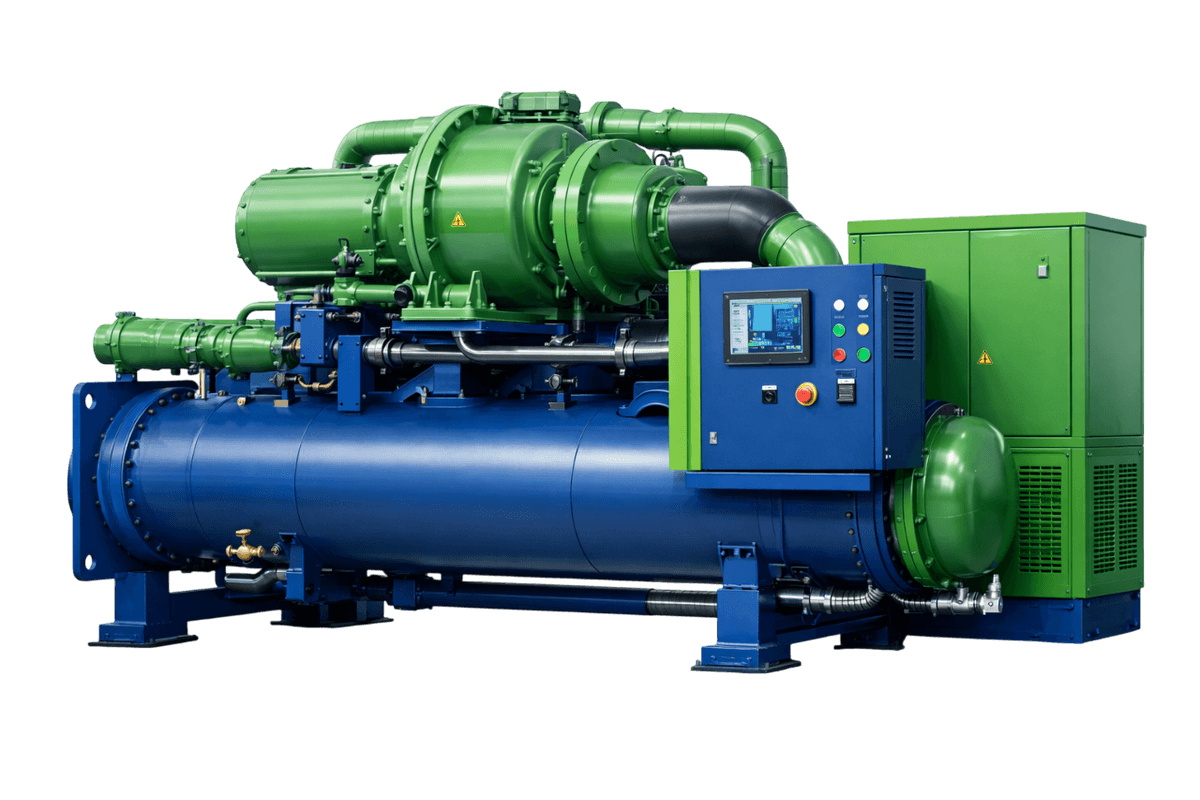
Water-Cooled Centrifugal Chillers
Learn More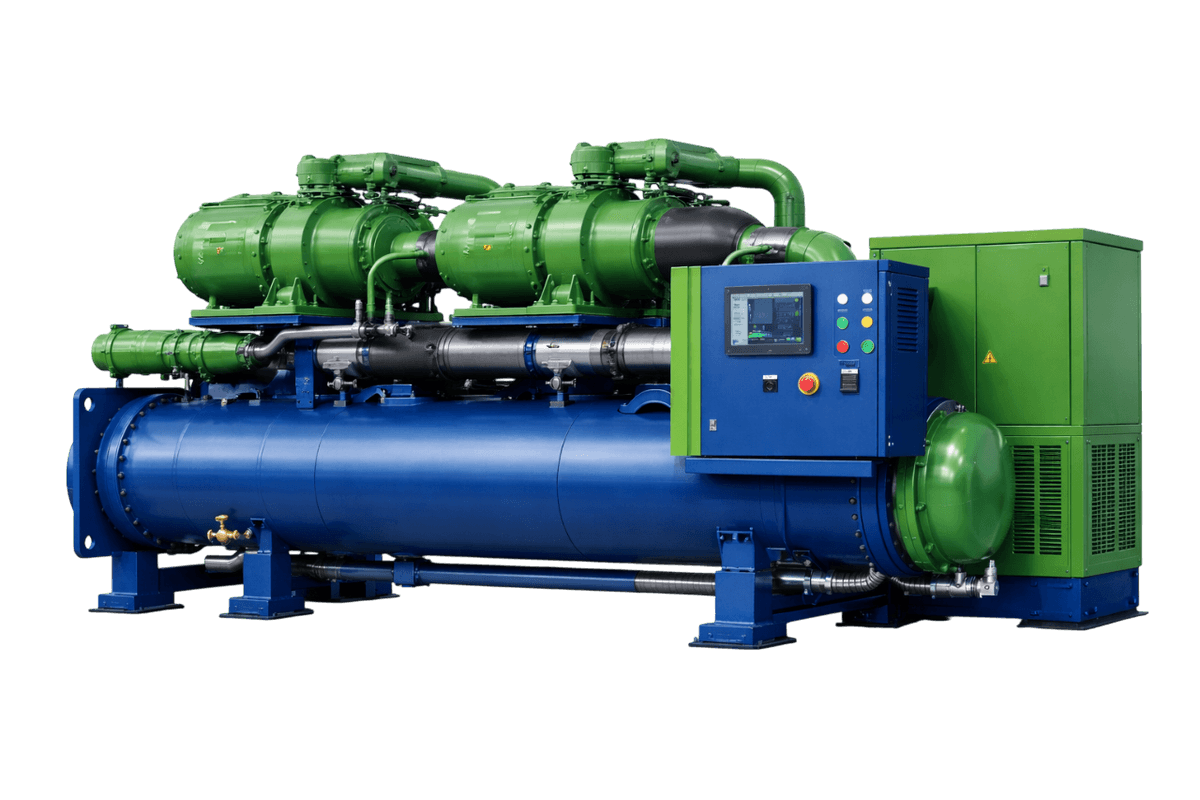
Water-Cooled Screw Chillers
Learn More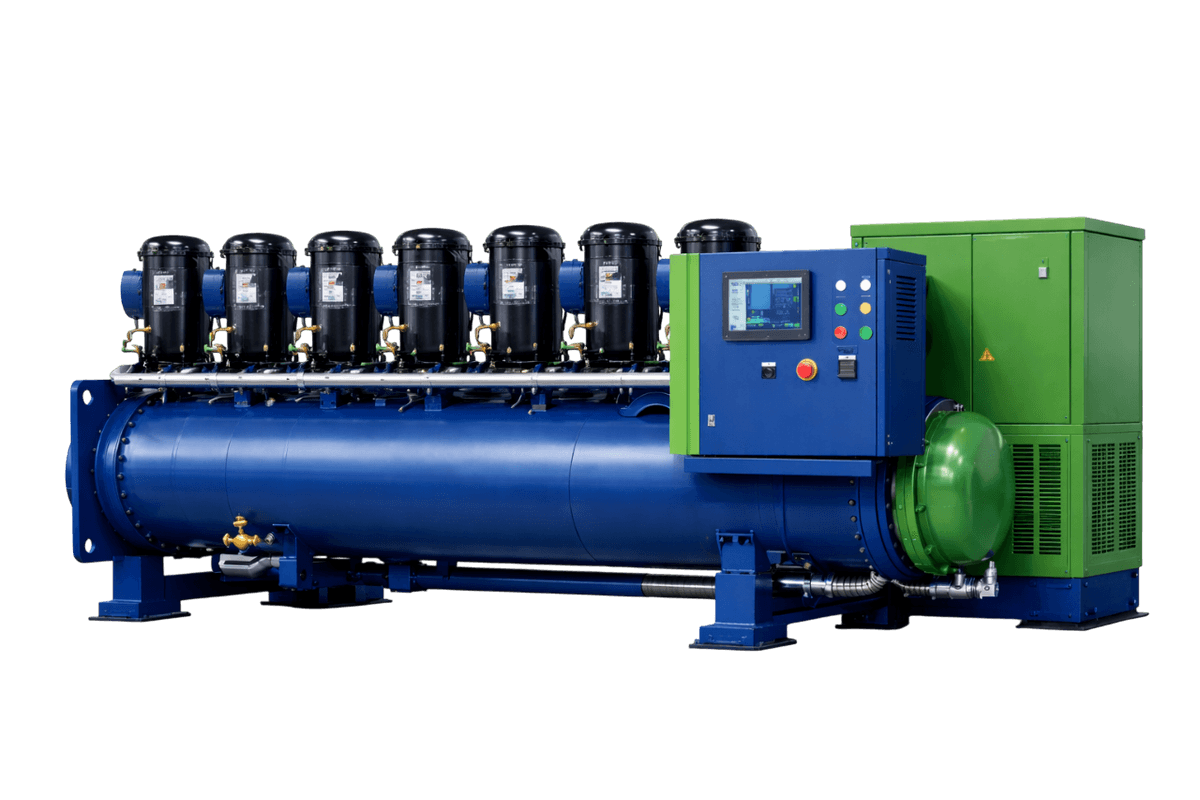
Water Cooled Scroll Chiller
Learn MoreFrequently Asked Questions
What is a water-cooled reciprocating chiller?
A Water Cooled Reciprocating Chiller is a refrigeration system that uses a piston-type reciprocating compressor and water-cooled condenser to produce chilled water for industrial processes or HVAC applications.
How does a reciprocating chiller work?
The evaporator removes heat from chilled water. Refrigerant absorbs this heat and enters the reciprocating compressor. The compressor increases refrigerant pressure before it enters the condenser. Condenser water removes the heat and transfers it to a cooling tower.
Where are reciprocating chillers used?
Common Water Cooled Reciprocating Chiller Applications include pharmaceutical manufacturing, plastics, chemicals, food processing, industrial machinery, process cooling, commercial HVAC and utility chilled water systems.
What capacities are available?
Applications may require 5 TR, 7.5 TR, 10 TR, 20 TR, 30 TR, 40 TR, 50 TR, 80 TR and other configurations depending on system design.
What are the advantages of reciprocating chillers?
Advantages can include proven compressor technology, staged capacity control, mechanical serviceability and suitability for moderate industrial cooling requirements.
What is the difference between reciprocating and screw chillers?
Reciprocating chillers use piston compressors, while screw chillers use rotary screw compressors. Reciprocating systems are commonly considered for smaller and moderate capacities, while screw chillers are frequently used for larger continuous cooling loads.
What is the difference between reciprocating and scroll chillers?
Reciprocating compressors use pistons and cylinders, while scroll compressors use interlocking scroll elements. Selection depends on capacity, service requirements, operating conditions and application.
What maintenance does a reciprocating chiller require?
Maintenance may include compressor inspection, oil checks, refrigerant inspection, electrical testing, condenser cleaning, evaporator cleaning, pump checks and cooling tower maintenance.
How often should the compressor be serviced?
Service frequency depends on operating hours, compressor condition, application, refrigerant system and equipment recommendations. Industrial systems operating continuously should be inspected regularly.
What factors affect chiller efficiency?
Water Cooled Reciprocating Chiller Efficiency can be affected by condenser water temperature, chilled water temperature, compressor condition, refrigerant charge, heat exchanger cleanliness, cooling tower performance and system load.
How do I select the correct cooling capacity?
The correct cooling capacity should be calculated from the actual process heat load, required temperature, water flow, operating hours and future requirements.
Do you provide installation and maintenance support?
Yes. Compress India supports water-cooled reciprocating chiller projects requiring system planning, installation, commissioning, preventive maintenance, compressor repair, troubleshooting, cleaning, retrofitting and plant optimisation.