Water-Cooled Scroll Chillers
(Efficient Cooling Solutions for Industrial & Commercial Applications)
Water-Cooled Scroll Chillers – Efficient Cooling Solutions for Industrial & Commercial Applications
Compress India provides Water Cooled Scroll Chillers designed for reliable industrial process cooling, commercial HVAC systems, manufacturing facilities and temperature-controlled applications. Built around proven scroll compressor technology and efficient water-cooled heat rejection, these systems provide stable chilled water performance across a wide range of operating conditions.
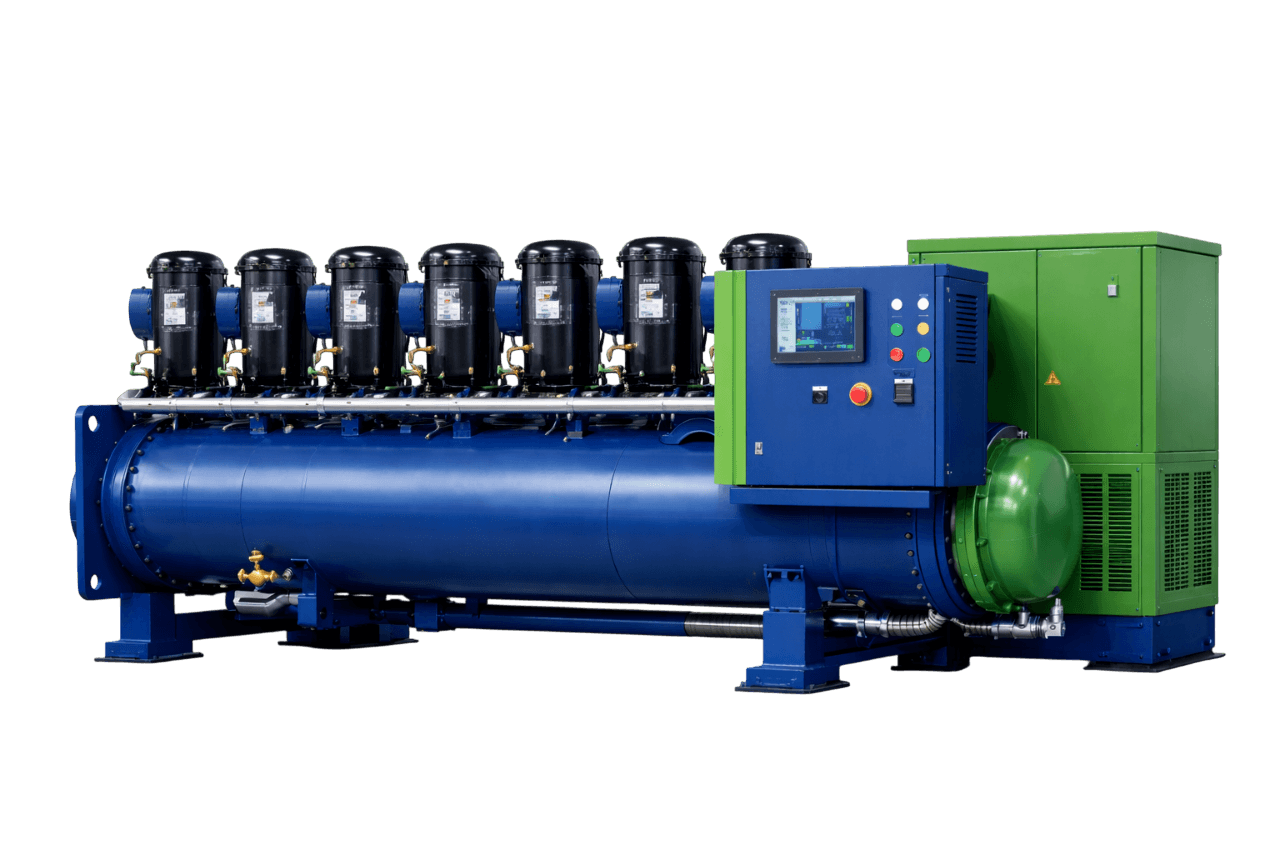
A Water Cooled Scroll Chiller combines one or multiple scroll compressors with an evaporator, water-cooled condenser, chilled water circulation system and cooling tower arrangement. The system removes heat from industrial processes or commercial HVAC loads and transfers it through the refrigeration circuit to condenser water for heat rejection.
Compress India supports customers looking for an Industrial Water Cooled Scroll Chiller, Water Cooled Scroll Compressor Chiller, Water Cooled Process Chiller, Industrial Process Chiller, HVAC Scroll Chiller, Water Cooled HVAC Chiller and complete Water Cooled Scroll Chiller Plant solutions.
Depending on project requirements, scroll chillers can be configured for pharmaceutical manufacturing, plastic processing, food and beverage production, dairy operations, manufacturing plants, commercial buildings, hospitals, hotels, data centres and other applications requiring reliable chilled water.
Overview of Water-Cooled Scroll Chillers
A Scroll Chiller uses one or more scroll compressors to compress refrigerant and maintain the refrigeration cycle.
Scroll compressors use two interlocking spiral-shaped scroll elements. One scroll remains stationary while the other moves in an orbital motion, progressively compressing refrigerant toward the centre.
This compression method provides smooth refrigerant flow, compact construction and comparatively low vibration.
A typical Water Cooled Scroll Compressor Chiller consists of:
Scroll compressor or multiple scroll compressors
Evaporator
Water-cooled condenser
Refrigeration circuit
Expansion device
Chilled water circuit
Condenser water circuit
Cooling tower
Chilled water pumps
Condenser water pumps
Electrical panel
Control system
Safety devices
Water-cooled scroll chillers are particularly suitable where a compact, modular and flexible cooling system is required.
How Water-Cooled Scroll Chillers Work
The Water Cooled Scroll Chiller Working Principle is based on a closed refrigeration cycle that transfers heat from chilled water into refrigerant and ultimately rejects that heat through condenser water and a cooling tower.
Refrigeration Cycle in Water-Cooled Scroll Chillers
The refrigeration cycle typically consists of four stages:
Evaporation
Compression
Condensation
Expansion
Warm water returning from the industrial process or HVAC system flows through the evaporator.
The refrigerant inside the evaporator absorbs heat from the circulating water.
The refrigerant then enters the scroll compressor, where its pressure and temperature increase.
The high-pressure refrigerant moves to the condenser, transfers heat to condenser water and then passes through an expansion device before returning to the evaporator.
The cycle repeats continuously while cooling is required.
Scroll Compressor Operation
A scroll compressor contains two spiral-shaped scroll elements.
One remains fixed while the second moves in an orbital pattern. Refrigerant becomes trapped between the scroll elements and is progressively compressed toward the centre.
This operating principle enables smooth compression with fewer major moving compression components than some conventional compressor designs.
Depending on cooling demand, a Single Compressor Water Cooled Scroll Chiller or Multiple Compressor Water Cooled Scroll Chiller configuration can be selected.
Heat Rejection Through Water-Cooled Condenser
After compression, hot refrigerant enters the condenser.
Condenser water absorbs heat from the refrigerant.
The warmed condenser water then flows to the cooling tower where the heat is released to the atmosphere.
The cooled condenser water returns to the chiller and repeats the heat rejection cycle.
Chilled Water Circulation Process
Chilled water pumps circulate water between the evaporator and the connected cooling load.
The chilled water absorbs heat from:
Production equipment
Process machinery
Air handling systems
Manufacturing processes
Commercial HVAC systems
The heated return water then flows back to the chiller where it is cooled again.
Key Features of Water-Cooled Scroll Chillers
High Cooling Efficiency
A properly designed High Efficiency Water Cooled Scroll Chiller can provide dependable cooling while maintaining stable condenser conditions through water-cooled heat rejection.
Overall efficiency depends on compressor performance, cooling tower operation, chilled water temperature, condenser water temperature and system loading.
Compact System Design
Scroll compressors provide compact construction, allowing multiple compressors to be integrated into relatively space-efficient chiller packages.
This can be useful where plant room space is limited.
Low Noise and Vibration
The orbital compression movement of scroll compressors generally results in smooth operation.
Reduced vibration can be beneficial for commercial facilities, healthcare buildings, hotels and other installations where equipment noise is an important consideration.
Reliable Scroll Compressor Technology
Scroll compressors use a relatively simple compression mechanism.
Properly maintained systems can provide dependable operation across industrial and commercial cooling applications.
Stable Temperature Control
Accurate chilled water temperature control is important for both manufacturing and HVAC applications.
A properly configured scroll chiller can maintain stable chilled water outlet temperatures under changing cooling loads.
Flexible Capacity Operation
Multiple-compressor systems allow compressors to be staged according to cooling demand.
When cooling demand is low, fewer compressors operate.
As the required capacity increases, additional compressors can be activated.
This makes a Multiple Compressor Water Cooled Scroll Chiller suitable for applications with changing load profiles.
Easy Installation and Maintenance
Compact equipment configuration and modular compressor arrangements can simplify installation and routine service.
Individual compressors can also be inspected separately in multi-compressor systems.
Advanced Control and Monitoring
Modern scroll chillers can include controls for monitoring:
Chilled water temperature
Condenser water temperature
Refrigerant pressure
Compressor operating status
Water flow
Electrical parameters
Alarm conditions
Operating hours
Energy consumption
System Configuration of Water-Cooled Scroll Chillers
Scroll Compressor Assembly
The compressor section can include:
Scroll compressor
Compressor motor
Suction line
Discharge line
Oil management components
Pressure sensors
Temperature sensors
Electrical protection devices
Multiple compressor configurations can provide staged cooling capacity.
Evaporator Section
The evaporator transfers heat from chilled water into refrigerant.
Efficient operation depends on:
Correct water flow
Clean heat exchanger surfaces
Correct refrigerant charge
Proper temperature difference
Water-Cooled Condenser
The condenser transfers heat from refrigerant into circulating condenser water.
Water-cooled condenser performance depends heavily on:
Water temperature
Water flow
Tube cleanliness
Cooling tower performance
Water treatment
Cooling Tower Connection
The cooling tower removes heat from the condenser water circuit.
Cooling tower selection should consider:
Heat rejection requirement
Condenser water flow
Wet bulb temperature
Approach temperature
Water quality
Fan capacity
Chilled Water Circulation System
The chilled water side may include:
Chilled water pumps
Supply and return piping
Buffer tanks
Expansion tanks
Flow switches
Temperature sensors
Isolation valves
Condenser Water Circulation System
The condenser circuit can include:
Condenser water pumps
Cooling tower
Piping
Balancing valves
Strainers
Water treatment equipment
Electrical and Control Panel
The control system may contain:
Compressor starters
Contactors
Relays
Protection devices
PLC controls
Temperature controllers
Pressure switches
Flow switches
BMS interfaces
Alarm systems
Technical Specifications of Water-Cooled Scroll Chillers
Final Water Cooled Scroll Chiller Specifications depend on cooling load, chilled water temperature, operating conditions and project configuration.
Cooling Capacity
Water Cooled Scroll Chiller Capacity should be selected according to the calculated heat load.
Common capacity requirements can include:
10 TR
10 TR Water Cooled Scroll Chiller
15 TR
15 TR Water Cooled Scroll Chiller
20 TR
20 TR Water Cooled Scroll Chiller
30 TR
30 TR Water Cooled Scroll Chiller
50 TR
50 TR Water Cooled Scroll Chiller
60 TR
60 TR Water Cooled Scroll Chiller
100 TR
100 TR Water Cooled Scroll Chiller
Actual configuration depends on compressor quantity, refrigerant circuit design and operating temperatures.
Compressor Configuration
Possible configurations include:
Single scroll compressor
Dual scroll compressors
Multiple scroll compressors
Independent refrigeration circuits
Staged compressor operation
A Single Compressor Water Cooled Scroll Chiller may be suitable for smaller loads, while larger systems may use multiple compressors.
Refrigerant Options
Refrigerant selection depends on:
Compressor compatibility
Equipment design
Required temperature
Existing system
Operating pressure
Project specification
Operating Temperature Range
The required chilled water temperature depends on the application.
Conventional HVAC systems usually operate at different temperatures from industrial process cooling systems.
For lower-temperature applications, glycol may be incorporated into the chilled water circuit where required.
Chilled Water Flow Rate
Correct chilled water flow is essential for achieving the designed cooling capacity.
Flow requirements depend on:
Cooling load
Temperature difference
Evaporator design
Process requirement
Condenser Water Flow Rate
Condenser water flow directly affects heat rejection.
Note:Insufficient flow can increase condensing pressure and negatively affect compressor performance.
Electrical Power Requirements
Electrical requirements can include:
Compressor motor power
Chilled water pump power
Condenser pump power
Cooling tower fan power
Control panel supply
Efficiency Parameters
Water Cooled Scroll Chiller Efficiency can be evaluated using:
Cooling capacity
Input power
COP
Full-load efficiency
Part-load efficiency
Auxiliary equipment consumption
Control Options
Available control options can include:
Digital temperature control
PLC control
HMI
Multi-compressor sequencing
BMS integration
Remote monitoring
Alarm monitoring
Energy monitoring
Available Capacity Range of Water-Cooled Scroll Chillers
Compress India can support scroll chiller requirements across different industrial and commercial capacities.
System selection should consider more than refrigeration tonnage alone.
Important factors include:
Process cooling load
Chilled water inlet temperature
Chilled water outlet temperature
Water flow
Operating hours
Peak cooling demand
Part-load conditions
Future expansion
Note:A modular multi-compressor system can also provide flexibility where cooling demand changes during operation.
Industrial Applications of Water-Cooled Scroll Chillers
Pharmaceutical Industry
A Water Cooled Scroll Chiller for Pharmaceutical Industry applications can support:
Production equipment cooling
Manufacturing utilities
HVAC systems
Process cooling
Laboratory equipment
Temperature-controlled areas
Plastic Processing Industry
A Water Cooled Scroll Chiller for Plastic Industry applications can support:
Injection moulding
Mould cooling
Extrusion processes
Hydraulic cooling
Production equipment
Process water cooling
Chemical Industry
Scroll chillers can support chemical processing applications such as:
Process vessel cooling
Batch cooling
Heat exchanger cooling
Production utilities
Controlled process temperatures
Food and Beverage Industry
A Water Cooled Scroll Chiller for Food Processing may be used for:
Process cooling
Production equipment
Beverage production
Mixing processes
Packaging operations
Utility cooling
Manufacturing Facilities
Manufacturing facilities may use an Industrial Water Cooled Scroll Chiller for:
Machine cooling
Process cooling
Tool cooling
Production line cooling
Hydraulic systems
Central chilled water systems
Process Cooling Applications
A Water Cooled Scroll Chiller for Process Cooling can remove heat generated by machinery, production processes or industrial equipment.
Commercial Buildings
A Water Cooled HVAC Chiller can support centralized chilled water air conditioning systems in commercial buildings.
Hospitals and Healthcare Facilities
Water-cooled scroll chillers can provide chilled water for HVAC applications requiring stable cooling and controlled indoor conditions.
Hotels and Hospitality
Quiet compressor operation and modular capacity control can make scroll technology suitable for appropriate hospitality applications.
Data Centres and IT Facilities
Data centres and technical facilities generate continuous heat loads.
Depending on project design, scroll chillers can support chilled water systems serving technical cooling equipment.
Process Cooling Applications of Water-Cooled Scroll Chillers
Production Equipment Cooling
Industrial machinery generates heat during operation.
A Process Cooling Chiller removes this heat using continuously circulated chilled water.
Machine Cooling
Machine cooling applications may include:
Manufacturing equipment
Hydraulic systems
CNC machinery
Moulding equipment
Production systems
Temperature-Controlled Processes
Certain production operations require controlled temperatures to maintain process stability.
Chilled water can help keep process equipment within defined temperature limits.
Glycol Cooling Systems
A water-glycol mixture can be used where lower operating temperatures or freeze protection are required.
Correct glycol concentration should be selected according to the process temperature.
Continuous Process Cooling
Facilities operating continuously require cooling equipment capable of sustained operation.
Multiple compressor configurations can provide staged operation according to changing demand.
Closed-Loop Cooling Systems
Closed-loop systems circulate chilled water repeatedly between the chiller and connected equipment.
This provides controlled cooling without continuously consuming process water.
Complete Water-Cooled Scroll Chiller Plant Setup
Compress India can support complete Water Cooled Scroll Chiller Plant requirements rather than only supplying the chiller unit.
Chiller Unit
The core chiller package includes:
Scroll compressors
Evaporator
Condenser
Refrigeration circuit
Controls
Safety systems
Cooling Tower
The cooling tower rejects heat absorbed by the condenser water.
Correct selection is important for maintaining suitable condenser temperatures.
Chilled Water Pumps
Chilled water pumps circulate water between the evaporator and cooling loads.
Pump sizing depends on:
Required flow rate
Pipe length
Pressure drop
Equipment configuration
Condenser Water Pumps
Condenser pumps circulate water between the condenser and cooling tower.
Water Circulation Network
A complete Water Cooled Chilling Plant may include:
Main piping headers
Distribution lines
Isolation valves
Balancing valves
Strainers
Flow switches
Temperature sensors
Expansion Tank and Buffer Tank
Expansion and buffer systems can help accommodate water volume changes and stabilise plant operation.
Plant Controls and Automation
Plant-level controls can coordinate:
Chiller operation
Compressor staging
Chilled water pumps
Condenser pumps
Cooling tower fans
Temperature controls
Alarm systems
Installation and Commissioning of Water-Cooled Scroll Chillers
Site Assessment and Planning
Site assessment should consider:
Equipment room
Chiller access
Cooling tower location
Piping routes
Electrical supply
Service access
Drainage
Ventilation
Cooling Load Evaluation
Cooling load evaluation helps determine the required capacity.
Factors can include:
Process heat
Equipment heat generation
Building load
Operating hours
Required temperatures
Future load
Mechanical Installation
Mechanical installation can involve:
Equipment positioning
Pump installation
Cooling tower installation
Valve installation
Pipe supports
Insulation
Chilled Water Piping
Proper chilled water piping is necessary to maintain correct flow through the evaporator.
Condenser Water Piping
Condenser piping connects the chiller condenser with pumps and the cooling tower.
Cooling Tower Integration
Cooling tower operation should be coordinated with condenser pumps and chiller controls.
Electrical Installation
Electrical work can include:
Power connection
Compressor wiring
Control wiring
Safety interlocks
Pump connections
Cooling tower controls
BMS communication
Testing and Commissioning
Commissioning may include checking:
Water flow
Chilled water temperature
Condenser water temperature
Refrigerant pressure
Compressor current
Compressor sequencing
Safety controls
Alarm operation
Service and Maintenance of Water-Cooled Scroll Chillers
Regular maintenance helps maintain system reliability, cooling capacity and operating efficiency.
Preventive Maintenance
Preventive maintenance can include:
Operating parameter checks
Compressor inspection
Refrigerant checks
Water temperature monitoring
Electrical inspection
Control inspection
Heat exchanger cleaning
Scroll Compressor Inspection
Scroll compressors should be checked for:
Abnormal noise
Vibration
Electrical current
Discharge temperature
Refrigerant condition
Terminal condition
Refrigeration System Inspection
Refrigeration system checks may include:
Refrigerant charge
Operating pressures
Leakage
Superheat
Expansion device operation
Electrical System Checks
Electrical inspection can include:
Terminals
Contactors
Relays
Motor protection
Wiring
Voltage
Current
Control Panel Inspection
Control systems should be checked for:
Temperature sensors
Pressure sensors
Flow switches
PLC operation
Alarm settings
Compressor sequencing
Water-Side Maintenance
Water-side maintenance can involve:
Flow checks
Strainer cleaning
Pump inspection
Heat exchanger inspection
Water treatment
Cooling Tower Maintenance
Cooling tower maintenance can include:
Basin cleaning
Nozzle inspection
Fill inspection
Fan checks
Water treatment
Repair and Troubleshooting of Water-Cooled Scroll Chillers
Scroll Compressor Repair
Depending on compressor design and failure condition, troubleshooting may involve:
Electrical testing
Motor checks
Refrigerant circuit inspection
Compressor replacement
Contactor inspection
Protection system checks
Refrigerant Leakage Repair
Refrigerant leaks should be located and repaired before restoring the correct refrigerant charge.
Evaporator and Condenser Repair
Heat exchanger problems can include:
Leakage
Fouling
Scaling
Reduced water flow
Damaged connections
Electrical Troubleshooting
Electrical problems can include:
Compressor trips
Contactor faults
Motor protection trips
Loose connections
Voltage problems
Control System Troubleshooting
Control faults can involve:
Temperature sensor errors
Pressure sensor faults
PLC issues
Compressor sequencing errors
Communication faults
Cooling Performance Issues
Reduced cooling can be caused by:
Dirty condenser
Dirty evaporator
Low refrigerant
Compressor failure
Incorrect water flow
High condenser water temperature
Control problems
Emergency Breakdown Support
Unexpected chiller failures can interrupt production or HVAC operations.
Systematic troubleshooting helps determine whether the issue is associated with compressors, refrigerant circuits, heat exchangers, water systems or electrical controls.
Cleaning and Descaling of Water-Cooled Scroll Chillers
Condenser Tube Cleaning
Scale or deposits inside condenser tubes reduce heat transfer.
Regular cleaning helps maintain efficient heat rejection.
Evaporator Cleaning
Evaporator fouling can reduce cooling capacity and affect chilled water temperature.
Chemical Descaling
Chemical descaling can be used where mineral deposits have accumulated on water-side heat transfer surfaces.
The cleaning method should be selected according to equipment material and deposit condition.
Cooling Tower Cleaning
Cooling tower cleaning may include:
Basin cleaning
Nozzle cleaning
Fill inspection
Deposit removal
Water treatment
Water-Side Scale Removal
Water-side scaling increases thermal resistance.
Regular water treatment and cleaning help maintain heat exchanger performance.
Retrofitting and Upgrades for Water-Cooled Scroll Chillers
Compressor Upgrades
Existing compressor configurations may be reviewed when replacement, additional capacity or improved reliability is required.
Control Panel Upgrades
Older controls can be upgraded with:
Digital controllers
PLC systems
Touchscreen interfaces
Modern protection devices
Alarm systems
Automation Integration
Chillers can be integrated into centralized plant automation systems where compatible.
Pump Upgrades
Pump improvements can help optimize chilled water and condenser water circulation.
Cooling Tower Improvements
Possible improvements include:
Fan upgrades
Cleaning
Water distribution correction
Control improvements
Water treatment
Energy Efficiency Improvements
Efficiency improvement opportunities can include:
Better compressor staging
Cooling tower optimisation
Heat exchanger cleaning
Pump optimisation
Correct water flow
Improved controls
Automation and Monitoring for Water-Cooled Scroll Chillers
Building Management System Integration
BMS integration can provide centralized monitoring of the Water Cooled Chiller System.
Parameters can include:
Equipment status
Temperatures
Pressures
Compressor operation
Alarms
Remote Monitoring
Remote monitoring can allow maintenance teams to review selected plant conditions from a central location.
Temperature Monitoring
Important temperatures include:
Chilled water inlet
Chilled water outlet
Condenser water inlet
Condenser water outlet
Compressor discharge temperature
Pressure Monitoring
Monitoring can include:
Suction pressure
Discharge pressure
Water pressure
Refrigerant pressure
Energy Monitoring
Energy monitoring can track:
Chiller power consumption
Pump power consumption
Cooling tower operation
System operating hours
Alarm and Fault Monitoring
Alarm monitoring can identify:
High refrigerant pressure
Low refrigerant pressure
Low water flow
Compressor overload
High temperature
Sensor faults
Energy Efficiency and Performance of Water-Cooled Scroll Chillers
Full-Load Performance
Full-load performance represents operation close to the rated cooling capacity.
Actual performance depends on chilled water conditions, condenser water conditions and equipment configuration.
Part-Load Performance
A multiple-compressor scroll chiller can stage compressor operation according to changing cooling demand.
This provides flexible operation during periods when full capacity is not required.
Power Consumption
Water Cooled Scroll Chiller Power Consumption depends on:
Cooling capacity
Compressor efficiency
Chilled water temperature
Condenser temperature
Compressor staging
Pump power
Cooling tower operation
Temperature Control Efficiency
Stable temperature control depends on:
Correct chiller sizing
Water flow
Sensor accuracy
Compressor staging
Heat exchanger condition
Factors Affecting System Efficiency
Efficiency can decrease due to:
Dirty condenser
Dirty evaporator
High condenser water temperature
Low water flow
Incorrect refrigerant charge
Compressor faults
Incorrect control settings
Performance Optimization
An Energy Efficient Water Cooled Scroll Chiller installation requires proper equipment selection and complete plant optimisation.
Possible optimisation measures include:
Heat exchanger cleaning
Cooling tower optimisation
Correct water flow
Compressor staging
Proper refrigerant charge
Pump optimisation
Control improvements
Advantages of Water-Cooled Scroll Chillers
Compact and Space-Efficient Design
Scroll compressors allow compact package design and modular system configurations.
Quiet Operation
Smooth compressor operation helps reduce vibration and equipment noise.
Reliable Compressor Performance
Scroll technology offers dependable compression for suitable HVAC and industrial applications.
Low Maintenance Requirements
Scroll compressors have relatively few major moving compression components, which can simplify routine mechanical maintenance.
Flexible Cooling Capacity
Multiple compressor systems allow staged operation according to changing cooling demand.
Suitable for Medium Cooling Loads
An Industrial Scroll Chiller can be suitable for moderate industrial and commercial cooling loads where larger screw chillers may not be necessary.
Water-Cooled Scroll Chillers vs Air-Cooled Scroll Chillers
When comparing a Water Cooled Scroll Chiller vs Air Cooled Scroll Chiller, the primary difference is the heat rejection system.
Water-Cooled
A water-cooled scroll chiller uses condenser water and normally operates with a cooling tower.
Water-cooled scroll chillers may be considered where:
- Cooling tower infrastructure is available
- Stable condenser temperatures are desired
- Equipment operates for extended hours
- Indoor chiller installation is preferred
Air-Cooled
An air-cooled scroll chiller rejects condenser heat directly to ambient air using condenser coils and fans.
Air-cooled scroll chillers may be considered where:
- Water availability is limited
- A cooling tower is not practical
- Simpler external installation is required
System selection should be based on project conditions rather than compressor type alone.
Water-Cooled Scroll Chillers vs Screw Chillers
A Water Cooled Scroll Chiller vs Screw Chiller comparison mainly involves compressor design, capacity range and load characteristics.
Scroll Chillers
Scroll chillers use scroll compressors and are commonly suitable for small to medium cooling loads.
Screw Chillers
Screw chillers use rotary screw compressors and are commonly used for larger continuous industrial and commercial loads.
Important selection factors include:
Required capacity
Operating hours
Part-load demand
Process temperature
Maintenance strategy
Available plant space
Future expansion
Water-Cooled Scroll Chillers vs Reciprocating Chillers
Scroll Chillers
Scroll compressors use two interlocking scroll elements.
Scroll technology generally provides smooth operation with fewer moving compression components.
Reciprocating Chillers
Reciprocating compressors use pistons and cylinders.
Reciprocating compressors may offer different serviceability characteristics because internal mechanical components can be inspected and overhauled on suitable compressor designs.
The correct chiller type should be selected according to:
Cooling capacity
Temperature requirement
Operating profile
Existing infrastructure
Service requirements
How to Select the Right Water-Cooled Scroll Chiller
Cooling Load Requirement
The first step is determining the total heat that must be removed from the process, equipment or building.
Required Cooling Capacity
Chiller capacity should be selected after calculating the actual load.
Oversized equipment may cycle unnecessarily, while undersized equipment may fail to maintain the required temperature.
Operating Temperature
Required chilled water temperature influences compressor operation and overall system design.
Site Conditions
Important site conditions include:
Available plant room
Cooling tower location
Ambient conditions
Pipe routing
Maintenance access
Power Availability
Electrical supply must support compressors, pumps, cooling tower fans and controls.
Water Availability
A water-cooled chiller requires suitable condenser water infrastructure and cooling tower make-up water.
Maintenance Requirements
Planning should consider:
Compressor access
Condenser cleaning
Evaporator cleaning
Pump service
Cooling tower maintenance
Water treatment
Future Cooling Demand
Facilities expecting expansion should consider additional future cooling demand during the initial plant design.
Pricing and Cost Considerations for Water-Cooled Scroll Chillers
Customers searching for Water Cooled Scroll Chiller Price, Water Cooled Scroll Chiller Price in India or Industrial Chiller Price should consider the complete plant configuration.
There is no single standard price because cooling systems are selected according to capacity, application and technical specification.
Cooling Capacity
A 10 TR chiller requires a different configuration from a 50 TR, 60 TR or 100 TR plant.
Required refrigeration tonnage therefore has a major influence on overall cost.
Compressor Configuration
Cost varies according to:
Number of compressors
Compressor capacity
Independent refrigeration circuits
Compressor staging
Redundancy requirements
Equipment Selection
Additional cost factors can include:
Evaporator
Condenser
Cooling tower
Pumps
Electrical panels
Controls
Automation equipment
Installation Cost
Installation expenses can include:
Piping
Insulation
Valves
Pump installation
Cooling tower installation
Electrical cabling
Commissioning
Operating Cost
Operating cost depends on:
Compressor power consumption
Pumps
Cooling tower fans
Operating hours
Required temperatures
Plant efficiency
Maintenance Cost
Maintenance can include:
Compressor checks
Refrigerant service
Electrical maintenance
Heat exchanger cleaning
Pump maintenance
Cooling tower maintenance
Lifecycle Cost
Initial chiller price should be considered together with:
Electricity use
Water consumption
Service requirements
Replacement components
Equipment life
Note:For an accurate Water Cooled Scroll Chiller Price in India, Compress India can evaluate the cooling load and complete system requirement before preparing a project-specific quotation.
Brands and Water-Cooled Scroll Chiller Systems We Support
Compress India supports various industrial and commercial scroll and water-cooled chiller systems.
Service requirements may include systems associated with:
Blue Star water cooled scroll chiller systems
Trane water cooled scroll chiller systems
Daikin scroll chiller systems
Carrier water cooled chiller systems
York water cooled chiller systems
Industrial scroll chillers
Air cooled scroll chillers
Water cooled industrial chillers
Multiple compressor scroll chillers
Every system should be evaluated according to its exact model, refrigerant, compressor configuration and operating condition.
Why Choose Compress India for Water-Cooled Scroll Chillers
Compress India supports customers requiring complete industrial and commercial cooling solutions.
Our capabilities can include:
Water cooled scroll chiller selection
Industrial process cooling solutions
HVAC chilled water systems
Chiller plant planning
Installation
Commissioning
Preventive maintenance
Scroll compressor troubleshooting
Refrigerant system repairs
Condenser cleaning
Evaporator cleaning
Chemical descaling
Control panel upgrades
Automation integration
Plant performance optimisation
Whether you require a Water Cooled Scroll Chiller Manufacturer in India, Water Cooled Scroll Chiller Supplier in India, Scroll Chiller Manufacturer in India or technical support for an existing chiller plant, Compress India can assist with system evaluation and project-specific solutions.
We can also support projects looking for a Water Cooled Scroll Chiller Manufacturer in Mumbai and industrial cooling solutions across different sectors.
Request a Quote for Water-Cooled Scroll Chillers
Looking for an Industrial Water Cooled Scroll Chiller, process chiller or complete cooling plant?
Share your project requirement with Compress India.
For accurate equipment selection, provide information such as:
Required TR capacity
Application
Chilled water inlet temperature
Chilled water outlet temperature
Water flow rate
Daily operating hours
Site location
Electrical supply
Existing chiller details
Cooling tower availability
Future expansion requirements
Compress India can assist with chiller selection, complete plant configuration, installation, commissioning, maintenance and repair support.
Connect with Our HVAC Execution Team
Need help with your cooling project? Connect with our team for technical support, project coordination, installation, service and lifecycle assistance.
Related Water-Cooled Chillers
Explore other water-cooled chiller systems available within our cooling solutions range.
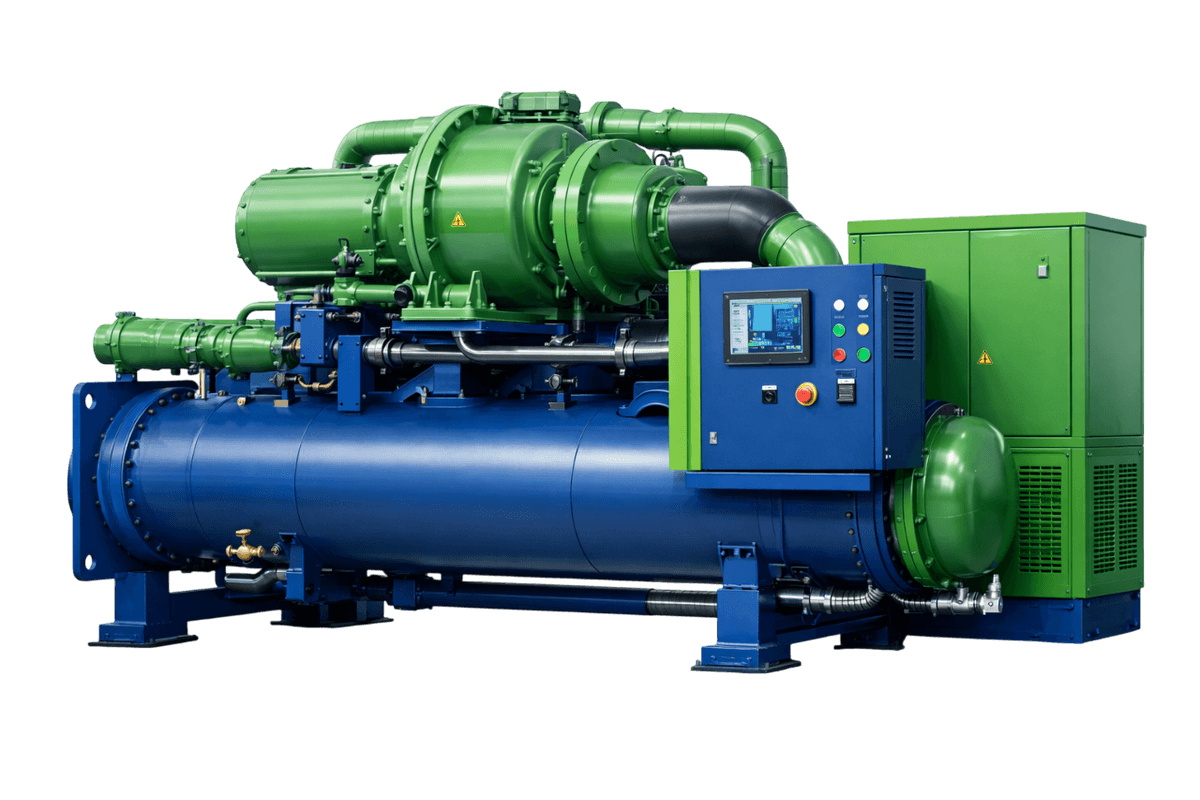
Water-Cooled Centrifugal Chillers
Learn More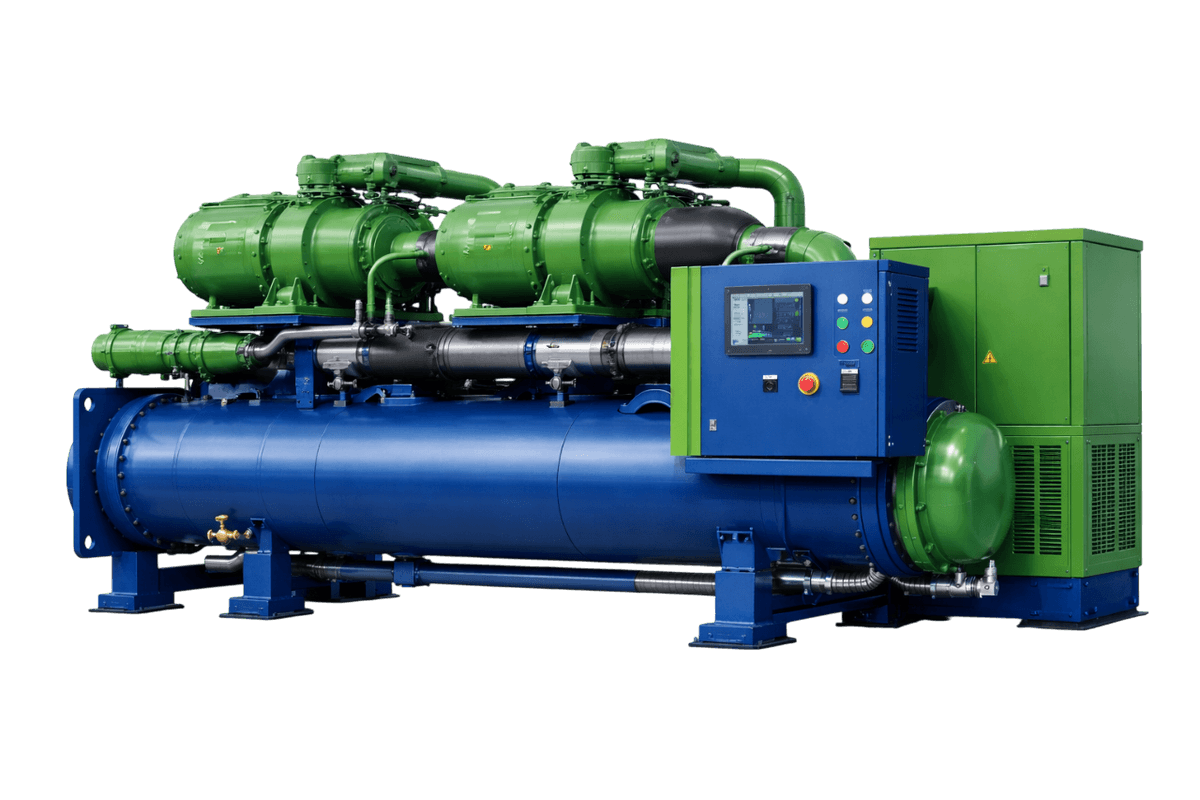
Water-Cooled Screw Chillers
Learn More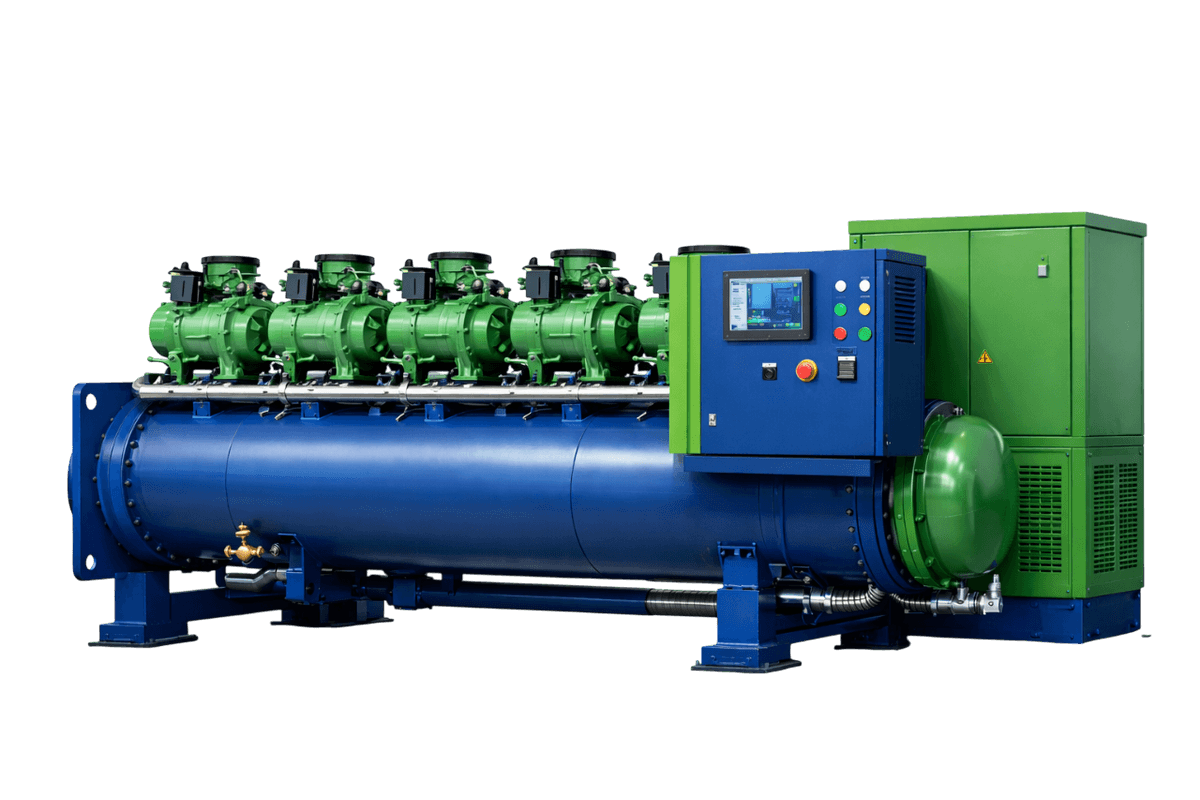
Water-Cooled Reciprocating Chillers
Learn MoreFrequently Asked Questions About Water-Cooled Scroll Chillers
What is a water-cooled scroll chiller?
A Water Cooled Scroll Chiller is a refrigeration system that uses one or more scroll compressors to produce chilled water and a water-cooled condenser to reject heat through condenser water and a cooling tower.
How does a water-cooled scroll chiller work?
The evaporator removes heat from circulating chilled water. Refrigerant absorbs this heat and enters the scroll compressor. After compression, the refrigerant transfers heat to condenser water before passing through an expansion device and returning to the evaporator.
Where are water-cooled scroll chillers used?
Water Cooled Scroll Chiller Applications include pharmaceutical production, plastic processing, food and beverage facilities, dairy plants, manufacturing, process cooling, commercial HVAC, healthcare facilities, hotels and technical facilities.
What cooling capacities are available?
Applications can require 10 TR, 15 TR, 20 TR, 30 TR, 50 TR, 60 TR, 100 TR and other capacities depending on project design and compressor configuration.
What are the main advantages of scroll chillers?
Advantages can include compact design, smooth operation, flexible compressor staging, relatively low vibration and suitability for moderate cooling loads.
Are water-cooled scroll chillers energy efficient?
A properly designed High Efficiency Water Cooled Scroll Chiller can provide efficient cooling. Actual efficiency depends on compressor loading, water temperatures, cooling tower performance, heat exchanger cleanliness and plant controls.
What is the difference between scroll and screw chillers?
Scroll chillers use scroll compressors and are commonly considered for smaller to medium cooling loads. Screw chillers use rotary screw compressors and are commonly selected for larger continuous cooling applications.
What is the difference between scroll and reciprocating chillers?
Scroll compressors use interlocking spiral elements, while reciprocating compressors use pistons and cylinders. Scroll compressors generally provide smoother compression, while reciprocating compressors have different mechanical service characteristics.
What maintenance does a water-cooled scroll chiller require?
Typical maintenance includes compressor checks, refrigerant inspection, electrical testing, condenser cleaning, evaporator cleaning, pump inspection, water treatment and cooling tower maintenance.
How often should a water-cooled scroll chiller be serviced?
Service frequency depends on operating hours, application, environmental conditions, water quality and equipment condition. Continuously operated industrial systems normally require regular preventive inspection.
What factors affect the performance of a scroll chiller?
Performance can be affected by condenser water temperature, chilled water temperature, compressor condition, refrigerant charge, water flow, heat exchanger fouling, cooling tower condition and control settings.
How do I choose the correct cooling capacity?
The correct capacity should be determined from the actual heat load, required chilled water temperature, flow rate, operating profile and expected future demand.
Do you provide installation, repair and maintenance support?
Yes. Compress India supports water-cooled scroll chiller projects requiring system selection, installation, commissioning, preventive maintenance, repair, troubleshooting, cleaning, retrofitting and performance optimisation.