Water-Cooled Screw Chillers
(Industrial & Commercial Cooling Solutions)
Water-Cooled Screw Chillers – Industrial & Commercial Cooling Solutions
Compress India provides Water-Cooled Screw Chillers engineered for reliable cooling performance across demanding industrial, process cooling and commercial HVAC applications. Designed around efficient screw compressor technology and water-cooled heat rejection, these systems are suitable for facilities that require stable chilled water temperatures, continuous operation and high cooling capacities.
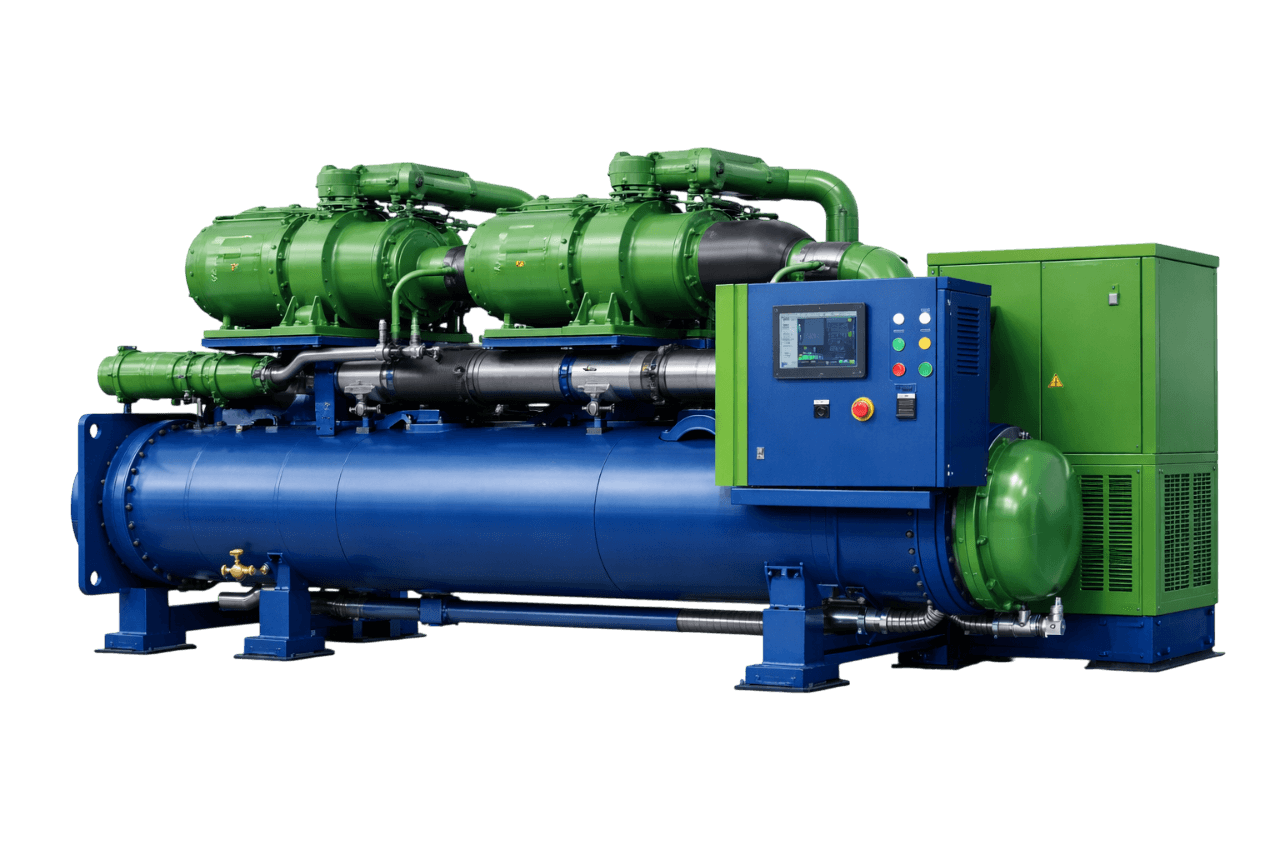
A Water Cooled Screw Chiller uses a screw compressor, evaporator, condenser and chilled water circulation system to remove heat efficiently from industrial processes or building cooling systems. When integrated with cooling towers, pumps, controls and water treatment systems, the chiller becomes part of a complete water cooled chiller system capable of handling continuous and variable cooling loads.
Compress India offers solutions for customers looking for an Industrial Water Cooled Screw Chiller, Industrial Screw Chiller, Water Cooled Process Chiller, HVAC Screw Chiller, complete Water Cooled Screw Chiller Plant and associated installation, commissioning, repair and maintenance services.
Whether your application requires process cooling for pharmaceutical manufacturing, plastics, chemicals, food processing, manufacturing plants or centralized air conditioning, we help configure the system according to cooling load, operating temperature, available infrastructure and required energy efficiency.
Overview
Water-cooled screw chillers are commonly used where medium to large cooling capacities, dependable operation and efficient heat rejection are required.
Unlike smaller packaged cooling equipment, an industrial screw chiller is designed to handle substantial refrigeration loads while maintaining consistent chilled water temperature. The screw compressor provides smooth capacity modulation, making the technology suitable for facilities where cooling demand changes throughout the day.
A typical water cooled screw compressor chiller consists of:
Screw compressor
Evaporator
Water-cooled condenser
Refrigeration circuit
Chilled water circuit
Condenser water circuit
Cooling tower
Pumps
Electrical control panel
Sensors and safety controls
Automation and monitoring systems
Compress India can assist with individual chiller units as well as complete industrial chilling systems based on project requirements.
How Water-Cooled Screw Chillers Work
The Water Cooled Screw Chiller Working Principle is based on a closed refrigeration cycle that transfers heat from chilled water to condenser water and ultimately rejects the heat through a cooling tower.
Cooling Cycle
Warm return water from the process or HVAC system enters the evaporator.
Inside the evaporator, refrigerant absorbs heat from the circulating water. The cooled water then leaves the chiller and returns to the production equipment, air-handling system or cooling process.
The refrigerant continues through compression, condensation and expansion before repeating the cycle.
Compressor Operation
The screw compressor is the core mechanical component of a Screw Compressor Chiller.
Rotating screw elements compress refrigerant vapour and increase its pressure and temperature. Screw compressors are widely used in industrial refrigeration because they can provide stable operation across varying cooling loads.
Depending on system design, a Semi Hermetic Screw Chiller, twin-screw system or variable-speed screw compressor may be selected.
Heat Rejection Process
After compression, high-pressure refrigerant moves into the condenser.
Condenser water absorbs the refrigerant heat and transports it to the cooling tower. The cooling tower then rejects this heat to the surrounding atmosphere.
This water-based heat rejection process is one of the major differences between water-cooled and air-cooled chillers.
Chilled Water Circulation
Chilled water pumps circulate cooled water between the evaporator and connected equipment.
Depending on the application, the system may use:
Standard chilled water
Process water
Water-glycol mixture
Closed-loop circulation
Primary-secondary pumping systems
Note:Correct flow rates and chilled water temperatures are important for maintaining chiller efficiency and protecting connected equipment.
Key Features of Water Cooled Screw Chillers
Efficient Cooling Performance
A properly engineered High Efficiency Water Cooled Screw Chiller can provide effective cooling for facilities requiring long operating hours and substantial cooling capacity.
Water-cooled condenser operation can help maintain stable condensing conditions when the cooling tower and water circuit are correctly designed.
Variable Capacity Control
Industrial cooling demand rarely remains constant.
Modern screw chillers can regulate compressor capacity according to actual cooling demand. Variable capacity operation helps reduce unnecessary compressor operation during lower-load periods.
A VFD Water Cooled Screw Chiller or variable-speed screw chiller can provide additional control where load conditions vary significantly.
Reliable Continuous Operation
A major advantage of an Industrial Screw Chiller is its suitability for continuous cooling applications.
Properly maintained systems can support manufacturing processes, pharmaceutical facilities, production lines, centralized HVAC systems and other operations where chilled water availability is critical.
Advanced Controls and Monitoring
Modern control systems can monitor parameters such as:
Chilled water inlet temperature
Chilled water outlet temperature
Condenser water temperature
Refrigerant pressure
Compressor operating condition
Motor load
Water flow
System alarms
Operating hours
Energy consumption
Integration with automation systems helps facility teams monitor and manage cooling equipment more effectively.
System Configuration
Compressor Assembly
The compressor assembly can include:
Screw compressor
Compressor motor
Oil separator
Lubrication system
Capacity control system
Temperature sensors
Pressure sensors
Safety protection devices
Correct compressor sizing is essential for achieving stable operation across the expected cooling load range.
Evaporator and Condenser
The evaporator transfers heat from chilled water into the refrigerant.
The condenser transfers refrigerant heat into the condenser water circuit.
Heat exchanger condition has a direct impact on system performance. Fouling, scale or incorrect water flow can reduce heat transfer efficiency.
Cooling Tower Integration
The cooling tower is an essential component of most water-cooled chiller installations.
Cooling tower capacity must correspond with the heat rejection requirement of the chiller plant.
System design should consider:
Cooling tower capacity
Wet bulb conditions
Water quality
Approach temperature
Condenser water flow
Pump selection
Water treatment
Pumping and Water Circulation
A complete Water Cooled Chilling Plant may include separate pumps for chilled water and condenser water.
Pump selection depends on required water flow, system pressure drop, piping length and equipment configuration.
Variable frequency drives can also be incorporated where variable-flow operation is required.
Electrical and Control System
The electrical system may include:
Main control panel
Motor starters
VFD panels
Protection devices
PLC controls
Sensors
Interlocks
BMS connectivity
Remote monitoring interfaces
Control logic should coordinate the chiller, cooling tower, pumps and associated equipment safely and efficiently.
Technical Specifications
Every industrial cooling project has different operating conditions. Therefore, final Water Cooled Screw Chiller Specifications should be selected according to the actual application.
Cooling Capacity
Water Cooled Screw Chiller Capacity is normally selected after calculating the total process or building cooling requirement.
Capacity requirements can vary from relatively small industrial installations to large centralized chilling plants.
Common project requirements may include configurations around:
50 TR
50 TR Water Cooled Screw Chiller
100 TR
100 TR Water Cooled Screw Chiller
200 TR
200 TR Water Cooled Screw Chiller
300 TR
300 TR Water Cooled Screw Chiller
500 TR
500 TR Water Cooled Screw Chiller
Actual available capacities depend on equipment configuration and project conditions.
Operating Temperatures
Important operating temperatures include:
Chilled water supply temperature
Chilled water return temperature
Condenser water inlet temperature
Condenser water outlet temperature
Required process temperature
Lower process temperatures may require specialized system configurations or glycol-based circuits.
Power Requirements
Electrical requirements depend on compressor capacity and system configuration.
Important considerations include:
Supply voltage
Frequency
Compressor motor rating
Starting current
Pump power
Cooling tower fan power
Control panel requirement
Efficiency Parameters
Water Cooled Screw Chiller Efficiency can be evaluated using operating parameters such as:
COP
Energy efficiency ratio
Input power
Cooling output
Full-load efficiency
Part-load efficiency
The Water Cooled Screw Chiller COP varies according to operating temperatures, compressor design, condenser conditions and system loading.
Refrigerant Options
Refrigerant selection depends on the chiller design, existing equipment, required operating conditions and applicable system configuration.
Note:For replacement or retrofit projects, refrigerant compatibility with compressors, heat exchangers, controls and lubricants must be evaluated before modifications are made.
Control Options
Control options can include:
Local chiller controller
PLC control
Touchscreen HMI
VFD control
BMS connectivity
Remote monitoring
Alarm notification
Energy monitoring
Plant sequencing
Available Capacity Range
Compress India can support cooling requirements across different industrial capacities and applications.
Depending on the project, customers may require anything from compact industrial chillers to large-capacity Water Cooled Screw Chiller Plants.
Note:Selection should not be based on tonnage alone. The cooling load profile, required chilled water temperature, condenser conditions, process characteristics and expected operating hours should all be evaluated.
Our team can assist with assessing the required refrigeration tonnage and configuring a suitable cooling system for the application.
Industrial Applications
Pharmaceutical Facilities
A Water Cooled Screw Chiller for Pharmaceutical Industry applications can support:
Process cooling
HVAC cooling
Manufacturing areas
Production equipment
Cleanroom cooling systems
Temperature-controlled operations
Utility cooling systems
Maintaining consistent chilled water conditions is especially important where manufacturing processes depend on controlled temperatures.
Plastic Processing
A Water Cooled Screw Chiller for Plastic Industry applications may support:
Injection moulding machines
Extrusion equipment
Mould cooling
Hydraulic system cooling
Process water cooling
Production line cooling
Stable process temperature can help support consistent production conditions.
Chemical Processing
A Water Cooled Screw Chiller for Chemical Industry applications can be used for:
Reactor cooling
Process vessel cooling
Heat exchanger cooling
Batch process temperature control
Production equipment cooling
Utility cooling
Materials and operating temperatures should be carefully evaluated according to the process.
Food and Beverage
A Water Cooled Screw Chiller for Food Processing can support production areas requiring controlled chilled water.
Applications may include:
Process cooling
Production equipment
Beverage manufacturing
Mixing processes
Ingredient cooling
Packaging processes
Facility air conditioning
Manufacturing
Industrial manufacturing facilities use chilled water for many different processes.
A centralized Industrial Water Chiller can serve multiple production machines or cooling loads from one plant.
Process Cooling
A Water Cooled Screw Chiller for Process Cooling is suitable where equipment or production processes generate significant amounts of heat.
The chiller removes this heat continuously and maintains the required operating temperature.
Commercial HVAC
A Water Cooled HVAC Chiller may be used in:
Commercial buildings
Corporate facilities
Hospitals
Hotels
Shopping complexes
Institutional buildings
Large centralized air-conditioning systems
Data Centres
Cooling systems can also support data centre and technical facility cooling where continuous heat removal is required.
System redundancy, control reliability and plant monitoring become particularly important for mission-critical cooling applications.
Process Cooling Applications
Production Equipment Cooling
Industrial machinery can generate substantial amounts of heat during continuous operation.
A Process Cooling Chiller circulates chilled water through equipment to remove this heat and support stable operation.
Temperature-Controlled Processes
Many production processes require a defined temperature range.
An Industrial Process Chiller can help maintain chilled water temperature according to process requirements.
Glycol Cooling Systems
Where operating temperatures or process conditions require additional freeze protection, a glycol-water mixture may be used.
The glycol concentration and system components should be selected according to the required temperature range.
Continuous Process Cooling
Applications operating for extended shifts or continuous production require cooling systems designed for reliable long-duration operation.
Correct chiller sizing and plant configuration are important to avoid frequent cycling or insufficient cooling capacity.
Complete Chiller Plant Setup
Compress India can support complete Water Cooled Screw Chiller Plant requirements instead of supplying only the core refrigeration machine.
Chiller Unit
The chiller unit forms the main refrigeration system and includes the compressor, evaporator, condenser, refrigerant circuit and control system.
Cooling Tower
The cooling tower removes heat transferred from the condenser water.
Proper cooling tower selection is essential for efficient condenser performance.
Pumps and Water Circuits
The plant may include:
Chilled water pumps
Condenser water pumps
Primary pumps
Secondary pumps
Distribution piping
Isolation valves
Balancing valves
Strainers
Storage and Expansion Systems
Depending on the plant configuration, additional equipment may include:
Buffer tanks
Expansion tanks
Air separators
Make-up water arrangements
Water treatment systems
Plant Controls and Automation
Centralized plant controls can coordinate:
Chiller staging
Pump operation
Cooling tower operation
Temperature control
Pressure monitoring
Alarms
Energy monitoring
Automation can be particularly valuable in multi-chiller plants.
Installation and Commissioning
Proper installation directly affects chiller performance, reliability and service life.
Site Assessment
Before installation, site conditions should be evaluated for:
Available space
Equipment access
Cooling tower location
Piping routes
Electrical supply
Ventilation
Drainage
Maintenance accessibility
System Planning
System planning includes evaluating:
Cooling capacity
Water flow
Pump head
Pipe sizing
Cooling tower selection
Electrical load
Controls
Expansion requirements
Mechanical Installation
Mechanical work may include:
Equipment positioning
Chilled water piping
Condenser water piping
Pump installation
Cooling tower integration
Valves and accessories
Insulation
Electrical Integration
Electrical work can include:
Power supply connection
Control wiring
Interlocks
Sensor connections
VFD integration
BMS communication
Testing and Commissioning
Before handover, the plant should be checked for correct:
Water circulation
Flow rates
Temperature differential
Refrigerant operation
Compressor operation
Electrical parameters
Control sequencing
Safety operation
Service and Maintenance
Regular maintenance helps maintain chiller performance and identify developing problems before they become major breakdowns.
Compress India supports Industrial Water Cooled Chiller maintenance and service requirements.
Preventive Maintenance
Preventive maintenance can include:
Operating parameter inspection
Temperature checks
Pressure checks
Water flow checks
Refrigerant inspection
Oil system inspection
Electrical inspection
Control inspection
Compressor Service
Screw compressor service may involve inspection of:
Bearings
Oil system
Filters
Capacity controls
Sensors
Motor condition
Mechanical components
Electrical and Control Checks
Electrical inspections may include:
Contactors
Relays
Terminals
Protection devices
Control panels
Sensors
Communication systems
Refrigeration System Inspection
The refrigeration circuit should be evaluated for correct:
Refrigerant charge
Operating pressures
Superheat
Oil condition
Leak-free operation
Expansion device performance
Water-Side Maintenance
Water-side maintenance is important for both the evaporator and condenser.
Inspection may include:
Water quality
Flow rates
Strainers
Pumps
Scale formation
Fouling
Corrosion
Repair and Troubleshooting
Chiller problems should be diagnosed based on actual operating data rather than replacing components without identifying the root cause.
Compressor Repair
Potential compressor-related problems may involve:
Abnormal noise
High motor current
Oil pressure problems
Capacity control issues
Bearing wear
Compressor trip conditions
Refrigerant System Repair
Refrigeration troubleshooting may involve:
Refrigerant leaks
Abnormal pressures
Expansion valve problems
Poor heat transfer
Incorrect refrigerant charge
Electrical Troubleshooting
Electrical failures may involve:
Motor protection trips
Loose connections
Control voltage problems
Starter faults
VFD faults
Sensor failures
Control System Troubleshooting
Control problems can involve:
Incorrect sensor readings
Communication faults
PLC errors
BMS integration problems
Improper sequencing
Alarm conditions
Emergency Breakdown Support
Unexpected chiller failures can affect critical production processes.
Fast fault diagnosis helps identify whether the issue is related to the compressor, electrical system, refrigerant circuit, water system or controls.
Cleaning and Descaling
Heat exchanger cleanliness has a major influence on cooling performance.
Condenser Cleaning
Scale inside condenser tubes reduces heat transfer and can increase condensing pressure.
Regular cleaning helps restore proper heat exchange.
Evaporator Cleaning
Evaporator fouling can reduce chilled water heat transfer and negatively affect system capacity.
Chemical Descaling
Chemical descaling may be required where mineral deposits have accumulated inside heat exchanger surfaces.
The descaling method should be selected according to equipment material and scale condition.
Cooling Tower Cleaning
Cooling tower maintenance can include:
Basin cleaning
Fill inspection
Nozzle cleaning
Water treatment
Fan inspection
Scale and deposit removal
Retrofitting and System Upgrades
Existing chillers can sometimes be improved through targeted upgrades rather than complete replacement.
Capacity Control Upgrades
Improved capacity control can help the chiller respond more effectively to changing cooling demand.
Control Panel Upgrades
Older control panels can be upgraded with modern controllers, sensors, monitoring systems and interfaces.
Automation Integration
Existing chillers can potentially be integrated into centralized plant automation or building management systems.
Pump and Cooling Tower Upgrades
Plant efficiency is influenced by more than the chiller itself.
Upgrading pumps, motors, cooling tower fans and control sequences may improve overall system operation.
Energy Efficiency Improvements
Energy optimisation can include:
Compressor control optimisation
VFD integration
Cooling tower optimisation
Pump control
Temperature reset strategies
Heat exchanger cleaning
Plant sequencing
Automation and Monitoring
Building Management System Integration
BMS integration enables facility operators to monitor chiller operation alongside other building systems.
Variable Frequency Drive Control
A VFD Screw Chiller or VFD-controlled auxiliary system can regulate equipment speed according to actual operating demand.
VFDs may be used with:
Compressor motors
Chilled water pumps
Condenser pumps
Cooling tower fans
Remote Monitoring
Remote monitoring can provide access to selected operating parameters without requiring constant physical inspection of the machine.
Alarm and Fault Monitoring
Alarm systems can help identify conditions such as:
High pressure
Low pressure
Low water flow
High temperature
Motor overload
Sensor failure
Communication failure
Energy Monitoring
Energy monitoring provides visibility into chiller power consumption and operating trends.
The information can be used to identify abnormal performance and opportunities for optimisation.
Energy Efficiency and Performance
Full-Load Performance
Full-load performance refers to chiller operation near its rated cooling capacity.
The actual performance depends on chilled water conditions, condenser water conditions and equipment configuration.
Part-Load Performance
Many chillers operate at partial load for substantial periods.
A properly controlled screw compressor can adapt capacity to changing demand.
Variable-speed operation can further improve system control for suitable applications.
Power Consumption
Water Cooled Screw Chiller Power Consumption depends on:
Cooling capacity
Compressor efficiency
Chilled water temperature
Condenser water temperature
Cooling load
Pump operation
Cooling tower operation
System maintenance condition
Note:Power consumption should be evaluated for the complete system rather than looking only at compressor motor rating.
Factors Affecting Efficiency
Chiller efficiency can be affected by:
High condenser water temperature
Dirty condenser tubes
Dirty evaporator surfaces
Incorrect refrigerant charge
Low water flow
Incorrect pump operation
Poor cooling tower performance
Improper control settings
Performance Optimization
Performance optimisation may include:
Heat exchanger cleaning
Cooling tower optimisation
Water treatment
Flow balancing
Control optimisation
VFD integration
Correct temperature settings
Preventive maintenance
An Energy Efficient Water Cooled Screw Chiller installation depends on both equipment selection and complete plant design.
Water-Cooled vs Air-Cooled Systems
When comparing a Water Cooled Screw Chiller vs Air Cooled Screw Chiller, the primary difference is the method used to reject heat.
Water-Cooled
A water-cooled system transfers condenser heat into water and typically rejects it through a cooling tower.
Water-cooled systems are often considered for larger centralized installations where cooling towers, condenser pumps and water systems can be accommodated.
Air-Cooled
An air-cooled screw chiller rejects heat directly to ambient air using condenser coils and fans.
Air-cooled systems may be selected where installation simplicity or limited water infrastructure is an important consideration.
The correct choice depends on:
Required cooling capacity
Operating hours
Ambient conditions
Water availability
Installation space
Maintenance requirements
Energy objectives
Project budget
Screw Chillers vs Centrifugal Chillers
A Water Cooled Screw Chiller vs Centrifugal Chiller comparison should consider system capacity, load profile and operating requirements.
Screw chillers use rotary screw compressors and are commonly used across medium and large industrial cooling applications.
Centrifugal chillers use centrifugal compressors and are frequently considered for very large centralized cooling installations.
Selection should be based on engineering requirements rather than compressor type alone.
Important factors include:
Cooling capacity
Minimum operating load
Part-load operation
Required chilled water temperature
Plant redundancy
Available infrastructure
Maintenance requirements
Energy consumption
How to Select the Right Chiller
Selecting the correct Water Cooled Screw Chiller requires more than simply matching an approximate tonnage.
Cooling Load
The total heat load from equipment, processes or building areas should first be calculated.
Required Capacity
After establishing the cooling load, the required refrigeration capacity can be selected with suitable design considerations.
Oversizing or undersizing a chiller can negatively affect performance and operating cost.
Operating Temperature
The required chilled water temperature has a major influence on system selection.
Industrial process applications may require different temperatures from conventional HVAC applications.
Site Conditions
Site evaluation should consider:
Ambient conditions
Wet bulb temperature
Available water
Cooling tower location
Electrical supply
Equipment room
Maintenance access
Energy Requirements
For facilities operating chillers for extended hours, system efficiency can significantly influence long-term operating costs.
Consider both full-load and part-load performance.
Future Expansion
If production capacity is expected to increase, the plant can be planned with future expansion in mind.
This may include provisions for:
Additional chillers
Additional pumps
Larger piping headers
Additional cooling tower capacity
Expanded electrical systems
Pricing and Cost Considerations
Customers searching for Water Cooled Screw Chiller Price, Water Cooled Screw Chiller Price in India, Screw Chiller Price or Industrial Chiller Price should consider the complete system configuration rather than expecting one standard price.
The final cost depends on the technical requirement of the project.
Capacity and Configuration
A 50 TR system will have very different equipment requirements from a 200 TR, 300 TR or 500 TR chiller plant.
Capacity is therefore one of the primary factors affecting overall cost.
Equipment Selection
Cost can also depend on:
Compressor configuration
Heat exchanger design
Refrigerant system
Control system
Electrical configuration
Automation level
Accessories
Installation Cost
Installation costs may include:
Piping
Pumps
Cooling tower
Electrical cabling
Panels
Insulation
Valves
Structural work
Commissioning
Operating Cost
Initial equipment price is only one part of the total ownership cost.
Electricity consumption, water consumption and operating hours should also be considered.
Maintenance Cost
Maintenance requirements depend on the plant size, operating conditions and equipment configuration.
Regular preventive maintenance can help reduce the risk of costly unplanned breakdowns.
Note:For an accurate Water Cooled Screw Chiller Price in India, Compress India can evaluate the required capacity and system configuration before preparing a project-specific quotation.
Brands and Systems We Support
Compress India supports different industrial water-cooled and screw chiller systems used across commercial and industrial installations.
Service requirements can include systems associated with widely used chiller technologies and configurations such as:
Carrier water cooled screw chiller systems
Daikin water cooled screw chiller systems
Trane water cooled screw chiller systems
York water cooled screw chiller systems
Voltas water cooled screw chiller systems
LG water cooled screw chiller systems
Blue Star screw chiller systems
Dunham Bush screw chiller systems
Kirloskar screw chiller systems
McQuay screw compressor systems
Variable speed screw chillers
Rotary screw chillers
Semi-hermetic screw chillers
Twin screw chillers
Support requirements should always be evaluated according to the exact model, compressor configuration, refrigerant and installed system.
Why Choose Compress India
Compress India focuses on practical industrial cooling solutions built around the actual cooling requirement of the facility.
We can support customers requiring:
Water-cooled screw chiller selection
Industrial process cooling solutions
HVAC chiller systems
Chiller plant planning
Equipment installation
System commissioning
Preventive maintenance
Chiller repair
Compressor troubleshooting
Cleaning and descaling
Control system upgrades
VFD integration
Automation
Plant performance optimisation
Instead of considering the chiller as an isolated piece of equipment, the complete cooling system—including compressors, evaporators, condensers, cooling towers, pumps, controls and water circuits—should work together correctly.
This system-level approach helps customers plan reliable cooling installations suitable for both current operating requirements and future expansion.
Request a Quote
Looking for a Water Cooled Screw Chiller Manufacturer in India, Water Cooled Screw Chiller Supplier in India or complete industrial chiller solution?
Compress India can help evaluate your cooling requirement and recommend a suitable system configuration.
For accurate selection, share details such as:
Required cooling capacity
Process application
Required chilled water temperature
Inlet water temperature
Outlet water temperature
Flow rate
Operating hours
Site location
Available electrical supply
Existing cooling equipment
Required redundancy
Expansion plans
Based on the project requirement, Compress India can assist with equipment selection, system configuration, installation, commissioning and ongoing service support.
Connect with Our HVAC Execution Team
Need help with your cooling project? Connect with our team for technical support, project coordination, installation, service and lifecycle assistance.
Related Water-Cooled Chillers
Explore other water-cooled chiller systems available within our cooling solutions range.
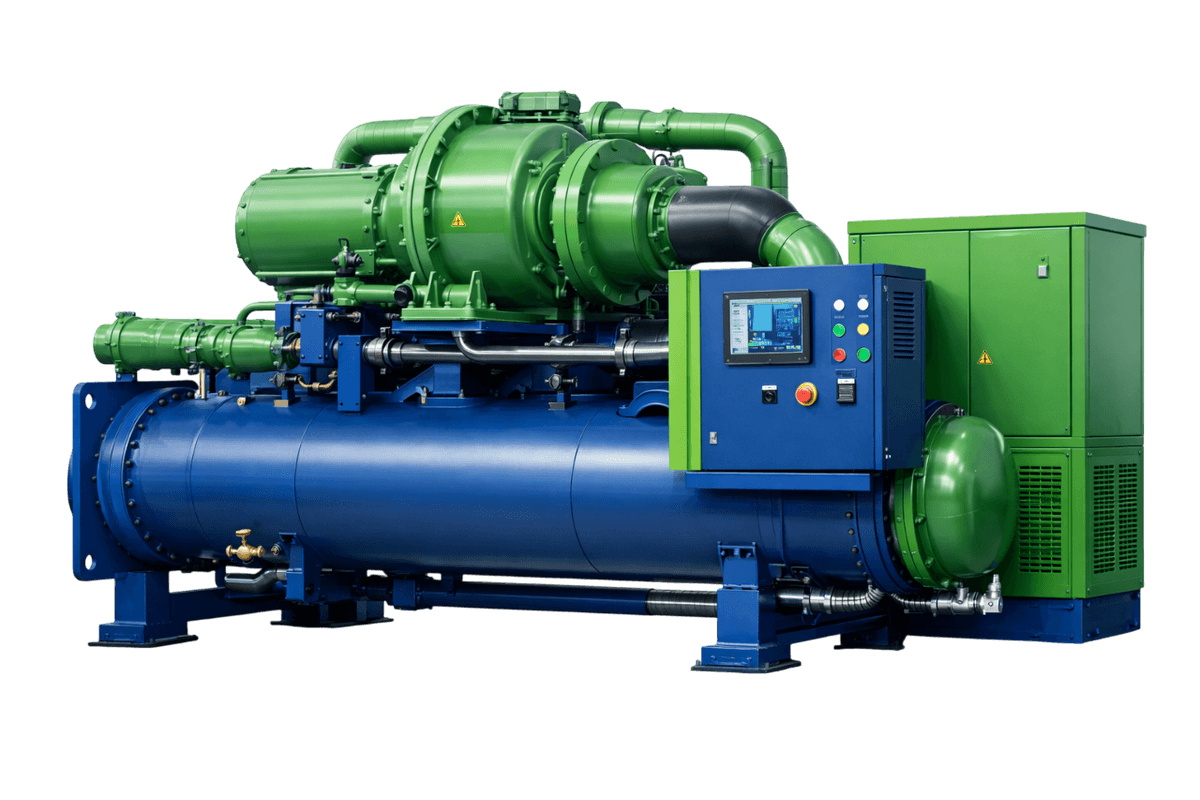
Water-Cooled Centrifugal Chillers
Learn More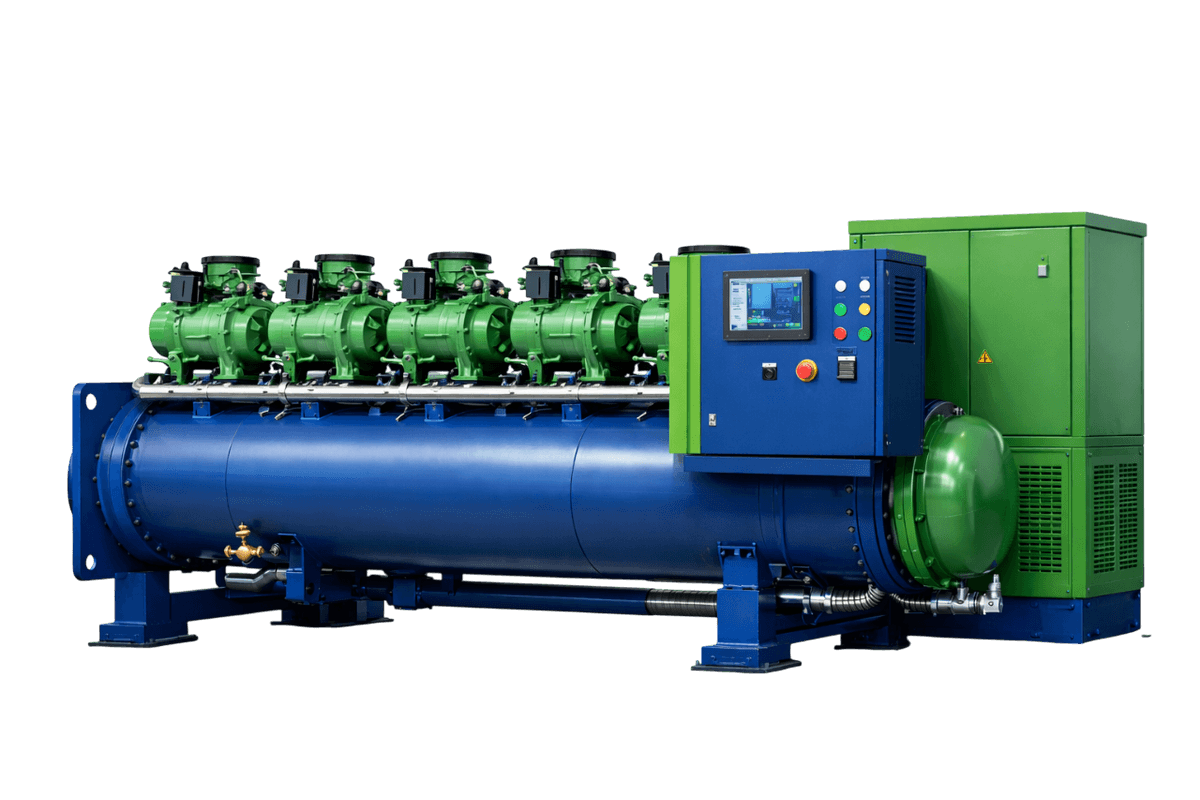
Water-Cooled Reciprocating Chillers
Learn More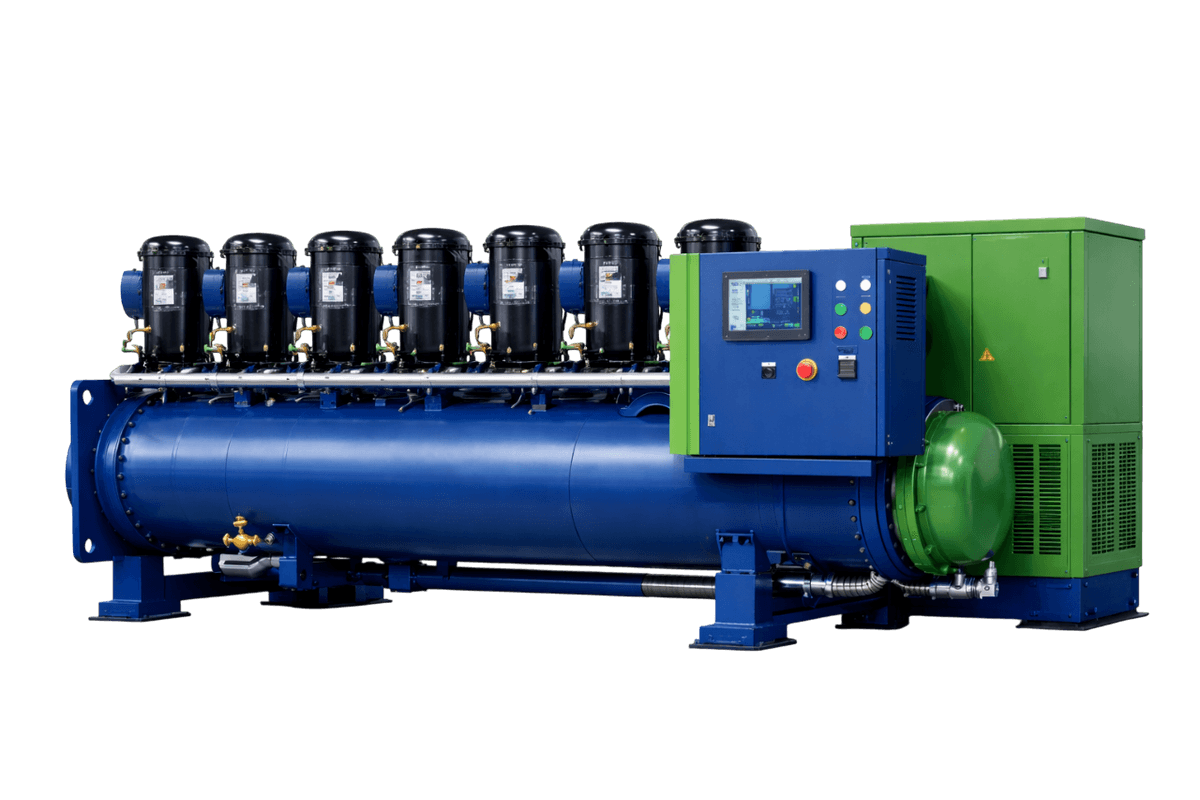
Water Cooled Scroll Chiller
Learn MoreFrequently Asked Questions
What is a water-cooled screw chiller?
A water-cooled screw chiller is a refrigeration system that uses a screw compressor to produce chilled water and a water-cooled condenser to reject heat. It is commonly used in industrial process cooling and centralized HVAC applications.
How does the system work?
The evaporator removes heat from circulating chilled water. The refrigerant carries this heat through the screw compressor to the condenser. Condenser water then transfers the heat to a cooling tower where it is rejected to the atmosphere.
What capacities are available?
Water-cooled screw chillers are available across a wide range of capacities. Project requirements may include systems around 50 TR, 100 TR, 200 TR, 300 TR, 500 TR and other capacities depending on application and system design.
Where are these chillers commonly used?
Common Water Cooled Screw Chiller Applications include pharmaceutical manufacturing, plastics, chemical processing, food processing, industrial manufacturing, commercial HVAC, process cooling and centralized chilled water systems.
How energy efficient are they?
Efficiency depends on compressor design, load conditions, chilled water temperature, condenser water temperature, cooling tower performance, water flow and maintenance condition. Correct system design is important for achieving efficient performance.
What maintenance is required?
Typical maintenance includes compressor inspection, refrigeration checks, electrical testing, heat exchanger cleaning, cooling tower maintenance, pump checks, water treatment and control system inspection.
How often should the system be serviced?
Service frequency depends on operating hours, environmental conditions, water quality, plant criticality and equipment recommendations. Facilities operating continuously generally require more frequent monitoring and preventive maintenance.
What affects the overall cost?
The Water Cooled Screw Chiller Price depends on cooling capacity, compressor configuration, heat exchangers, control system, cooling tower, pumps, installation, piping, electrical systems and automation requirements.
How do I choose the correct capacity?
The correct capacity should be selected after calculating the actual process or building cooling load. Required chilled water temperature, operating hours, site conditions and future expansion should also be considered.
Do you provide installation and maintenance support?
Compress India supports industrial cooling projects requiring chiller selection, plant planning, installation, commissioning, preventive maintenance, troubleshooting, repair, cleaning, retrofitting and system optimisation.